
Editor's Review
The Ministry of Trade has announced a temporary adjustment to fuel quality standards following emerging global supply disruptions that have made it difficult to source compliant petroleum products.
The Ministry of Trade has announced a temporary adjustment to fuel quality standards following emerging global supply disruptions that have made it difficult to source compliant petroleum products.
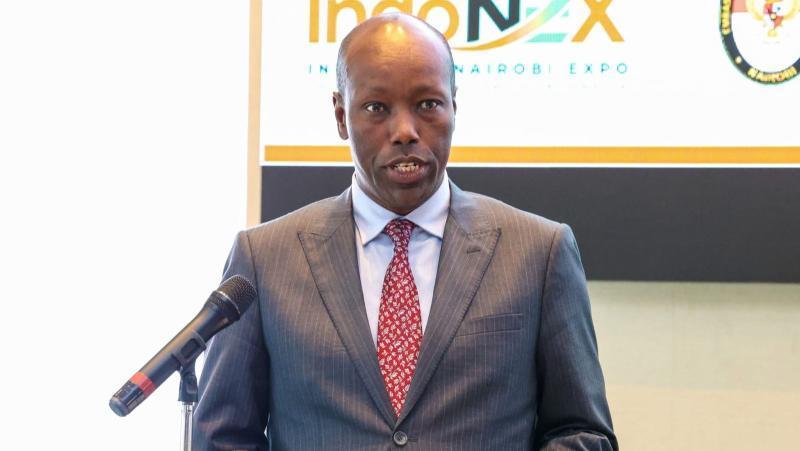
In a statement on Thursday, April 30, Trade Cabinet Secretary Lee Kinyanjui said the ministry had received multiple concerns from key players in the petroleum sector regarding difficulties in meeting existing fuel specifications.
"The Ministry of Investments, Trade and Industry has received requests from stakeholders in the petroleum sector, including the Ministry of Energy and Petroleum, regarding challenges in sourcing fuel that meets the current standard compliance levels," the statement read.
Kinyanjui linked the supply challenges to ongoing global conflicts that have disrupted key fuel transportation routes.
"Owing to constraints occasioned by the ongoing conflict in the Middle East, including disruptions to supply routes such as the Strait of Hormuz, and the need to safeguard the continuous supply of fuel critical to the economy, these concerns have been given urgent consideration," the statement added.
Read More
Kinyanjui explained that following the request, technical experts and regulatory bodies were then brought in to evaluate it and determine the best course of action in light of the challenges.
In the end, the ministry approved a temporary adjustment to the sulphur limits in fuel to align with previous standards, citing the need to balance supply stability with consumer protection.
"Upon review by our technical teams, and following consultations with the Kenya Bureau of Standards and the National Standards Council, the Ministry has subjected the request to a comprehensive technical assessment.
"It is against this backdrop, and in full consideration of the need to safeguard the welfare of Kenyan consumers and the stability of the economy, that the Ministry of Investments, Trade and Industry has approved a request by the Ministry of Energy and Petroleum, under the guidance of the National Standards Council, to temporarily waive the sulphur parameter to the maximum limit of 50mg/kg for KS EAS 177:2025- Automotive Gasoil and KS EAS 158:2025-Premium Motor Spirit as per the previous fuel standards for a period of six (6) months," the statement further read.

The ministry noted that the measure is not permanent and will only apply for a limited period as authorities monitor global supply conditions.
"This measure is temporary and intended to ensure continued fuel availability and sustain economic stability during the current period of global supply disruption. It will be reviewed at the end of the six-month period, or earlier if global supply conditions improve," the statement concluded.
This comes a week after Kinyanjui warned that escalating tensions in the Middle East are now posing a serious threat to the country's export sector.
In a statement on Tuesday, April 21, he said the disruptions are already being felt across key industries, outlining how the crisis is affecting global trade systems and Kenya’s position within them.
"The ongoing crisis in the Middle East continues to exert significant pressure on global trade systems, with direct implications for Kenya's export sector, a key pillar of our foreign exchange earnings and economic stability," the statement read.
Kinyanjui pointed to Kenya’s recent export performance, noting that the country had achieved record growth before the current disruptions.
He warned that a significant portion of these exports is now under threat due to the ongoing geopolitical tensions in the Middle East.
"Kenya's exports reached a record Ksh1.1 trillion in 2024, supported by strong performance in horticulture, tea, apparel and emerging manufacturing sectors.
"However, the current geopolitical tensions now place at risk approximately Ksh164.6 billion worth of annual exports to the Middle East, one of Kenya's most strategic and fastest-growing markets," the statement added.
Kinyanjui further explained that the region plays a broader role beyond direct trade, acting as a key global logistics hub that supports Kenya’s access to multiple international markets.
"Beyond direct trade, the Middle East serves as a critical global logistics and transshipment hub. Disruptions in this region are therefore affecting not only exports to Gulf markets, but also Kenya's access to Europe, Asia and North America," the statement continued.
According to Kinyanjui, the crisis has led to the suspension and restriction of major maritime and air cargo routes through the Red Sea and Gulf corridors.
He explained that transit times have increased by between 10 and 20 days, freight costs have surged, and air cargo delays of up to 48 hours are affecting perishable exports such as flowers and fresh produce.
As such, the government said it had already begun implementing measures to cushion exporters and stabilize the economy.
"A key intervention is the temporary reduction of VAT on petroleum products from 16 percent to 8 percent, to ease cost pressures from rising global oil prices," the statement noted.