
Editor's Review
The United States has issued a travel warning to its citizens, advising against travel to three African countries over concerns linked to the Ebola virus outbreak.
The United States has issued a travel warning to its citizens, advising against travel to three African countries over concerns linked to the Ebola Bundibugyo Virus disease outbreak in the region.
In an advisory on Tuesday, May 19, the US Department of State Bureau of Consular Affairs warned Americans against travelling to DR Congo, South Sudan, and Uganda.
On the other hand, travel to Rwanda was downgraded to a reconsideration level.
"The Department of State strongly urges Americans not to travel to the Democratic Republic of the Congo (DRC), South Sudan, or Uganda for any reason and to reconsider travel to Rwanda due to the Ebola Bundibugyo Virus disease outbreak in the region," the department said.
The US government explained that the affected countries had been assigned new travel advisory levels due to the severity of the situation and associated risks.
Read More
"The Department’s Travel Advisories for DRC, South Sudan, and Uganda are now Level 4 - Do Not Travel, and the Travel Advisory for Rwanda is Level 3 - Reconsider Travel," the department added.

This comes a day after the Ministry of Health had issued an advisory following confirmation of two Ebola cases in Uganda, including one death involving individuals who had travelled from the DR Congo.
In a statement on Monday, May 18, the ministry said no further spread had been reported in Uganda but warned that Kenya remained on high alert.
According to the ministry, the DRC continued to battle an active Ebola outbreak, with 10 confirmed cases and 336 suspected cases, including 88 deaths.
"The Ministry of Health continues to closely monitor the Ebola Virus Disease (EVD) outbreak reported in the Democratic Republic of Congo (DRC) and the wider regional situation in collaboration with the World Health Organization (WHO), Africa Centres for Disease Control and Prevention (Africa CDC), East African Community (EAC) Partner States, and county governments," the statement read.
Health authorities said the risk of cross-border transmission within the region remained elevated because of population movement, trade activities, and humanitarian travel.
The ministry noted that several countries in the East African region had already heightened surveillance and preparedness measures to contain any possible spread of the disease.
In response to the evolving situation, Kenya had intensified surveillance and screening measures across the country, particularly at all international airports, seaports, and designated ground crossing points.
The government said it had also strengthened event-based surveillance systems, traveller monitoring from affected regions, and daily surveillance reviews at both national and county levels.
National reference laboratories had been placed on high alert and were ready to test suspected Ebola samples, while sample transportation systems and biosafety protocols had also been reinforced.
Additionally, health facilities across the country had been directed to strengthen triage systems and infection prevention measures.
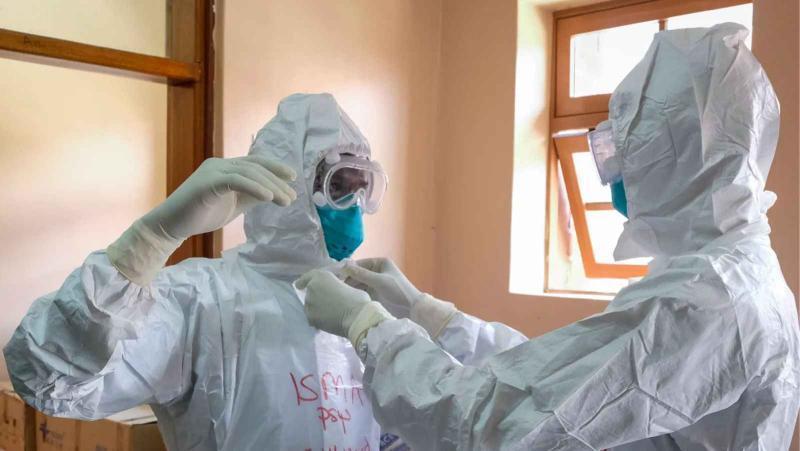
Distribution of personal protective equipment (PPE) and infection prevention commodities was ongoing, while healthcare workers were being sensitised on Ebola case identification and management protocols.
The Ministry of Health further said national and county rapid response teams remained on standby for immediate deployment, with simulation exercises and refresher training currently underway in high-risk counties.
Public awareness campaigns had also been intensified through media platforms and community outreach programmes.


 (1)-1791708588-md.jpg)
 (1)-1791175033-md.jpg)
-1791699761-md.jpg)
-1791696120-md.jpg)


 (1)-1791708588-sm.jpg)
 (1)-1791175033-sm.jpg)