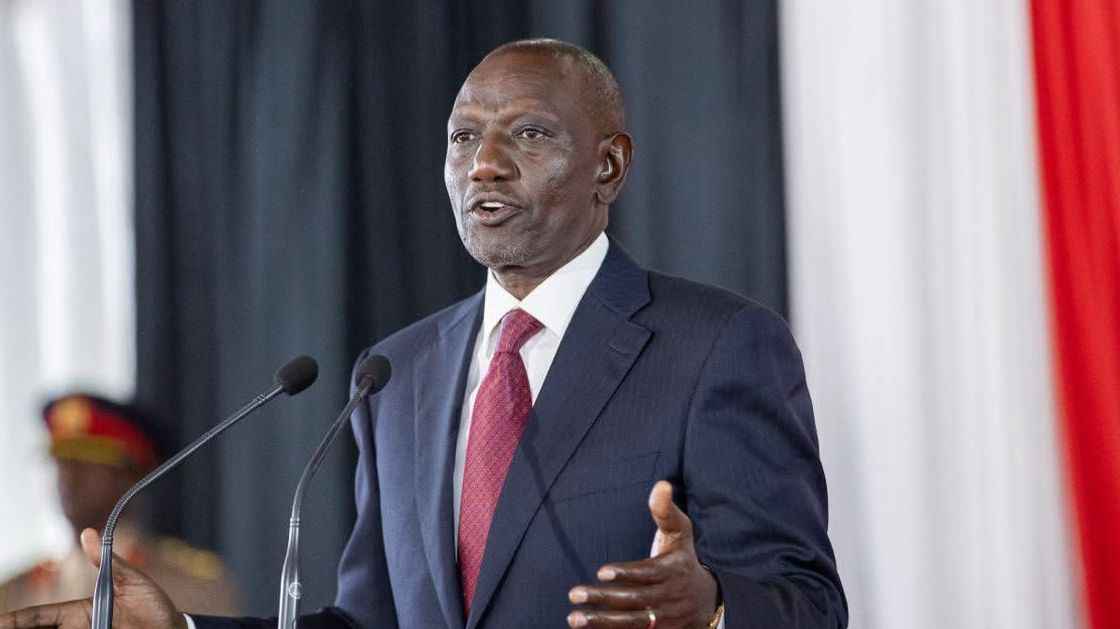
President William Ruto has announced a new Ksh5 billion initiative aimed at empowering pastoralists across Arid and Semi-Arid Lands (ASAL) counties through investment companies owned by local communities.
Speaking during Madaraka Day Celebrations in Wajir County on Monday, June 1, Ruto said the initiative targets more than 350,000 pastoralists across 21 ASAL counties.
He said the government’s long-term goal was to ensure pastoralists benefit directly from enterprises built around livestock production.
"Our vision, however, goes beyond production. Just as tea farmers own their factories through KTDA and dairy farmers own their cooperatives, pastoralists too must own and control the businesses built around their livestock," he said.
Ruto explained that the County Livestock Investment Company initiative would create community-owned enterprises designed to strengthen economic participation among pastoral communities.
Read More
"That is why we are establishing a Ksh5 billion County Livestock Investment Company initiative to support more than 350,000 pastoralists across 21 ASAL counties to form and own livestock investment companies. Through these enterprises, they will gain access to markets, finance, insurance, and value-addition opportunities," he added.

According to Ruto, the first phase of implementation is expected to directly impact millions of people who depend on livestock for survival and income generation.
"In Phase One alone, the initiative will improve the livelihoods of more than two million household members. I have directed the Ministry of Agriculture and Livestock Development, in partnership with county governments, to begin immediate registration of these companies across all 21 ASAL counties," he noted.
Beyond investment companies, the government also plans broader reforms targeting livestock production systems, market access, and drought resilience.
"We will also operationalise the Livestock Enterprise Development Fund, establish a National Strategic Fodder Reserve, strengthen pastoral cooperatives, fully roll out the Animal Identification and Traceability System (ANITRAC), and invest in the infrastructure needed to unlock premium export markets across Africa, the Middle East and beyond," Ruto further said.
Elsewhere, Ruto has apologised to residents of Northern Kenya for decades of marginalisation, acknowledging historical neglect.
Speaking during the celebrations, he said previous attitudes that viewed the region as difficult to develop had contributed to years of exclusion.
Ruto said the region had for years been unfairly overlooked because of perceptions surrounding its geography and security challenges.
"For too long, some said this region was too difficult, too dry, too remote, and too insecure to deserve any investment," he said.
Ruto dismissed those beliefs as misguided and insisted that his government was actively working to change the situation.
"That was wrong then, it is wrong now and it will forever remain wrong. But we are dismantling that legacy of exclusion, one road, one health facility, one school, one water project, and one opportunity at a time," he added.
Ruto then issued a direct apology to residents, saying the country had failed communities in Northern Kenya for many years.
"Fellow citizens, today, as I stand here as President and leader of our great nation, I wish to address the people of northern Kenya. On behalf of the people and the Republic of Kenya, I offer my sincere apology for the marginalisation that you have endured over the years. It was never meant to be this way," he further said.

-1784265081.jpg)