The Kenya Meteorological Department has issued an update on the anticipated development of El Niño conditions in 2026.
In a statement on Wednesday, June 10, the department warned that the climate phenomenon could have a significant impact on weather patterns across the country and the wider East African region in the coming months.
Kenya Met said the current global climate models indicate a high probability that El Niño will develop and persist through the remainder of the year.
"The Kenya Meteorological Department is closely monitoring global forecasts indicating the anticipated development of El Niño conditions in 2026, which could significantly influence weather patterns across the Country," the agency said.
According to Kenya Met, most climate models suggest the event is likely to be at least moderate in strength and could potentially become strong.
Read More
"While forecasts remain subject to change as new climate data becomes available, there is an 80-82% likelihood of El Niño during June-August 2026, with probabilities near or above 90-96% for it to continue through the end of 2026," the department added.
According to Kenya Met, during June, July, and August, the phenomenon is typically associated with reduced rainfall over western Kenya, while most other parts of the country experience predominantly dry weather conditions.
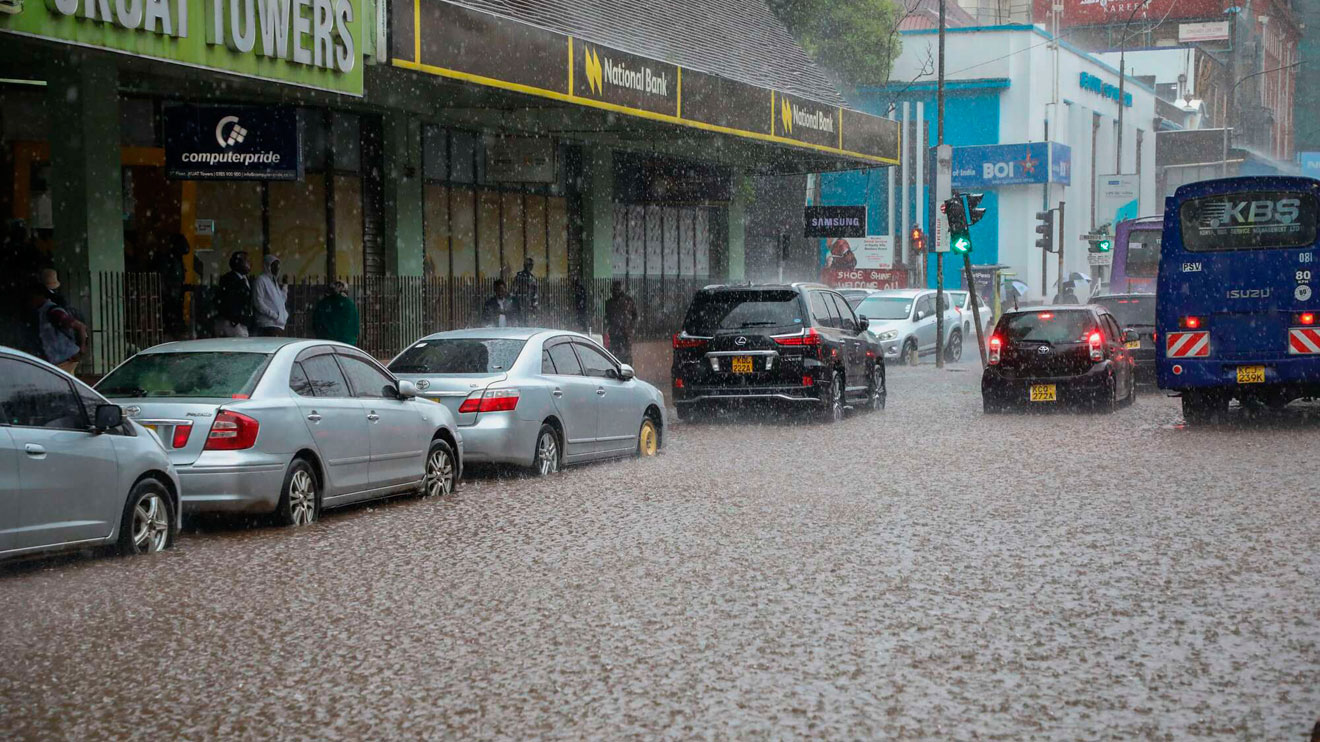
However, during the October-November-December rainy season, El Niño is generally linked to enhanced rainfall across much of the country, often increasing the likelihood of wetter-than-normal conditions.

Kenya Met noted that El Niño is not the only climate driver being monitored and emphasized the importance of the Indian Ocean Dipole (IOD), which can influence how El Niño impacts Kenya.
"It is important to note that the influence of El Niño does not occur in isolation. KMD is also closely monitoring the Indian Ocean Dipole (IOD) signal, which modulates the effect of El Niño in Kenya.
"The Indian Ocean Dipole (IOD) is currently neutral, and most models indicate that it is likely to remain neutral in June 2026, with the development of a positive IOD event possible later in the year," the agency explained.
Kenya Met further warned that a combination of El Niño and a positive IOD could have a greater impact on rainfall patterns during the short rains season.
"The combined effects of El Niño and a positive IOD significantly influence rainfall patterns over Kenya, potentially leading to enhanced rainfall during the October-November-December (OND) season," the department noted.
Kenya Met said it will continue monitoring both El Niño and IOD conditions and will provide regular updates at monthly intervals or whenever significant developments occur.
This comes a day after Kenya Met predicted dry weather in most parts of the country between June 9 and June 15.
In an update on Monday, June 8, the department said that despite the predominantly dry conditions, some areas in the Highlands East and West of the Rift Valley, as well as parts of the Coast, are likely to receive rainfall during the forecast period.
The forecast also indicates that intermittent cool and cloudy conditions are expected in sections of the Highlands East and West of the Rift Valley, the Southeastern Lowlands, the Rift Valley, and Northeastern Kenya.
According to Kenya Met, daytime temperatures are expected to remain high in several regions.
Average maximum temperatures exceeding 30 degrees Celsius are forecast in parts of the Coast, the Southeastern Lowlands, the Highlands West of the Rift Valley, and in Northeastern and Northwestern Kenya.
At the same time, colder nights are expected in a few areas.
Average minimum temperatures below 10 degrees Celsius are likely in parts of the Highlands East and West of the Rift Valley, the Central Rift Valley, and areas surrounding Mount Kilimanjaro.