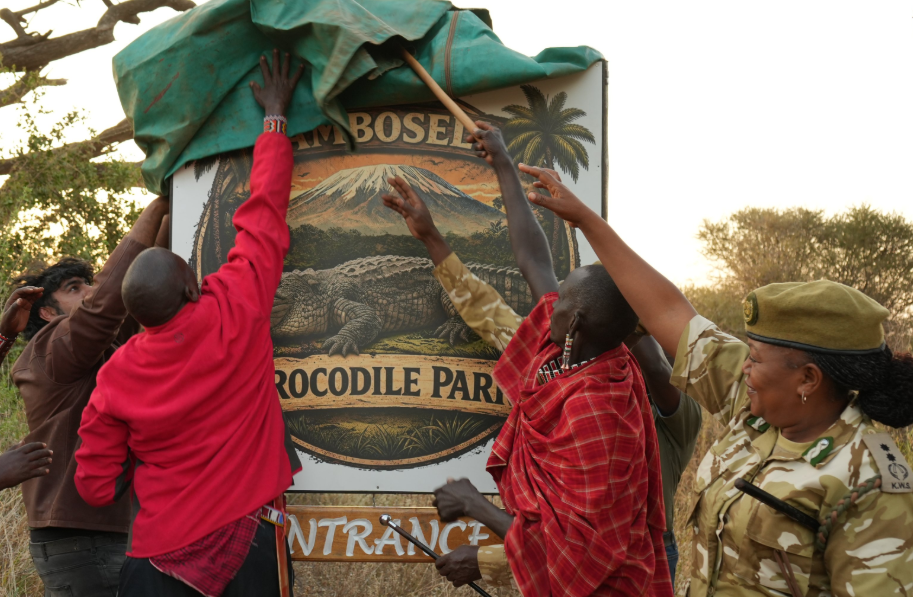
On Monday, June 20, the Kenya Wildlife Service (KWS) announced that it had opened the Amboseli Crocodile Park in Amboseli, Kajiado County.
KWS confirmed that the park is the first crocodile eco-tourism and education facility within the Amboseli ecosystem.
The Amboseli Crocodile Park was commissioned by KWS Chief Licensing Officer Lucy Mwita, who stated that it demonstrates how responsible wildlife farming and utilisation can drive conservation.
Mwita further explained that the establishment would promote environmental education, boost tourism, support local livelihoods and grow Kenya's wildlife economy.
"Wildlife conservation isn't just about safeguarding wild animals; it’s also about creating opportunities for people to conserve them responsibly," the statement read in part.
Read More

At the time of its opening, the park had several crocodiles, which were photographed basking on the shores of a man-made pool of water. KWS informed members of the public that individuals, community groups and investors can apply for licenses to keep certain wildlife species.
It explained that applicants must, however, demonstrate that they can meet the required conservation, welfare and regulatory standards.
The Service reiterated its commitment to ensuring wildlife conservation benefits both nature and people through responsible and well-regulated wildlife utilisation.
Earlier, the High Court ordered the KWS to pay Ksh5 million as compensation to a man who was killed in a crocodile attack. The judge directed that the money be repaid to the family of the late Leonard Asunga Okune.
The Court determined that the Service cannot hold or delay the remittance of approved compensation claims arising from escalated human-wildlife conflict.
It further directed that once a claim has been assessed and approved by the County Wildlife Conservation and Compensation Committee, the compensation becomes a legal entitlement and cannot be withheld through prolonged administrative delays.
Additionally, KWS was told that it could not shift responsibility to the Cabinet Secretary for Tourism or rely on internal government procedures to justify the delay.
The Court further added that public institutions are required to perform their statutory duties fairly, efficiently and in compliance with the directions of the law.