Editor's Review
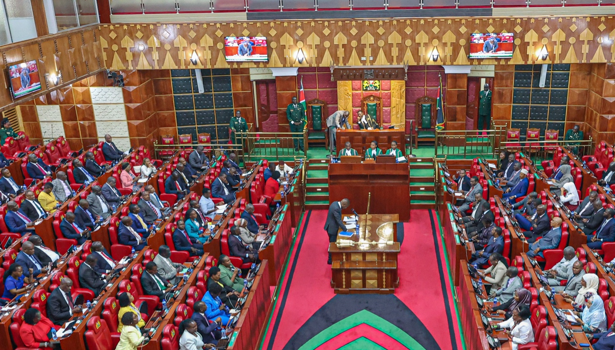
The National Assembly is set to consider six Bills seeking to introduce wide-ranging reforms across the education sector.
The National Assembly is set to consider six Bills seeking to introduce wide-ranging reforms across the education sector.
According to an update issued on Tuesday, August 11, the six Bills, sponsored by Majority Leader Kimani Ichung’wah, have been introduced in the House and seek to establish new legal and institutional frameworks for different aspects of the education system.
The Bills have been committed to the Committee on Education for public participation.
The Basic Education Bill (National Assembly Bill No. 50 of 2026) proposes changes to the legal framework governing basic education, including the administration and governance of institutions, quality assurance and standards, special needs education and the management of education information.
The Kenya National Educational Assessments Council Bill (National Assembly Bill No. 51 of 2026) proposes a new framework for national assessment and seeks to replace the existing legal framework governing the Kenya National Examinations Council.
Read More
The proposed assessment framework seeks to move national assessment beyond an examination-centred approach by providing for competency-based assessment.
It also proposes the use of electronic assessment and measures aimed at curbing examination malpractices.
The Kenya Institute of Curriculum Development (Amendment) Bill (National Assembly Bill No. 54 of 2026) seeks to redefine the mandate of the curriculum development agency and remove overlaps in its functions.
Under the proposed amendments, the Institute's mandate would focus on basic and teacher education, alongside changes to its governance structure.
Teacher preparation and professional development are addressed under the Pre-Service Education and In-Service Training Bill (National Assembly Bill No. 52 of 2026).
The Bill seeks to establish a dedicated statutory framework for the training and professional development of teachers.
It also provides for institutions and structures through which pre-service and in-service teacher education would be coordinated.

The Tertiary Education, Placement and Funding Bill (National Assembly Bill No. 49 of 2026) proposes changes to the manner in which students are placed and financed in universities, colleges and technical and vocational education and training institutions.
One of the key proposals is the establishment of the Tertiary Education Funding Authority (TEFA) as a central body for tertiary education financing.
The proposed framework would bring together functions currently undertaken by the Higher Education Loans Board, the Universities Fund and the TVET Fund, with the aim of creating a more coordinated system of student financing.
The Bill also proposes changes to the role of the Kenya Universities and Colleges Central Placement Service (KUCCPS) in student placement while establishing a new statutory framework for tertiary education funding.
The Kenya National Qualifications Framework (Amendment) Bill (National Assembly Bill No. 53 of 2026) seeks to strengthen the national system for recognising and regulating qualifications.
Among the proposed measures is the establishment of a registration framework for institutions that award qualifications, as well as the development of a national qualifications database.
Elsewhere, the National Council for Persons with Disabilities (NCPWD) has provided an update on the development of regulations aimed at implementing provisions of the Persons with Disabilities Act, 2025.
In a statement on Tuesday, the council said it has developed three sets of regulations covering the registration of persons with disabilities, adjustment orders, and income tax exemptions for persons with disabilities, their parents and guardians.
The three regulations are the Persons with Disabilities (Registration) Regulations, Persons with Disabilities (Adjustment Orders) Regulations, and Income Tax (Persons with Disabilities, Parents and Guardians' Tax Exemptions) Regulations.
NCPWD said the Registration and Adjustment Regulations have made significant progress, while consultations are still ongoing on the regulations dealing with income tax exemptions.
"The Registration and Adjustment Regulations have progressed well, while the Income Tax Regulations are still undergoing finalization through consultations with the National Treasury and the Kenya Revenue Authority (KRA). We look forward to concluding these consultations and finalizing the draft Income Tax Regulations," the statement read.
NCPWD said the next stage after finalization will involve public participation, allowing persons with disabilities and other stakeholders to examine the proposed regulations and provide their input before they are formally concluded.
"Once the regulations have been finalized, NCPWD will proceed with public participation, providing persons with disabilities and other stakeholders with an opportunity to review the proposed regulations and give their views and recommendations before the regulations are finalized," the statement added.