
Editor's Review
Nairobi's public hospitals are set for significant changes in governance and management following the coming into force of the Nairobi City County Health Services and Management Act, 2026.
Nairobi's public hospitals are set for significant changes in governance and management following the coming into force of the Nairobi City County Health Services and Management Act, 2026.
In a statement on Thursday, August 20, the Nairobi County Government said the new legislation gives Level Five hospitals greater autonomy in handling their finances, staff and physical resources.
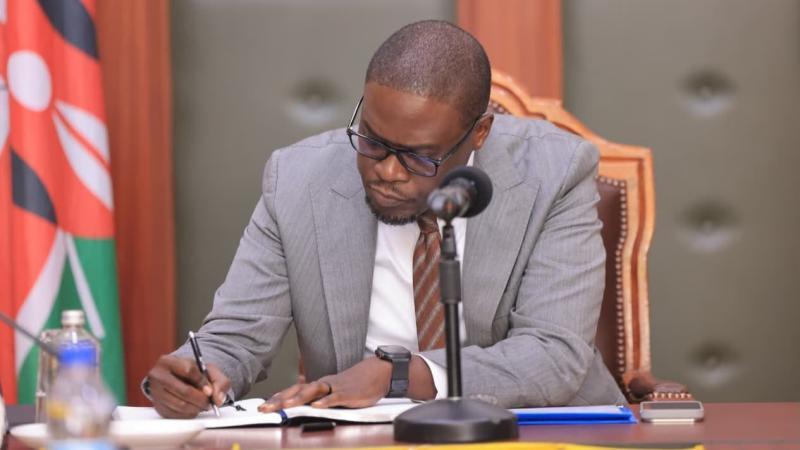
The law, assented to by Governor Johnson Sakaja on August 14 and taking effect on August 19, establishes each Level Five county hospital as a county entity.
The facilities will be overseen by Hospital Management Boards and led by Chief Executive Officers who will be competitively appointed by the County Public Service Board.
Under the new framework, the CEOs will serve as accounting officers and take charge of the day-to-day running of the hospitals, including budgeting, procurement, staffing, financial management and performance.
Read More
The facilities will also be responsible for preparing and implementing strategic plans, annual work plans and budgets, while continuing to comply with public finance and audit requirements.
The Act places responsibility for the efficient use of hospital resources directly on the management structures of each facility.
"Every County Hospital (Level 5) shall be a County entity managed in accordance with this Act by the respective Hospital Management Board and the Chief Executive Officer and be responsible for the efficient, effective and economical management of its financial, human and physical resources," the statement read.
The legislation also gives Level Five hospitals responsibility for managing funds allocated to them or generated through their operations.
However, the hospitals will still be required to operate within the requirements of the Public Finance Management Act and other applicable laws.
"The hospital shall receive, administer and account for funds allocated or accruing to the hospital in accordance with this Act and the Public Finance Management Act, 2012," the statement added.
The Act also sets out a range of rights for patients, including access to emergency care, privacy, dignity and professional treatment.
It provides that every patient is entitled to the highest attainable standard of health and that emergency treatment cannot be denied by a first-contact healthcare provider.
Notably, providers capable of offering emergency care who fail to do so may face a fine of up to Ksh1 million, imprisonment for up to 12 months, or both.
"Every patient has the right to the highest attainable standard of health to be treated with professional standard of care and to be treated with dignity, respect and have their privacy respected," the statement further read.

At the same time, the new law introduces protections for healthcare personnel by requiring safe working environments and recognising their right to decline treatment involving physically or verbally abusive or sexually harassing patients.
The Act specifically places an obligation on healthcare facilities to minimise risks faced by their workers, patients, families and property.
"A healthcare personnel shall have the right to a safe working environment that minimizes the risk of disease transmission and injury or damage to the health care personnel, their clients, families and property," the statement noted.
Beyond hospital management and patient rights, the legislation introduces mandatory quality-management systems and provides for regular inspections and audits of health facilities.
It also promotes integrated digital health information systems and greater community involvement in healthcare management.
The law further provides for equitable distribution of health facilities and adequate resources for primary healthcare units, broadening the reforms beyond Level Five hospitals to the wider county health system.
This comes days after Nairobi County has stepped up preparations for the expected El Niño rains after identifying 227 flood hotspots across 17 sub-counties.
According to a statement on Monday, August 17, the preparedness plan brings together several government agencies as the county begins implementing Ksh2.4 billion in drainage and flood-mitigation projects.
The coordination framework brings together the Kenya Red Cross, Kenya Urban Roads Authority (KURA), Kenya National Highways Authority (KeNHA), National Disaster Management Authority, Nairobi County Disaster Management Team, Environment Department, Nairobi Rivers Commission and other agencies.
Governor Johnson Sakaja said the involvement of multiple agencies would enable the county to prepare in advance, coordinate operations and respond more effectively to emergencies.
"This calls for us to prepare together, act early and protect lives and property," he said.
The county has set aside Ksh2 billion of the Ksh2.4 billion allocation for drainage and flood-control works covering 19 roads identified as vulnerable to flooding.
The projects are at an advanced stage, with tenders awarded and contractors expected to begin work once the remaining administrative processes are completed.
The drainage programme is intended to complement existing efforts under the Nairobi Regeneration Programme while addressing recurring flooding along roads and other essential infrastructure.
Sakaja said the investment is intended to provide a lasting solution to Nairobi’s persistent flooding problem by improving the city’s drainage system.
"The Ksh2 billion will support a comprehensive drainage overhaul that complements the ongoing Nairobi Regeneration Programme. Our goal is to permanently address the flooding challenges that have affected the city for many years," he added.


 (1)-1791178178-md.jpg)




 (1)-1791178178-sm.jpg)