Honda has unveiled a plan to revolutionize road construction in Africa through a new startup venture focused on innovative building materials.
In a statement on Tuesday, March 31, the company confirmed the establishment of PathAhead Co., Ltd., a business initiative born out of its IGNITION new business creation program.
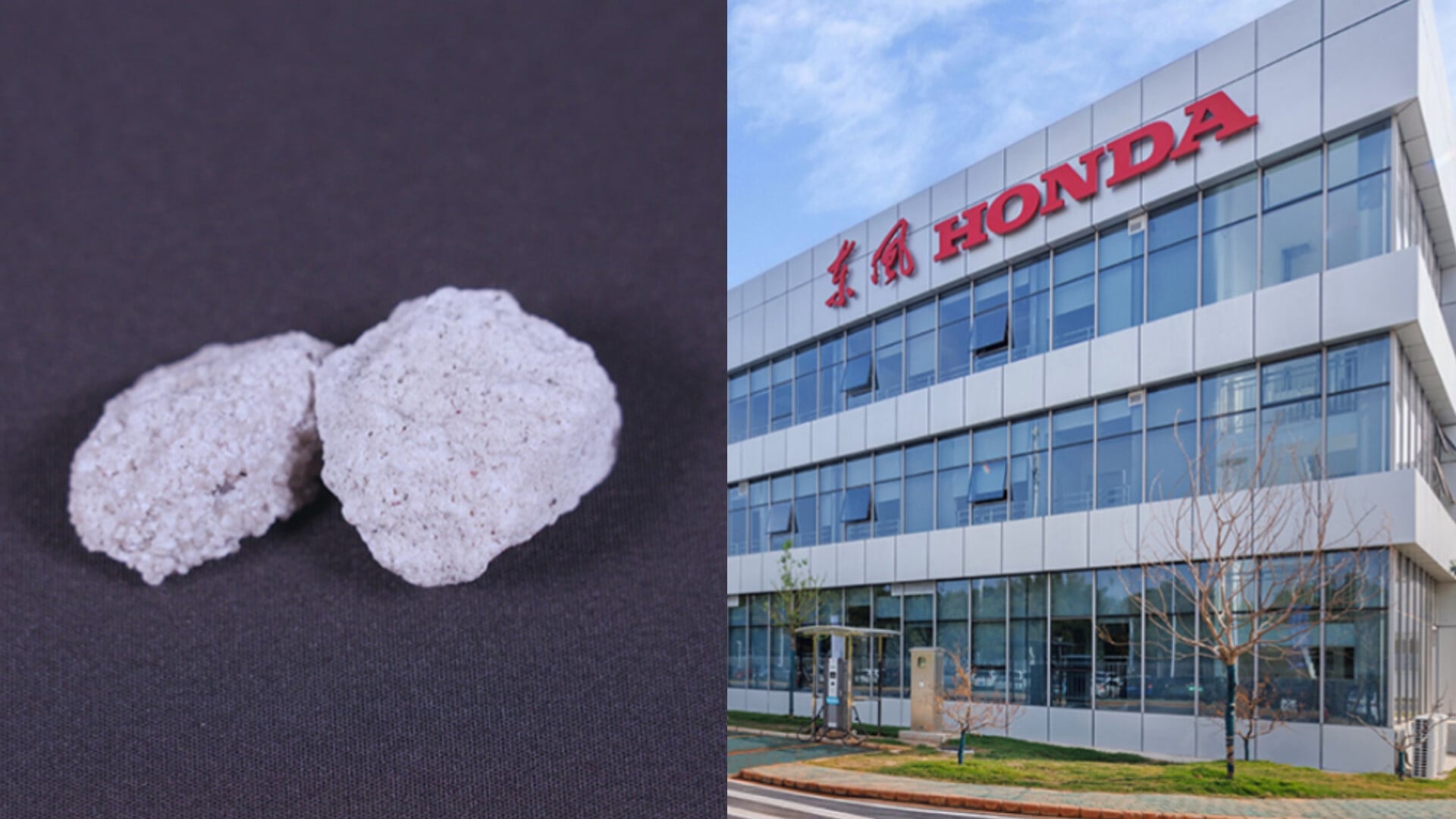
The project introduces a groundbreaking material known as 'Rising Sand,' which is designed to address long-standing infrastructure challenges across the continent, including poor road coverage and inconsistent construction materials.
"PathAhead has developed Rising Sand, the world’s first artificial aggregate made from desert sand. Going forward, the company will work to establish mass-production technology and conduct demonstration testing to verify its workability and durability in asphalt road construction," the company said.
The announcement comes at a time when many African economies are expanding rapidly due to population growth, yet infrastructure development has struggled to keep pace.
Read More
Honda said that with only about 20% of roads paved across the region and existing ones deteriorating, the need for durable and cost-effective materials has become urgent.
The company said Kenya will be at the center of its long-term manufacturing strategy, with plans already mapped out for large-scale production.
"After these steps, the company aims to begin mass production of Rising Sand at its own production plant, scheduled to be built in Republic of Kenya in 2028, and establish a system and capability to ensure stable supply to construction companies in Africa," the company added.
According to Honda, traditional aggregates such as natural sand and crushed stone often vary in quality depending on their source.
PathAhead’s innovation seeks to eliminate this issue by transforming desert sand into a more reliable material.
"PathAhead recognized the potential of desert sand as a locally available resource and developed an artificial aggregate, Rising Sand, that achieves both high cost efficiency and durability," the company explained.
Rising Sand is produced using proprietary technology that converts fine desert sand into uniform, high-hardness aggregate suitable for road paving, concrete, and foundational road layers.
Before full-scale production begins, PathAhead will undertake a phased testing program across multiple African countries, starting with Kenya.
"As the first step toward commercialization, PathAhead will conduct demonstration testing of Rising Sand for road paving applications over a period of approximately three years, first in Kenya starting in 2027, then in Tanzania, followed by South Africa," the company stated.

Honda said the phase will focus on performance under different environmental and usage conditions to ensure the material meets required standards.
"The company will verify workability, durability, and the consistency of quality while considering local climate and traffic conditions in each country, aiming to establish specifications that satisfy the requirements for road pavement materials for mass production," the company further read.
Following successful trials, expansion plans will extend to Tanzania and South Africa.
"Based on the results of the demonstration testing, PathAhead will start mass-production of Rising Sand at a production plant scheduled to be constructed in Kenya in 2028, then in Tanzania, followed by South Africa, with the goal of building a stable supply system through local sourcing and local production," the statement noted.
PathAhead’s leadership emphasized the broader vision behind the initiative, highlighting its potential societal impact.
"I established PathAhead based on my desire to leverage technologies and insights I amassed through such experience to swiftly and directly address challenges facing our society.
"With our end-to-end commitment, from fundamental research to locally rooted real-world implementation, we will leverage the power of our technology and enable people and society to unleash their limitless potential, starting from the ‘roads’ they use," Representative Director and CEO Masayuki Iga said.
Elsewhere, this comes months after Bamburi Cement signed a Ksh32 billion Engineering, Procurement and Construction (EPC) contract with China-based Sinoma CBMI Construction Co., Ltd for the construction of a new clinkerisation factory in Matuga, Kwale County.
In a statement on Tuesday, December 16, 2025, the company said the project is part of Bamburi Cement’s strategy to expand its manufacturing operations, reduce reliance on imports, and support Kenya’s infrastructure development and economic transformation.
The clinkerisation plant will have a production capacity of 1.6 million tonnes per year and will incorporate advanced, carbon-neutral technologies aimed at reducing environmental impact.
Through the project, Bamburi Cement plans to more than double its clinker production from 1 million tonnes to 2.6 million tonnes, while cement production is expected to increase from 1.8 million tonnes to 4 million tonnes annually.
President William Ruto, who witnessed the signing of the agreement, said the government will support the Bamburi Cement project and other similar investments that promote value addition, job creation, and industrial growth.
"The Government of Kenya remains fully committed to supporting this project and similar investments that deepen value addition, create jobs, and strengthen our manufacturing base," he said.
Ruto stated that the cement industry plays a central role in Kenya’s economic development, noting that major infrastructure projects depend on a stable and competitive cement supply chain.
"The cement industry sits at the heart of our economic freedom agenda. Every road, power plant, dam, irrigation canal and factory depends on a reliable, competitive and sustainable cement value chain.
"Projects such as the Bamburi Clinker Line are not isolated investments, they are foundational catalysts for our national transformation," he added.