
Editor's Review
A section of MPs have faulted a 21-year PPP deal between the NTSA and a private consortium led by PesaPrint, describing the revenue-sharing arrangement as unfair.
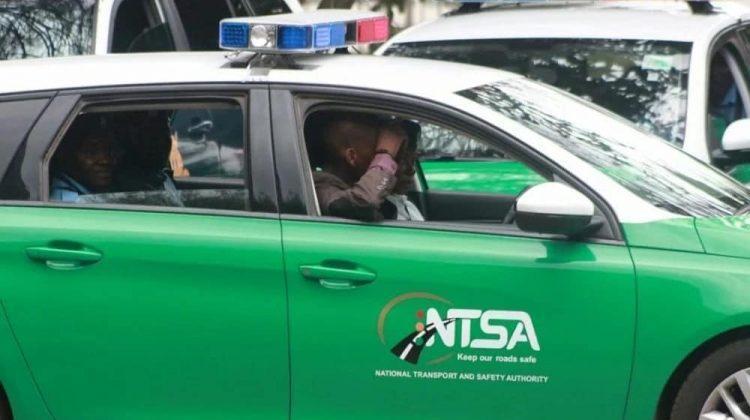
Members of the National Assembly’s Public Debt and Privatization Committee have faulted a 21-year Public-Private Partnership (PPP) deal between the National Transport and Safety Authority (NTSA) and a private consortium led by PesaPrint, describing the revenue-sharing arrangement as unfair and skewed against the public.
The committee, chaired by Balambala MP Abdi Shurie, raised alarm over the structure of the agreement, which focuses on the rollout of smart driving licences and an automated 'instant fine' system.
Legislators noted that the deal would see private partners take about 77.4 per cent of the projected earnings, leaving the government with less than 25 per cent throughout the contract period.
Appearing before the lawmakers, NTSA Director General Nashon Kondiwa defended the decision to adopt a PPP model, pointing to persistent budgetary constraints from the National Treasury.
He explained that under the earlier government-funded system, only 2.7 million licences were issued over nearly nine years, missing the five million target.
Read More
"We were clearly disadvantaged in terms of ability to negotiate because we are not even negotiating our own money; we are negotiating our services and the revenue is going elsewhere," he said.

Kondiwa added that 60 per cent of NTSA’s revenue is surrendered to the Exchequer, a situation he said limits the Authority’s ability to reinvest in key road safety initiatives.
Despite this explanation, MPs rejected the rationale, highlighting the strong financial performance of the previous model.
Between 2017 and 2024, the government invested Ksh1.2 billion and realized Ksh6.7 billion in returns; figures lawmakers said prove that a fully public system is sustainable.
Wajir East MP Aden Daudi criticised the financial assumptions behind the agreement, arguing that it disproportionately benefits private players.
"This is a PPP that is so unfair to the public and so fair to the private part of the equation. Over 21 years, projected revenues are about KSh900 billion against costs of KSh300 billion, that is a 300 per cent profit," he stated.
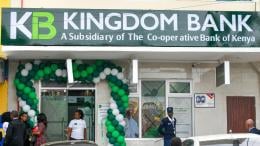
The consortium behind the deal also includes KCB Bank, following its acquisition of National Bank of Kenya.
Lawmakers argued that the technology required to produce smart licences is similar to that used in the issuance of national identification cards, which is handled under a traditional public framework.
The project further outlines plans to install 1,000 surveillance cameras across the country to support automated traffic enforcement.
While MPs acknowledged the urgent need to address road accidents, estimated to cost the economy Ksh460 billion annually, they questioned whether the terms of the deal were proportionate.
"Who in their right mind negotiates away revenue from the Kenyan public? Seventy-seven per cent going to a private entity for 21 years makes no sense," Daudi added.
The committee has since resolved to obtain the final agreement and summon the PPP Unit at the Treasury to explain why competitive procurement procedures may have been bypassed.
This comes days after Deputy President Kithure Kindiki urged the judiciary to reconsider its decision halting the implementation of the instant fines system.
In a statement on Tuesday, April 7, Kindiki stressed that the government’s new traffic enforcement measures were introduced as a response to increasing fatalities on Kenyan roads.
"To suppress the escalation of road fatalities and improve safety on the roads, the Government last month introduced far-reaching enforcement measures," he said.
Kindiki expressed concern that the court’s intervention has stalled the rollout of these measures at a critical time when the government is seeking to reduce accidents.
"Unfortunately the courts issued an injunction against the implementation of these measures a couple of weeks ago," he further said.
Kindiki called for a balance between legal processes and public safety, urging the judiciary to allow the measures to proceed even as the case continues.
"The Government appeals to the judiciary to lift the interim orders or otherwise allow implementation of these measures even as the litigation continues on the merits at the hearing," he concluded.
 (1)-1791708588-sm.jpg)
 (1)-1791175033-sm.jpg)