In 2025, Kenya was a country under strain.
Strikes in key sectors disrupted daily life while waves of protests spread across towns and cities, driven by anger over police brutality, governance failures and unmet promises.
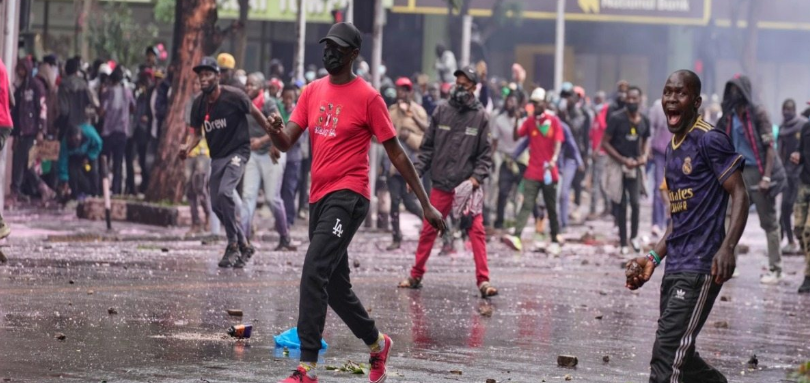
As crowds confronted state power in the streets, tear gas and water cannons became familiar sights, and lives were lost.
With deaths such as that of Albert Ojwang, the year mirrored 2024 in exposing some of the most difficult moments of President William Ruto’s tenure.
Hospitals, schools and public services bore the brunt of prolonged industrial action, leaving millions of citizens caught between policy standoffs and survival.
Read More
At the same time, the protests showed a growing public resolve to challenge the powers that be, even at great personal risk.
The Protests
Finance Bill Anniversary Protests- June 25, 2025

On June 25, 2025, thousands of Kenyans across Nairobi, Mombasa, Nakuru, Kisumu, and other major towns took to the streets to mark the first anniversary of the devastating anti-Finance Bill demonstrations of 2024.
What began as planned marches and vigils to honor those killed in 2024 and demand accountability rapidly escalated into violent confrontations across several cities.
Police responded with tear gas, water cannons, and live ammunition. The clashes between demonstrators and security forces left multiple people dead and hundreds injured that day, mirroring the violence of exactly one year earlier.
The anniversary march recalled June 25, 2024, when protests against the Finance Bill had culminated in demonstrators briefly storming Parliament, with security forces responding with lethal force.
Human rights monitors and media had reported that dozens of people were killed during the 2024 unrest, with hundreds more injured.
In reaction to both the 2024 and 2025 violence, domestic and international rights organizations, religious leaders, and foreign embassies renewed calls for independent inquiries, prosecutions of officers implicated in unlawful killings, and comprehensive reforms to Kenya's policing and crowd-control practices.
Albert Ojwang's murder protests in June 2025

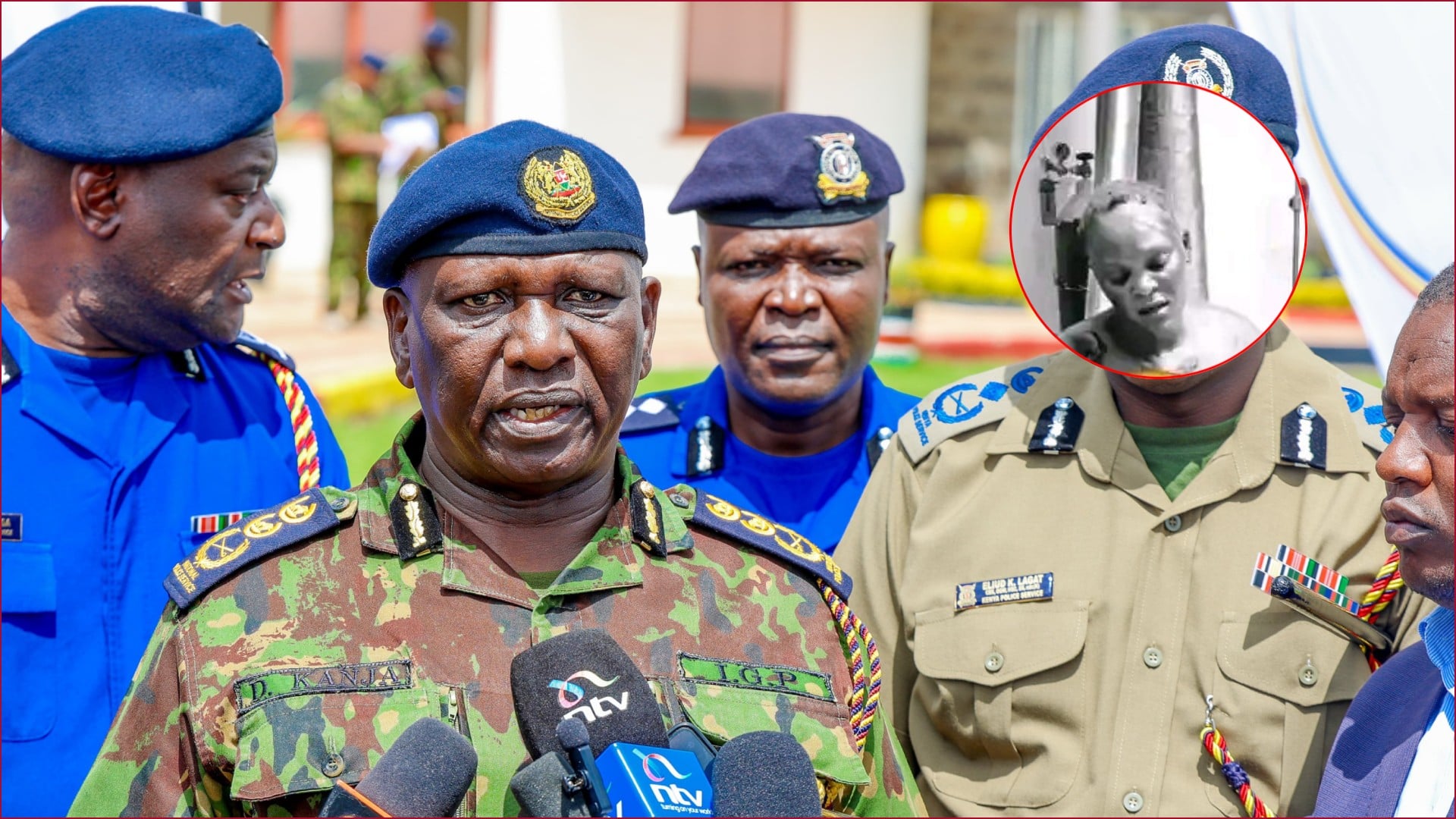
Albert Ojwang was a 31-year-old teacher, blogger, and social media commentator from Homa Bay County. On June 7, 2025, he was arrested in his home village, reportedly over a social media post critical of a Deputy Inspector General of Police Eliud Laga. He was taken from Homa Bay to Nairobi and detained at the Central Police Station.
The following morning, on June 8, Ojwang was found dead, a development that saw the country up in arms against the National Police Service. Police initially claimed he died after allegedly hitting his head against a cell wall, implying suicide or self-inflicted harm.
However, a post-mortem examination revealed a different story: forensic experts found evidence of blunt-force trauma, neck compression, and multiple soft-tissue injuries; consistent with assault, not a suicide attempt.
Ojwang's death triggered widespread outrage and protests in Nairobi and other areas, with demonstrators condemning what many called a brutal killing by those meant to protect citizens.
As crowds marched, tensions escalated. In some instances, anger boiled over with reports of vehicles set ablaze and at least one police station attacked.
The outrage was amplified because Ojwang's death occurred at a police station.
In response to public pressure, the Independent Policing Oversight Authority (IPOA) launched a detailed investigation, recovering blood-stained clothes, water bottles, a jug, and a tumbler from near the holding cell as potential evidence of violence.
The Kenya Police Service suspended key officers who were on duty when Ojwang died, including the duty officer, cell guard, and Officer Commanding Station (OCS) who is already in court facing murder charge.
The government's Interior Ministry announced that all police stations across Kenya would be fitted with CCTV cameras, a reform measure prompted directly by Ojwang's killing.
Saba Saba Day Protests- July 7, 2025
Saba Saba Day marks the anniversary of the 1990 pro-democracy protests in Kenya that helped end one-party rule and usher in multiparty democracy.
For 2025, many young people and civil society groups planned nationwide demonstrations on July 7 to protest worsening economic conditions, poor governance, corruption, police brutality, shrinking civic space, and to demand accountability from the government.
Ahead of the protests, the National Police Service mounted roadblocks on all major routes leading into key city centers, including Nairobi's CBD. Routes such as Thika Road, Waiyaki Way, Kenyatta Avenue, and Uhuru Highway were blocked, with only "essential" vehicles allowed through.
Public transport and matatus were largely grounded, and many offices and institutions closed in anticipation.
In many towns and cities, businesses shuttered, public transport shut down or was delayed, and widespread disruption to day to day activities was witnessed.
As protests commenced on July 7, police fired live rounds, water cannons, and tear gas to disperse demonstrators in Nairobi and other parts of the country.
According to the Kenya National Commission on Human Rights (KNCHR), the initial confirmed toll was at least 10 dead, 29 injured, and 37 arrests across 17 counties by early evening.
However, other reports revised the death toll upwards: by July 9, human rights monitors and civil society organizations put the number at at least 31 dead, 107 wounded, and 532 arrests nationwide.
The Strikes
University Staff Strike (49 Days)
University staff unions brought learning at public universities across Kenya to a standstill with a 49-day strike that began in September 2025.
The industrial action, led by the Universities Academic Staff Union (UASU), the Kenya Universities Staff Union (KUSU) affected thousands of students nationwide.
The strike was triggered by the government's persistent failure to honor obligations worth Ksh7.9 billion owed under the 2017-2021 Collective Bargaining Agreement (CBA). Despite numerous meetings and formal submissions, the unions had exhausted all dialogue channels, accusing the government of undermining agreements reached after extensive negotiations.
During the strike, a court order directing lecturers to suspend the industrial action and engage in conciliatory talks with the Education Ministry was ignored by the unions, who maintained their position until a satisfactory agreement was reached.
The breakthrough came on November 5, 2025, following intervention by the National Assembly's Committee on Education. UASU Secretary General Constantine Wasonga announced that the unions had reached an agreement with the government on the disbursement of the outstanding amount in two installments.
Under the return-to-work formula, the government would disburse Ksh3.8 billion between November and December 2025, with the remaining balance to be settled by July 2026. Wasonga assured students that lecturers were committed to making up for lost time by extending the current semester.
However, he issued a stern warning that failure by the government to meet its obligations would result in the immediate resumption of strike action.
Five-Month Kiambu Doctors' Strike
 File photo of Kiambu Governor Kimani Wamatangi and KMPDU Secretary General Davji Atellah.
The five-month doctors' strike in Kiambu County, which began on May 26, 2025, ended following a deal between the Kenya Medical Practitioners, Pharmacists, and Dentists Union (KMPDU) and the county government.
The deal was reached after a mediation process led by the Council of Governors (COG). The COG Whip and Tharaka Nithi Governor Muthomi Njuki, who chaired the meeting, confirmed that both parties had agreed to a settlement that would see doctors resume work.
Under the agreement, the county government committed to paying one month's salary for the strike period and immediately releasing October salaries, with other pending payments to be cleared in installments.
The doctors' strike had been triggered by demands for better pay, improved working conditions, and delayed promotions.
It had severely disrupted services in public hospitals across Kiambu County, forcing many patients to seek medical attention in private facilities and neighbouring counties.
Nairobi County Doctors' Strike (39 Days)
Nairobi County doctors had kicked off their strike on February 28, 2025, following a series of grievances including illegal salary stoppages and dismissals, chronic salary delays, stalled promotions, unpaid gratuities, and delayed confirmation letters.
The doctors revealed that they had conducted numerous engagements with the Nairobi County government for the past two years over the implementation of the Collective Bargaining Agreement (CBA), but the engagements had borne no fruit.
The Kenya Medical Practitioners and Dentists Union (KMPDU) reached an agreement with the Nairobi County government on April 8, 2025, bringing a 39-day doctors' strike to a close. The deal was led by KMPDU Secretary General Davji Atellah and Nairobi County Governor Johnson Sakaja.
Among the demands addressed by the deal were the reinstatement of dismissed county doctors, the issuance of 369 Permanent and Pensionable (PnP) letters by May 1, 2025, clearing Mama Lucy Hospital arrears, giving gratuity to defunct Nairobi doctors by July, a 4 percent mortgage deal, salary harmonization, and the promotion of doctors by mid-May.