Editor's Review
I have never looked forward to a new year the way I look forward to 2026 - President Ruto.
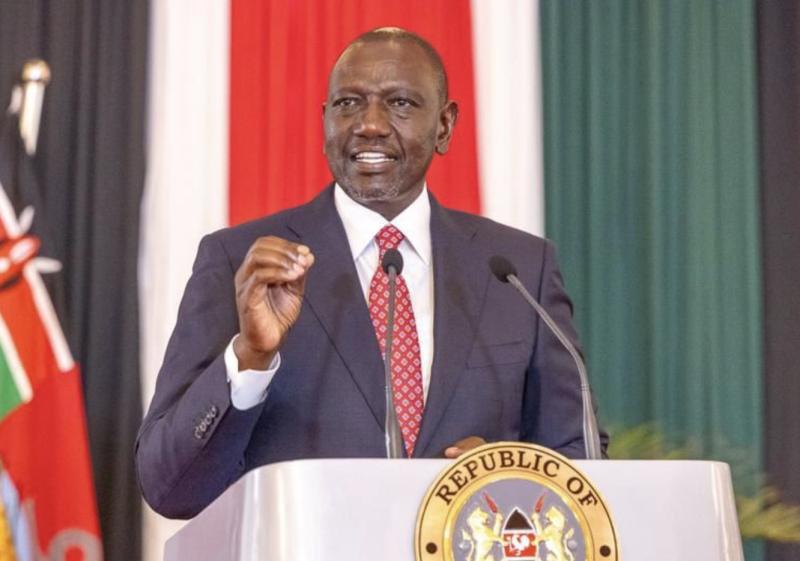
President William Ruto on Wednesday, December 31, delivered his New Year's address from Eldoret State Lodge in Uasin Gishu County. Here is the full speech;
1. I have never looked forward to a new year the way I look forward to 2026.
2. I do not say this lightly. I say it from a place of conviction, born of what we have achieved together, the foundations we have laid, and the certainty that those foundations now allow us, finally, to reach for our highest ideals as a nation.
3. This has been a year that tested our resolve and our collective purpose, a year that demanded sacrifice and called for unity. As your President, I am proud to say that together, we rose to the occasion.
4. When I addressed the nation at this time last year, I outlined the decisive measures we had taken in 2023 and 2024 not only to stabilise our economy, but also to begin turning it around. I said then that 2025 would be the year when we would start earning the dividends of the hard work we had undertaken together since 2023. And indeed, looking back, this has been the year in which our deliberate choices, sometimes difficult and often demanding, began to pay off.
Read More
5. For the first time in a long while, Kenya is not guessing. We are not drifting. We are not gambling. We have set our targets. We have begun the journey. And we now have a clear roadmap to make 2026 a defining year in Kenya’s history.
6. Tonight, fellow Citizens, this is not just a customary New Year's address. It is a moment that calls on all of us to seize the opportunity before us, to walk together, as one people, and to complete a journey that has been delayed for far too long.
7. 2026 will be a watershed year in the story of our Republic. A turning point in our march from promise to prosperity. A year that future generations will look back on and say; that is when Kenya changed course.
8. We can speak of this moment with confidence because we are not starting from nothing. We are building on a solid foundation already laid.
9. Step by step, we confronted difficulties, carved out opportunities, and laid a strong and formidable base for the future of our country.
10. But the story of 2025 is not merely about numbers or statistics. It is about people, the hustlers; the mama mbogas, the boda boda riders, the farmers, the traders, the entrepreneurs, and the workers, whose toil, patience, and sacrifice have begun to yield tangible results. It is the story of ordinary citizens whose lives have quietly changed in very extraordinary ways.
11. Kenyans like Mama Jerusha Muthoni, whose dream of owning a decent home finally came true. For years, her family lived in a single crowded room, exposed to rain and cold, indignity and fear, never knowing what tomorrow might bring. In 2025, that chapter ended. She moved into a modern, affordable home with clean water, electricity, a proper toilet, and cooking gas. For the first time, her children have space to study. Dignity replaced survival.
12. The foundations we have laid have also enabled millions to access quality health services under our universal healthcare programme. Today, more than 29 million Kenyans are registered under the Social Health Authority. Across the country, stories of care, relief, dignity, and support are being told, quietly and powerfully, by ordinary citizens whose lives have been transformed.
13. Stories like that of Naomi Mutendwa Kilunda, a single mother of six, who watched her 17-year-old daughter, Lydia, struggle daily with a severe and abnormal breast overgrowth that caused pain, limited mobility, and emotional distress. After learning about the SHA through her local assistant chief, Naomi enrolled and registered her children as dependents. Lydia was treated at Kenyatta National Hospital, where SHA fully covered the cost of her specialised corrective surgery, amounting to KSh 168,000, as well as all post- operative follow-up care. No out-of-pocket payment was required. Lydia has since recovered well, regained her confidence and dignity, and is preparing to resume her education in this new year as she joins Form Four.
.jpeg)
14. In Kisumu, Christine Awino Onyango, a 41-year-old widow, mother of five, and a mama mboga, faced a life-threatening diagnosis of Stage II oesophageal cancer. As a registered SHA member contributing KSh 7,000 annually, Christine received comprehensive treatment at Jaramogi Oginga Odinga Teaching and Referral Hospital. SHA covered medical costs exceeding KSh 250,000, including diagnostic tests, specialised surgery, five days of intensive care, and inpatient and post-operative management. Her chemotherapy, scheduled to begin on January 15, will also be fully covered.
15. These are not isolated stories. They reflect the experiences millions of other Kenyans who have benefited from outcomes of deliberate policy choices.
16. Ladies and gentlemen, for too long, farming was a gamble rather than an investment. Farmers planted and prayed, never certain whether the harvest would even cover costs. That story has changed. With affordable fertiliser and certified seeds reaching millions, yields have improved significantly.
17. Food production rose significantly. Maize harvests are on course to reach historic highs. Tea earnings surged. Coffee prices nearly doubled. Sugar production grew as imports fell. Livestock, dairy, leather, and meat exports expanded steadily.
18. We expanded educational opportunity through reformed, merit- based systems. And we helped nearly a million Kenyans access jobs through housing, labour mobility, and the digital economy, with many more opportunities coming in 2026 and beyond.
19. But even as we acknowledge this progress, 2025 was not defined by success alone. It was also a challenging year, one that tested our unity and reminded us of the responsibility that comes with freedom and democracy. The events of June and July, and the regrettable loss of lives and destruction of property, left a stain on our national conscience.
20. Our Constitution guarantees every Kenyan the right to express themselves, to assemble, and to participate freely in our democracy. But it also imposes duties on citizens and leaders alike to uphold the rule of law, protect life and property, and safeguard peace and stability. Rights and responsibilities are inseparable.
21. In a thriving democracy, debate and dissent are legitimate and necessary. But our Constitution does not license violence, destruction, or criminality. Differences must never degenerate into disorder that threatens the peace we cherish.
22. Those entrusted with leadership carry a heightened duty to unite rather than divide, to build rather than burn. Kenya is bigger than any individual, any office, or any ambition. This Republic belongs to all of us, and because it belongs to all of us, we share a duty to protect it.
23. Ladies and Gentlemen, as I announced during the State of the Nation Address, 2026 marks the moment when our journey to transform Kenya into a first-world economy begins in earnest. What matters now is execution.
24. But to speak honestly about the future, we must begin with the truth about the present. Today, nearly four in every ten Kenyans live below the poverty line. That is more than twenty million of our people, families working hard, yet struggling to meet basic needs.
25. While we have undertaken deliberate policy interventions to create employment under the Bottom-Up Economic Transformation Agenda, too many of our young people, especially those entering the job market, still wake up every morning without work to go to. This is the reality we are determined to change.
26. When a nation chooses to organise its economy around work, production, and exports, when it invests deliberately in infrastructure, energy, and skills, and when it finances growth intelligently, not recklessly, something profound happens.
27. Poverty recedes, jobs expand, and dignity rises.
28. This is not a theory. History shows us that countries like South Korea, Singapore, and Malaysia made national transformation a deliberate choice. Each organised its economy around work, industry, exports, and skills, investing deliberately in infrastructure and people. Poverty fell. Jobs grew. Strong middle classes emerged.
29. These countries were not spared hardship; they prevailed despite it. Their success was built on elevated ambition, relentless determination, and sustained action over time. That is the path we have chosen for Kenya, and that is the future we are determined to build.
30. So let us be clear about our goals. We are committing ourselves to a measurable national mission:
- To cut the number of Kenyans living below the poverty line by half, lifting millions into dignity and opportunity.
- To cut unemployment by half, ensuring that millions of our citizens are productive, earning, and contributing.
31. And we will do this without crushing taxpayers and without saddling our children with unsustainable debt.
32. That is why, in January 2026, we will fully establish and operationalise the National Infrastructure Fund and the Sovereign Wealth Fund; key instruments designed to underpin Kenya’s transformation.
33. The National Infrastructure Fund will serve as the central engine for aligning our financial resources with Kenya’s development priorities.
34. Through innovative mobilisation of domestic resources, strategic monetisation of mature public assets, democratisation of ownership through capital markets, and the disciplined growing and deployment of national savings, we will unlock large-scale private sector capital while reducing reliance on borrowing and taxation.
35. All proceeds from privatisation will be ring-fenced and invested strictly in public infrastructure projects that generate and preserve long-term value. Every shilling invested through this Fund will crowd in multiple additional shillings from long-term investors in the private sector.
36. Alongside this, the Sovereign Wealth Fund will, for the first time, secure intergenerational equity, saving for the future, protecting the nation from external shocks, and investing strategically to grow national wealth, giving full effect to Article 201 of our Constitution.
37. Together, these two Funds will enhance by multiples the financing of Kenya’s development agenda and accelerate our bottom- up transformation as we charge forward, full steam, to economic freedom and a first-world economy.
38. Through this framework, 2026 becomes the year of execution at scale. In this new year, we will complete the Talanta Sports Complex, ready to host major international sporting events, including the 2027 AFCON. We will also complete the state-of-the-art Bomas International Convention Centre, restoring it as a premier venue for national and international conferences, and positioning Kenya as the region’s hub for international events.
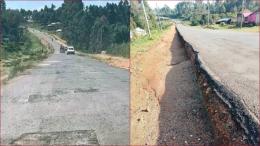
39. We will accelerate the tarmacking of the 6,000 KMs of roads already contracted and underway across the country, including the Rironi- Mau Summit Road, which will be completed and open to traffic by mid 2027. At the same time, we will start the construction of several new highways countrywide.
40. Ladies and gentlemen, in this new year, we will also commence the construction of the Naivasha-Narok-Bomet-Nyamira-Kisumu-Malaba Standard Gauge Railway, creating a modern transport and logistics corridor linking Kenya to the east and central Africa region.
41. Equally, we will launch the Galana-Kulalu Dam, whose contract was signed yesterday, and several others as part of the expansion of our irrigation infrastructure across the country, with the ultimate objective of bringing 2.5 million acres of land under irrigation.
42. We will also begin the construction of a modern, world-class airport at the Jomo Kenyatta International Airport, to anchor our nation as the aviation capital of our region and to boost our trade and tourism sectors.
43. Ladies and Gentlemen, changing and transforming a country does not require a miracle. It requires a clear and bold vision, and a leadership equal to that vision. The nations that have succeeded were not exceptional by accident; they were deliberate by choice.
44. Fellow citizens, allow me to address a silent but deadly crisis confronting our nation today. Alcohol and drug abuse have become a clear and present danger to Kenya’s health, security, and economic future.
45. One in every six Kenyans aged between 15 and 65, that is over 4.7 million people, is currently using at least one drug or substance of abuse. This is no longer a marginal issue; it is a national emergency.
46. The burden falls heaviest on men and young people. One in every three Kenyan men in this age group uses drugs or alcohol. Among young adults aged 25 to 35, our most productive population, one in five is affected. Over 1.5 million young Kenyans are being pulled away from opportunity into dependency.

47. Alcohol remains the most widely used substance, with more than 3.2 million current users. Initiation often occurs between 16 and 20 years, and in some cases as early as seven, exposing children to lifelong harm before adulthood begins.
48. Kenya cannot grow, compete, or remain secure when millions are trapped in addiction. This crisis demands decisive national action.
49. Accordingly, going into the new year, the Government will confront alcohol and drug abuse as a national development and security emergency, backed by political will, expanded enforcement capacity, and coordinated action across the Government.
50. We will establish a strengthened Anti-Narcotics Unit within the Directorate of Criminal Investigations, with operational capacity comparable to the Anti-Terrorism Police Unit. Fully resourced with modern surveillance, intelligence, forensic, and financial- investigation capabilities, the unit will operate as a permanent, multi- agency formation working closely with the National Authority for the Campaign Against Alcohol and Drug Abuse (NACADA), the National Intelligence Service, Dorder Management Agencies, County Governments and International Partners.
51. To support this expansion, the unit’s strength will be boosted from the current 200 to 700 officers through new recruitment and redeployment, all trained and equipped for nationwide operations against high-level traffickers, financiers, and organised criminal networks.
52. Asset tracing, seizure, and forfeiture will become central to every narcotic and illicit alcohol investigation. The Assets Recovery Agency will be engaged from the point of seizure, and all assets used in or acquired through these activities, including cash, vehicles, land, buildings, and businesses, will be treated as proceeds of crime, promptly frozen, prosecuted, forfeited to the State, and redirected to rehabilitation, prevention, and treatment programmes.
53. Recognising these crimes as organised criminal enterprises, I urge the Judiciary to consider establishing specialised courts to fast-track cases, and I will consult with the Chief Justice on how the Executive can support this effort, including resourcing, while fully respecting judicial independence.
54. Border security will be strengthened through enhanced capacity for the Border Patrol Unit and the National Police Service, including modern surveillance technologies to monitor movement across our borders.
55. Finally, to safeguard integrity within the security services, any government official, including security officers, found culpable of facilitating, protecting, or colluding with drug traffickers or illicit alcohol networks will be prosecuted and dismissed forthwith from service.
56. Fellow citizens, this struggle is deeply personal to me, as your President, and as a parent. No law can replace parental guidance, community values, or early intervention in the lives of our children.
57. We must choose to be present in the lives of our children; to guide them, protect them, and intervene early, before addiction takes hold. If we fail to act, we fail our children; if we rise to this duty, we secure not only their future, but the moral strength and destiny of our nation.
58. And just as we demand responsibility in our homes, we must demand the same, at an even higher standard, from those entrusted with leadership in our public life.
59. I reiterate that 2026 and the years beyond will usher in a period of accountability. Leadership will be judged not by promises made, but by performance delivered; not by the exuberance of youth or the longevity of service, but by results and a proven track record.
60. Those entrusted with the privilege of leadership will be held to account for the service they render and the outcomes they deliver to the people; not for excuses crafted to mask a poverty of ideas or lack of ambition. The measure of leadership is impact, and that standard will apply to all.