Editor's Review
KHRC has issued a seven-day ultimatum to the ODPP, demanding action over a series of alleged police brutality and killings reported across the country since the beginning of the year.
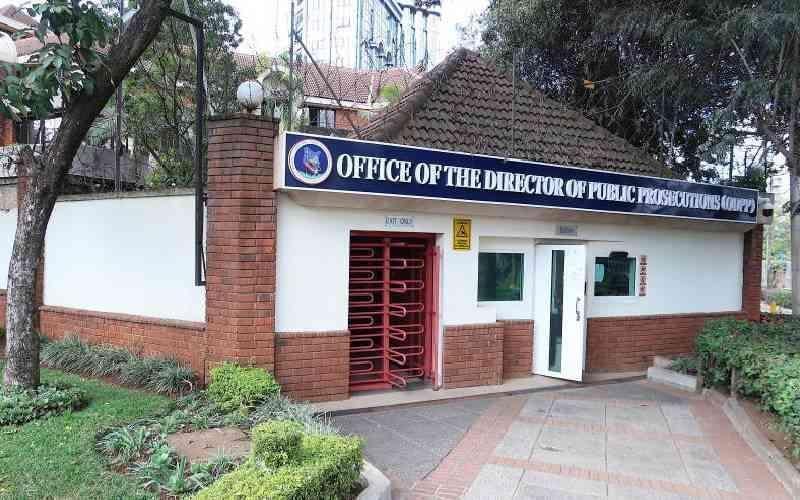
The Kenya Human Rights Commission (KHRC) has issued a seven-day ultimatum to the Office of the Director of Public Prosecutions (ODPP), demanding action over a series of alleged police brutality and killings reported across the country since the beginning of the year.
In a statement on Wednesday, February 11, the rights lobby detailed multiple fatal shootings and injuries it says point to a pattern of excessive use of force by law enforcement officers.
It outlined fatal shootings that occurred later in January and early February.
"Since the start of the year, Kenya Human Rights Commission (KHRC) has documented at least seven police killings across the country. The first was on January 1, when 14-year-old Dennis Ringa was shot dead in Mombasa. This was followed on January Il by the killing of Shukri Adan, 20, in Mukuru kwa Njenga, Nairobi.
"On January 18, police shot and killed George Gathu Matheri, 40, in Nyeri. A day later, in Kakamega, police killed Godfrey Muyonga, 52, and Benedict Isiakali, 34, and injured another man. On February I, two more men, James Muraga Maina, 29, and Daniel Nudhu Njoki, 45, were killed in Kahawa West, Nairobi," the statement read.
Read More
Beyond the fatalities, KHRC said it had also documented several cases of injuries allegedly resulting from police brutality in different parts of the country.
"KHRC has also documented multiple cases of injury resulting from police brutality. On January 10, police officers in Nandi attacked and injured youth who were playing pool. Three days later, police brutally assaulted Francis Nzau in Kahawa West, Nairobi. On January 20, police shot and injured a man in Mukuru kwa Njenga, Nairobi, during protests over demolitions," the statement added.
The rights body argued that the conduct of officers in the cited cases contravenes constitutional provisions governing policing standards and the protection of fundamental rights.
"Articles 29 and 244 of the constitution impose an obligation on police officers to discharge their duties in a professional manner, with due regard to human rights and the rule of law. However, based on the evidence, they have violated constitutional provisions, including the right to life as enshrined under Article 25," the statement further read.

While acknowledging the role of oversight institutions, KHRC expressed dissatisfaction with the pace of investigations by the Independent Policing Oversight Authority (IPOA).
"While KHRC acknowledges that the Independent Policing Oversight Authority (IPOA) has initiated investigations into some of these incidents, we note with great concern the slow pace of its investigations, which continue to undermine victims' pursuit of justice and accountability," the statement continued.
The commission went further to demand leadership changes at the National Police Service, placing responsibility on the Inspector-General.
It also called for criminal accountability not only for officers directly involved but also for their superiors.
"KHRC demands the immediate resignation of Inspector-General of Police, Douglas Kanja, in light of his failure to stop systemic abuse and end a culture of impunity.
"KHRC further calls for the arrest and prosecution of all culpable officers who pulled the trigger or brutalized victims. The same accountability must extend to police commanders under whose watch these crimes occurred," the statement added.
Finally, the commission issued an ultimatum to the Director of Public Prosecutions and warned against non-compliance.
"Additionally, KHRC gives the Director of Public Prosecutions, Renson Ingonga, seven days to institute proceedings against the culpable officers; failing which, KHRC will pursue private prosecution," the statement concluded.
Elsewhere, this comes barely a day after the Kenya Medical Training College (KMTC) spoke out following the fatal shooting of a student, Sheryl Adhiambo, linked to its Mathari Campus.
In a show of solidarity, KMTC CEO Kelly Oluoch visited the campus on Tuesday, February 10, to stand with the grieving community and address student leaders and staff during a sombre gathering.
The atmosphere was heavy with grief as students and faculty gathered to mourn the tragic loss of Sheryl Adhiambo, a first-year student remembered as vibrant and full of promise.
"The loss of Sheryl Adhiambo is a heartbreaking blow to our entire KMTC community. To her fellow students, please know that in this difficult season, you are not walking alone. The College is committed to providing the psychosocial support needed to help you navigate this tragedy," he said.
On behalf of KMTC, Oluoch conveyed condolences to Sheryl’s family, friends, and all who knew her.
He said the circumstances surrounding the incident are subject to ongoing official processes, noting that the college has engaged relevant independent oversight institutions and will continue to cooperate fully.
Oluoch also reaffirmed KMTC’s commitment to continued support for Mathari Campus, including strengthening student welfare and counselling services.