
Editor's Review
A new report on Kenya's media industry has revealed a widening gap between growing digital audiences and the ability of media organisations to generate sustainable revenue online.
A new report on Kenya’s media industry has revealed a widening gap between growing digital audiences and the ability of media organisations to generate sustainable revenue online.
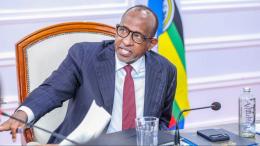
Presenting the findings on Friday, February 13, under the theme Navigating the Digital Reality: Monetisation Challenges and Opportunities for Kenyan Media in the Digital Economy, Media Council of Kenya CEO David Omwoyo said the sector is undergoing structural change driven by shifting audience behaviour and technological disruption.
"Traditional revenue models, particularly advertising and have given in," the report pointed out, signalling a sharp decline in legacy income streams that once sustained many media houses.
The study noted that rapid digital transformation has fundamentally altered how content is produced, distributed and consumed.
"Global digital technologies have fundamentally reshaped how we generate, produce and distribute media content, creating an urgent need for innovation," the report added.
Read More
It further warned that the industry faces serious long-term risks as organisations increasingly rely on external digital platforms for visibility and revenue.
At the same time, the audience data presented in the report shows Kenya has become a predominantly mobile-first media market.
According to the report, over half of the audience are prioritising social media platforms such as Facebook, TikTok and X.
"A massive 91.1% of media contents consumers in Kenya now access content via smartphones. Over half (51.3%) of our audience prioritises social media platforms (Facebook, TikTok, X) for news and entertainment over traditional websites or apps," the report indicated.
Streaming services such as YouTube, Netflix, and Spotify account for 23.8 per cent of consumption, while news websites attract 13.6 per cent.
Despite strong online engagement, monetisation remains a major challenge; the report stated that advertising remains the dominant revenue format.
"Advertising remains the primary encounter (50%), followed by sponsored posts (27.2%) and subscription/paywall models (15.8%)," the report noted.

However, it highlights an implementation gap across the sector, saying, "While 58% of professionals feel current tools are effective, over half of organisations (53.6%) still lack a dedicated digital revenue strategy."
It further reveals that 52% of media players still receive less than 10% of their total revenue from digital platforms, demonstrating how digital growth has not translated into financial stability.
The study also explored consumer psychology around paid content and found that quality remains the strongest driver.
According to the report, audiences cited high-quality content, exclusive access, supporting creators and ad-free experiences as key reasons for paying.
The report adds that nearly half of consumers indicate they are likely to pay for digital content in the future, suggesting potential opportunities if media organisations adapt effectively.
To address these challenges, the report outlines a strategic roadmap that calls for a stronger mobile focus, greater investment in niche content, and flexible payment systems.
"We must prioritise responsive, fast-loading layouts for the 91% mobile user base," the report stated.
It also urged media organisations to focus on high-demand sectors, particularly entertainment and specialised analysis.
The report additionally recommended flexible payment models, noting that one-time payments are preferred by a significant portion of audiences.
Elsewhere, in a separate statement, MCK highlighted the continued importance of radio in Kenya’s media landscape.
It noted that the country currently has 249 licensed radio stations, comprising public, commercial and community broadcasters.
According to the findings, radio remains one of the most widely accessed media platforms, with 74 per cent of Kenyans tuning in weekly and 55 per cent relying on it as a source of news.
MCK maintained that radio continues to play a vital role, especially in rural and marginalised communities where internet access may be limited.