Editor's Review
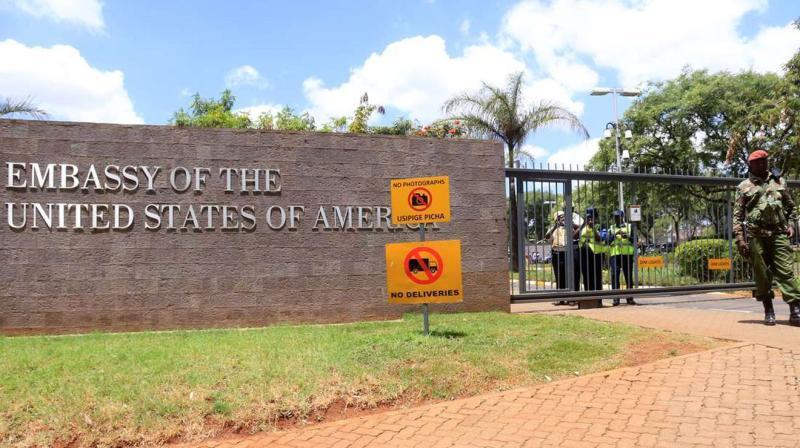
The U.S. Embassy has announced a temporary closure scheduled for Monday, February 16, as part of an official holiday observance.
The U.S. Embassy has announced a temporary closure scheduled for Monday, February 16, as part of an official holiday observance.
In a notice on Saturday, February 14, the embassy explained that the shutdown is connected to the annual observance of President’s Day, a national holiday in the United States.
"The U.S. Embassy will be closed Monday, February 16 in observance of President’s Day," the mission said in its statement.
Presidents’ Day in the United States began as a holiday dedicated to honoring George Washington, whose birthday falls on February 22.
In 1879, the U.S. government established Washington’s Birthday as a federal holiday, making it the first national holiday created to celebrate an individual person.
Read More
The holiday changed significantly in the late 1960s when Congress passed the Uniform Monday Holiday Act, which moved several federal holidays to Mondays to create long weekends.

Starting in 1971, Washington’s Birthday was observed on the third Monday of February instead of the exact date.
Because the new date falls between the birthdays of Washington and Abraham Lincoln, many people gradually began referring to it as Presidents’ Day, seeing it as a celebration of multiple American presidents rather than just one.
Despite this popular usage, the federal government still officially recognizes the holiday as Washington’s Birthday.
Earlier in the year, on Monday, January 19, the embassy was closed in observance of Martin Luther King Jr. Day, a public holiday in the US.
“The U.S. Embassy will be closed Monday, January 19, in observance of Martin Luther King Jr. Day,” the Embassy stated.
Martin Luther King Jr. Day, which is also referred to as MLK Day, is a federal holiday in the United States that is observed on the third Monday of January each year.
The holiday honors the life and legacy of Martin Luther King Jr., a civil rights leader renowned for his advocacy of civil rights and racial equality, voting rights, nonviolent resistance, economic justice, and fair housing.
The day is usually celebrated with marches and parades and with speeches by civil rights and political leaders.
-1792662527-md.jpg)


-1792662527-sm.jpg)


-1792658467-sm.jpg)