
Editor's Review
Kanini demonstrated how the digital device can be used to steal cars in eight minutes.
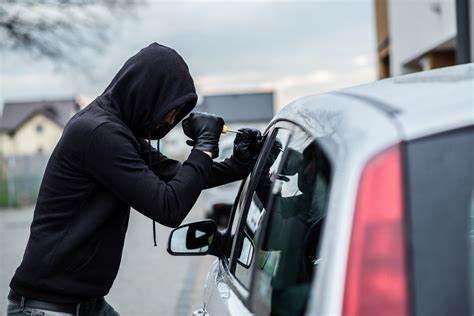
At least 30 cars have been reported stolen within the Nairobi Metropolitan Area since the beginning of the year, and the surge in car theft cases is becoming a major concern.
The latest incident happened last weekend, when Kenyan content creator, M Alby, lost his car and filming equipment while attending an event in Karen.
On Monday, February 23, motorvehicle security expert Samuel Kanini disclosed new tricks used by car thieves that allow them to steal cars even without coming into contact with the owners.
Kanini exposed a new digital programming device, which can be used to steal cars in under eight minutes.
The expert, who has been in the car tracking business for 13 years, disclosed how the hand-held device is used to re-programme vehicles to allow thieves to driveoff with vehicles even when the car key is far away from the vehicle.

Most modern vehicles use programmed keys that need to be within the vehicle for the engine to start, but this tool bypasses that programme.
"There are diagnostic machines which are ideally supposed to be used to detect issues in cars, and help reprogramme new keys for drivers who have lost theirs. However, they are now used to steal vehicles," he stated.
Kanini demonstrated the technique during the Obinna TV show, where a similar machine was used and drove off despite the key being far away.
The expert also disclosed that some car theft syndicates run car-tracking businesses, which they use to trail unsuspecting customers and steal their vehicles.
He explained that they often offer installation of tracking devices at cheaper rates, then track the owners before making away with the target vehicles.
"People rarely do a background check on companies that offer installation services. Companies must have a physical address and be licensed by the Communication Authority of Kenya and the Office of the Data Protection," he stated.
Kanini further explained how car thieves know where vehicle trackers have been installed in cars.
"Some of them come in as customers and insist that they want to see how the installation is done. Previously, we would ask clients for privacy during the process, but some of them insist that they have to see because it is their car," he divulged.
He explained that installing one tracker may not be enough to ward off thieves since most of them are equipped with signal jammers to interfere with the transmission of the vehicle's location to the owner or tracking company.
"Once they enter the vehicle with the network jammer, it freezes the tracking devices, no matter how many they are," the car security guru stated.
Kanini noted that motorists can install car trackers with anti-signal-jamming features.
He named car wash businesses the top hotspot for car theft, stating that leaving car keys with car wash attendants affords them time to duplicate car keys.
Additionally, he cautioned Kenyans buying second-hand vehicles to always ensure that they demand all copies of the car keys from the seller.
Kanini claimed that some of the car thieves who pretend to sell vehicles at throwaway prices, only to steal them afterwards, using spare keys they retained.
An emerging trend used by thieves who do not drive off with vehicles is stripping the vehicle of its parts, which are then sold as spare parts.
This was the case for Rose Muriuki, whose Lexus LX600, worth Ksh35 million, was stripped down to its shell by a gang of 20 thugs who raided her compound in the middle of the night.