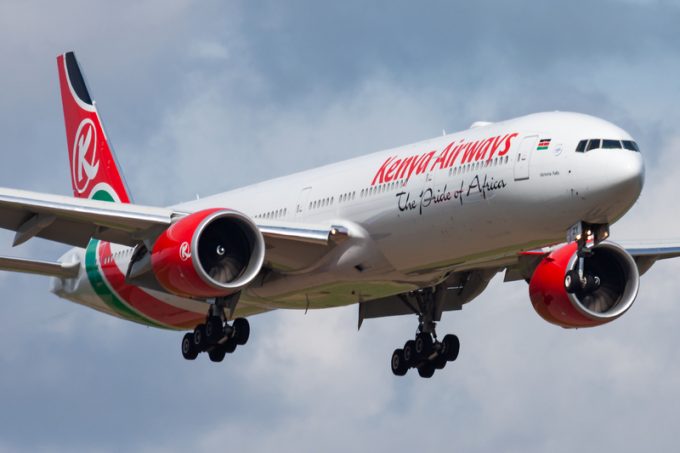
Kenya Airways has announced the suspension of scheduled flights to the United Arab Emirates (UAE) until further notice.
In an official statement on Saturday, February 28, the national carrier cited the closure of the region's airspace.
"We wish to inform our customers that we have temporarily suspended flights to Dubai and Sharjah until further notice due to the UAE airspace closure," it said.
KQ noted that two passenger flights were affected by the move.
It apologised to the passengers caught up in the disruption, promising timely feedback as the situation in the UAE unfolds, adding that the decision was for the safety of the passengers and crew.
Read More
"As a result, and for the safety of our customers and crew, we have cancelled KQ310, KQ305 and freighter flights. We sincerely apologise for the inconvenience caused and appreciate your patience and understanding. We will communicate and engage directly with affected customers and provide them with the necessary assistance. As this is a developing situation, we will provide updates as soon as new information becomes available," it said.
The issue was triggered by Israel’s strike on Iran, which led to widespread airspace closures across the Middle East, including in the UAE.
In retaliation, Iran launched missile attacks that caused explosions in Abu Dhabi and Dubai, targeting US bases and allied facilities within the Emirates.
Early Saturday, explosions shook central Tehran after Israel confirmed it had carried out a pre‑emptive missile strike against Iran.
Local media reported multiple blasts across the capital, with missiles hitting University Street and the Jomhouri district. At the same time, further strikes were noted in the northern and eastern parts of the city.
One attack occurred near offices linked to Supreme Leader Ali Khamenei, whose whereabouts remain uncertain amid claims he was moved to a secure location.
Israel’s Defence Minister, Israel Katz, acknowledged the operation and declared a nationwide state of emergency, saying the strike was intended to eliminate threats to Israel.
Sirens sounded across major cities, schools and workplaces were ordered closed except for essential services, and civilians were urged to stay near bomb shelters.
Israel’s Airports Authority also shut the country’s airspace to civilian flights, reflecting fears of swift Iranian retaliation.




-1780738861.jpg)