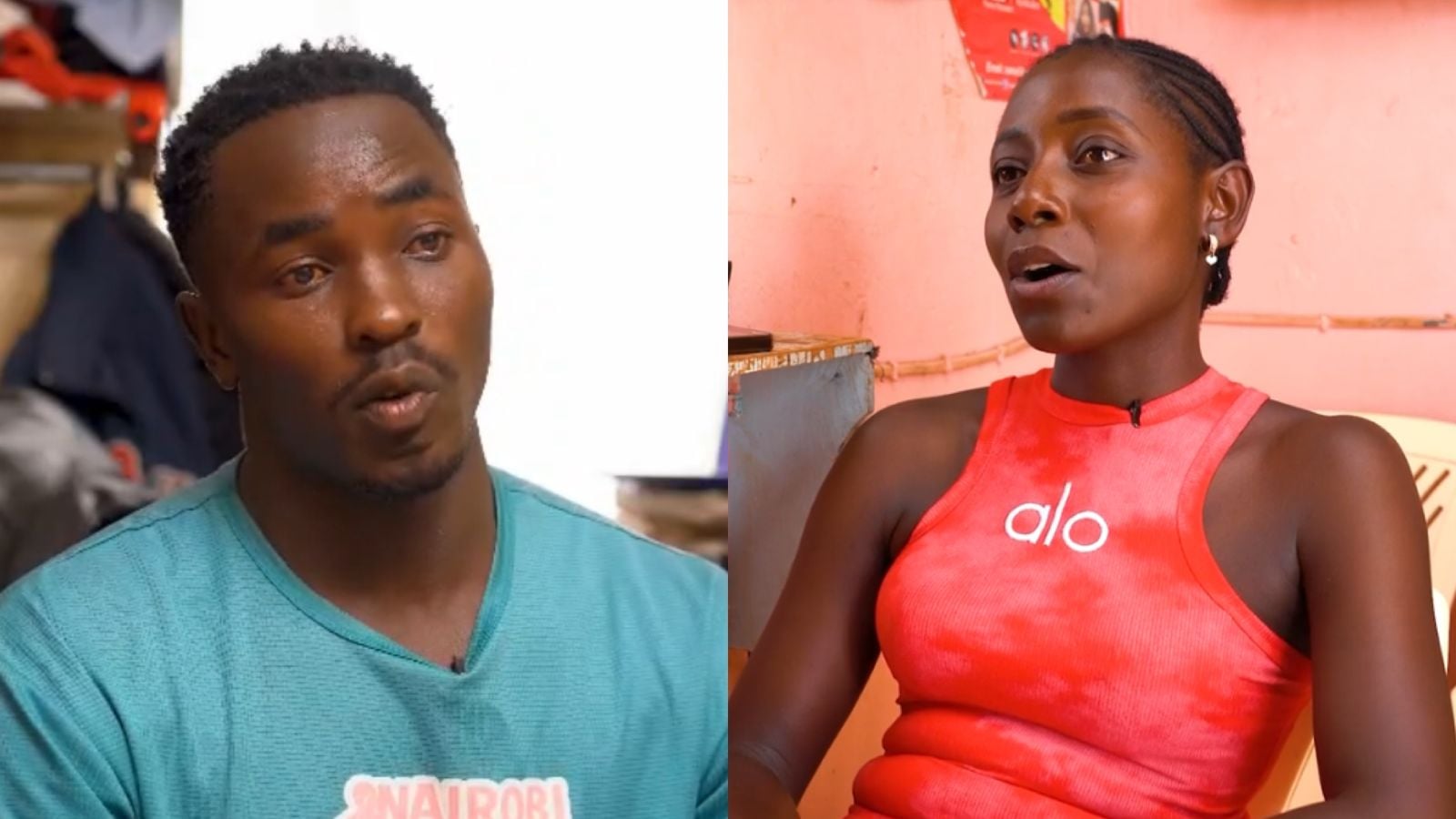
Two small business owners in Nairobi have credited the National Youth Opportunities Towards Advancement (NYOTA) Project with helping them stabilize and expand their businesses.
Samuel Nyantika, a boda boda operator working in Nairobi, said the programme came at a time when he was struggling with the financial pressure of repaying a motorcycle loan.
Nyantika explained that the support helped him ease the daily burden he had been facing while operating his motorcycle business.
"Nyota has helped me stabilize and improve my boda boda business here in Nairobi. I came from Borabu in Kisii and had taken a bike on loan where I had to pay Ksh350 daily, which was very stressful," he said.
Nyantika said the financial assistance enabled him to better organize his earnings, invest in maintaining his motorcycle and begin saving part of his income.
Read More
"After receiving support from the Nyota programme, I was able to manage my finances better, invest part of the money into my bike and save the rest," he added.
Nyantika added that the relief from constant financial pressure has given him confidence to think about expanding his operations in the future.
"Today the pressure has reduced, and I now believe I can grow my business, buy more bikes and eventually employ other young people as I work towards my dream of becoming a contractor," he further said.
Meanwhile, Millicent Atwoli, a salon owner based in Kangemi, also credited the Nyota programme for helping her strengthen and grow her business after moving to Nairobi.
Atwoli said she relocated from Kaimosi in Vihiga County to follow her passion for the beauty industry, beginning her journey by volunteering at a friend’s salon before eventually opening her own.
"Nyota has helped me strengthen and grow the salon business I run here in Kangemi. I came from Kaimosi in Vihiga to Nairobi to pursue my passion for beauty, starting by volunteering in a friend’s salon before opening my own base," she shared.
Atwoli explained that access to capital had always been one of the biggest obstacles in running her salon, particularly when it came to purchasing beauty products needed for clients.
"The biggest challenge was always money for products, but after receiving the Nyota grant, I was able to buy treatments and supplies in bulk for the first time," she added.
Atwoli said the support has since helped her business grow steadily, giving her confidence that she can expand her operations in the years ahead.
"Today, my salon continues to grow, and I believe in the coming years I will expand and manage several salons of my own," she further said.

NYOTA fund, a five-year initiative aimed at addressing youth unemployment and promoting sustainable economic empowerment, focuses on expanding income-generating opportunities, fostering savings, and nurturing entrepreneurship among young Kenyans.
Through the programme, the government aims to empower youth as innovators and contributors to national development and economic resilience.
The project targets 820,000 vulnerable youth across all 47 counties, offering them a chance to gain employability skills, business support, and access to financial services.
To qualify, applicants must meet specific criteria: they should be between 18 and 29 years old (up to 35 for Persons with Disabilities), have a maximum education level of Form Four or below, and currently be unemployed, underemployed, or engaged in low-income work.
Importantly, participation in the NYOTA Project is entirely free; applicants are not required to pay any fees or service charges to enroll.
NYOTA is implemented through a multi-agency approach featuring four key interventions, each focusing on different aspects of youth development and empowerment.
The first intervention, Improving Youth Employability, seeks to equip young people with socio-emotional and work-readiness skills to prepare them for the labour market.
This intervention is jointly implemented by the State Department for Youth Affairs and the Creative Economy (SDYACE), the National Employment Authority (NEA), the National Industrial Training Authority (NITA), and the State Department for Labour and Skills Development (SDL).
The second component, Expanding Employment Opportunities, focuses on supporting 110,000 young people to start or grow their businesses.
It provides business training, mentorship, start-up capital, and financial linkages to boost entrepreneurship.
This arm of the programme is led by the Micro and Small Enterprises Authority (MSEA).
The third intervention, Supporting Youth Savings, promotes a savings culture among participants.
Approximately 190,000 beneficiaries from the employability and business support interventions are enrolled in the National Social Security Fund’s (NSSF) 'Haba Haba' Savings Scheme.
The scheme features automatic deductions, matched savings incentives, maternity benefits for young mothers, and financial literacy training.
The NSSF oversees the implementation of this initiative, helping young Kenyans build financial discipline and long-term security.
The fourth intervention, Strengthening Youth Employment Systems, aims to enhance coordination and efficiency across youth-related programmes.
It includes the digital skilling of 600,000 young people to improve their access to government procurement and funding opportunities, as well as capacity building for national and county government actors to promote multi-sectoral collaboration.
-1773225593.jpg)
-1773644237.png)