Editor's Review
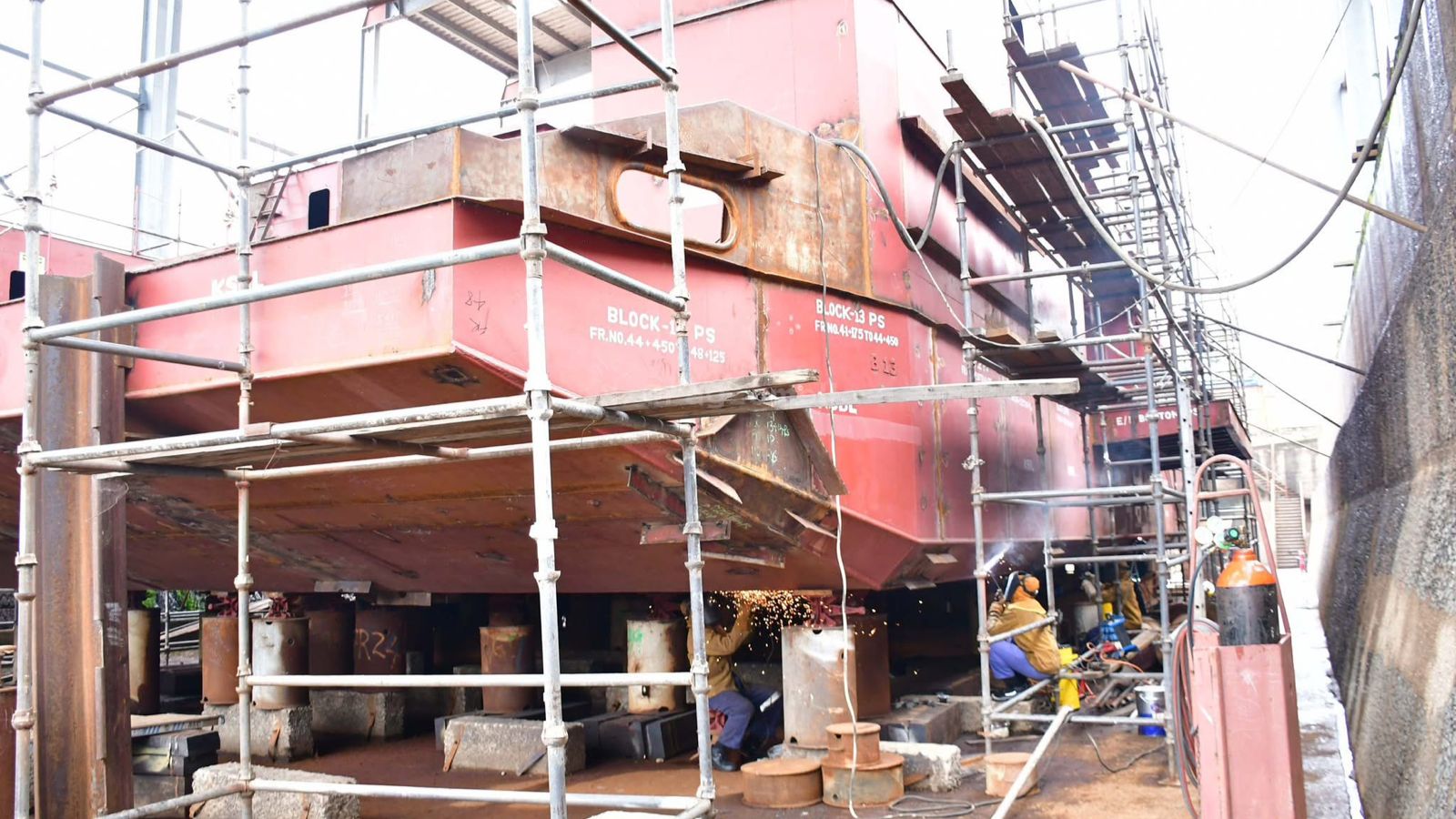
The Kenya Shipyards Limited has commenced the construction of its first-ever public ferry on Lake Victoria.
The Kenya Shipyards Limited has commenced the construction of its first-ever public ferry on Lake Victoria.
In an update on Tuesday, March 17, Interior Principal Secretary Raymond Omollo confirmed that the development is part of the government's efforts to invest in water transport infrastructure.
"As part of the government's ongoing strategy to harness the Blue Economy, Kenya Shipyards Limited has commenced construction of a 29-metre shallow-draft ferry at the Kisumu Shipyard. The vessel will be the first public ferry operated by Kenya Ports Authority on Lake Victoria," he said.
Omollo revealed that construction of the vessel is already at an advanced stage, with key structural work nearing completion.
He added that additional technical works are currently underway as the project moves closer to completion.
Read More
"The project is now at 50% completion, with most welding works finalised, structural joining and fitting completed and the passenger area ready. Ongoing works include electrical piping and painting of sub-structural components," he added.
According to Omollo, once operational, the ferry is expected to boost movement across Lake Victoria, benefiting residents in remote and island areas.
"The ferry will bridge a critical gap in public maritime transport, improving connectivity to island-rich areas such as Homa Bay County, including Mfangano Island, while linking the riparian counties of Busia, Siaya, Kisumu and Migori," he further said.
Beyond the ferry project, Omollo said the Kisumu Shipyard is also playing a role in local boat manufacturing, supporting both transport and fishing activities across the lake.
"In addition to large vessel fabrication, the shipyard also manufactures smaller fibre-reinforced plastic (FRP) boats, commonly used for fishing, patrol and transport operations across Lake Victoria," he concluded.

This comes barely a day after the Ministry of Interior has provided an update on the progress of the Kisii Cancer Centre.
In an update on Monday, March 16, Omollo said the project forms part of the government's plan to strengthen healthcare services across the country.
He noted that the government has also expanded financial support for cancer patients through the Social Health Authority, noting that the policy change is aimed at ensuring more Kenyans can access life-saving care without facing overwhelming medical bills.
"The Government remains committed to expanding access to cancer care across the country through both progressive policy and strategic health infrastructure.
"In line with this commitment, the Social Health Authority (SHA) has enhanced the oncology benefits package from Ksh550,000 to Ksh800,000 per patient, significantly easing the financial burden of treatment for many Kenyan families," he said.
Omollo explained that the ongoing construction of the Kisii Cancer Centre will play a crucial role in bringing essential services closer to communities in the region.
"Complementing this policy support is the ongoing development of the Kisii Cancer Centre, a critical facility that will bring specialized cancer services closer to communities in Kisii and the wider South Nyanza region, advancing the goals of Universal Health Coverage (UHC)," he added.
Omollo revealed that construction work on the facility is progressing steadily, with contractors currently focusing on the upper levels of the building.
He added that the project timeline remains on track as the government continues to push forward with the development.
"The project is currently at about 30% completion, with works progressing on the third floor, expected to run through mid-April. Construction of the Chemotherapy Centre block is scheduled to commence next week," he further said.
According to Omollo, once operational, the Kisii Cancer Centre will be equipped with critical medical infrastructure designed to support uninterrupted cancer treatment and improve service delivery for patients.
"Once complete, the facility will also include essential support infrastructure such as a Medical Gases Plant Room, Generator Room and Boiler House, ensuring reliable and uninterrupted medical services for patients undergoing critical treatment," he concluded.