
Editor's Review
The National Assembly's Public Accounts Committee (PAC) has summoned the leadership of seven institutions as part of an ongoing probe into suspected misappropriation of billions from eCitizen.
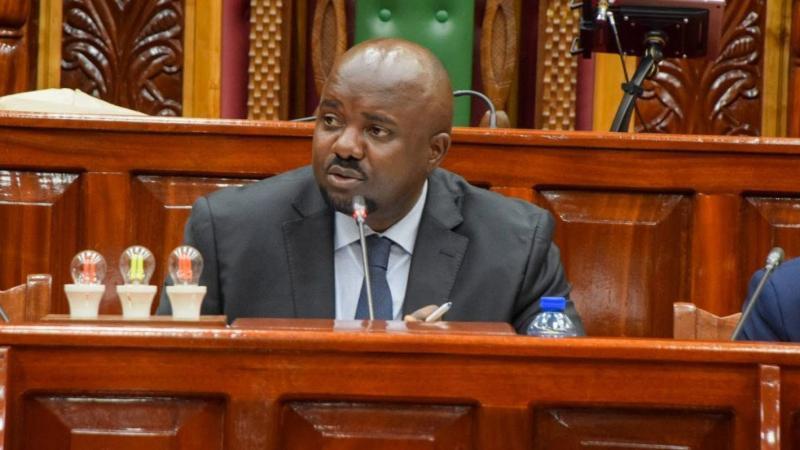
The National Assembly’s Public Accounts Committee (PAC), led by Butere MP Tindi Mwale, has summoned the leadership of seven institutions as part of an ongoing probe into suspected misappropriation of billions from eCitizen.
The directive was issued during a session on Wednesday, March 25, where the committee questioned three Principal Secretaries, Chris Kiptoo from the National Treasury, Belio Kipsang from Immigration and Citizen Services, and John Tanui from ICT and the Digital Economy, following the release of a Special Audit Report by the Auditor-General on the eCitizen system.
The audit report flagged an estimated Ksh9.4 billion that was allegedly transferred irregularly from the platform.
It further outlined the mechanisms through which the funds were moved and indicated that some of the money was paid out to private firms.
As part of its inquiry, the committee has called on the heads of seven entities, including the Office of the Attorney General and Equity Bank, to appear and provide clarification on how funds flowed out of the platform.
Read More
Other organizations expected to appear before the committee include Pesa Flow Limited, Goldrock Limited, Olive Media Limited, Webmasters Kenya, and Electronic Citizen Solutions.
"We expect the entities to give their side of the story and explain how they were licensed to collect funds from Kenyans, how approvals were granted, the amounts they are holding, and any possible diversion," Mwale said.
The Auditor-General’s findings also questioned the level of government control over the eCitizen platform, noting that operations largely depend on a vendor.
"Noting that the majority of government services are provided through the platform, control by the vendor creates a single point of failure," the report, tabled in the House on April 2, 2025, stated in part.

In response, Kiptoo told the committee that the platform is fully under government ownership, citing a transfer agreement finalized in January 2023.
He noted that the agreement was signed jointly with officials from the State Department of ICT and the State Department of Immigration, formalizing the transition.
“As per the agreement, the vendor agreed to completely and unconditionally hand over the eCitizen platform to the Government of Kenya," he said.
This comes months after PAC recommended the suspension of the e-Citizen operations until a clear legal and operational framework is established.
In a committee meeting on Tuesday, August 5, 2025, the committee raised an alarm over massive irregularities and unauthorized payments linked to the government’s digital payments platform.
It described the e-Citizen platform as a 'crime scene' plagued by large-scale corruption and theft of public resources.
"From the findings of this report, the truth is, this system operates without any legal foundation. It completely lacks a legal framework; there’s no law under which it can be validated or regulated. There’s also no clear government structure to govern its operations," Mwale said.
Mwale also said the platform lacks standard operating procedures (SOPs) and service level agreements (SLAs) with financial service providers, which he said leaves the government exposed to legal and financial risks.
"Let’s be honest: if we truly care about this country, and with the National Treasury represented here, we must admit that we should not be using this system. It has no legal backing whatsoever," he added.
The committee further expressed concern that funds are being transferred to private entities and banks without the support of proper legal instruments, rendering the transactions not only irregular but outright illegal.
"Even if a dispute arose and went to court, the government could easily lose to a bank simply because there are no binding service level agreements in place. That’s how dangerously exposed we are," Mwale warned.

-1792392980-md.jpg)


-1780684637-md.jpg)

-1792392980-sm.jpg)