Ruto disclosed that the government is considering looking for alternative fuel suppliers.
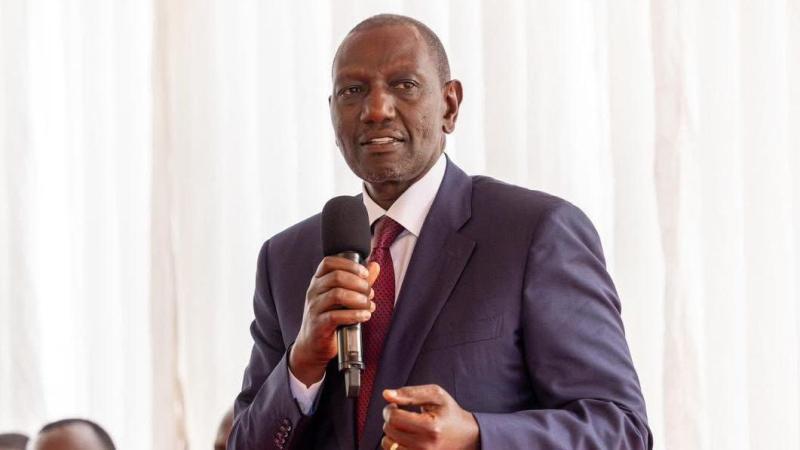
President William Ruto on Thursday, March 26, admitted that Kenya stares at a looming fuel crisis if the situation in the Middle East persists.
Speaking at State House, Nairobi, Ruto reassured Kenyans that the government had embarked on processes to mitigate the challenges that may affect fuel supply in the country.
He revealed that he discussed with regional leaders on how they could hold off the ripple effects of the war in the Middle East before it affects Kenya's economy and that of its neighbours.
"We have discussed as regional partners the interventions necessary for us to forestall any serious effects that the Middle East crisis is going to cause in our economies in terms of fuel and commodities supply.
"It is a reality because of challenges of logistics and transport across the Strait of Omuv, the change of routes, increase of insurance and many other issues," Ruto stated.
A file image of a fuel attendant holding a fuel pump.
The Head of State disclosed that the government is considering changing its suppliers to ensure the continued supply of petroleum products.
"I have tasked the Ministry of Energy to work with all our suppliers and oil producers to find, if necessary, alternative sources that would mitigate any shortages," he stated.
Ruto reiterated an earlier warning issued by Energy Cabinet Secretary Opiyo Wandayi to Oil Marketing Companies hoarding fuel.
"The government is not going to entertain any artificial shortages that are meant to benefit profiteers. We will work with all stakeholders to make sure that every participant works within the conditions of their licensing," he remarked.
His sentiments come amid reports of a fuel shortage in the country after several motorists were unable to purchase fuel at filling stations.
The perceived fuel shortage has pushed Kenyans into impulse buying with fears that the commodity would soon run out.
Earlier, Vivo Energy, the firm that operates Shell Petrol Stations across the country, announced a temporary fuel shortage in most of its branches.
Vivo explained that there was an increased demand for its products, which resulted in temporary stock-outs at some service stations.
Nonetheless, it assured its customers that a team had been deployed to replenish the fuel reserves in the affected fuel outlets.
Paul Kurgat is a Digital Journalist based in Nairobi, Kenya. He is passionate about writing to inform and educate the public. His interests are in politics, current affairs, and real-life experience.

.jpg)

 (1)-1791708588-md.jpg)
 (1)-1791175033-md.jpg)
-1791699761-md.jpg)
-1791696120-md.jpg)
 (1)-1791708588-sm.jpg)
 (1)-1791175033-sm.jpg)