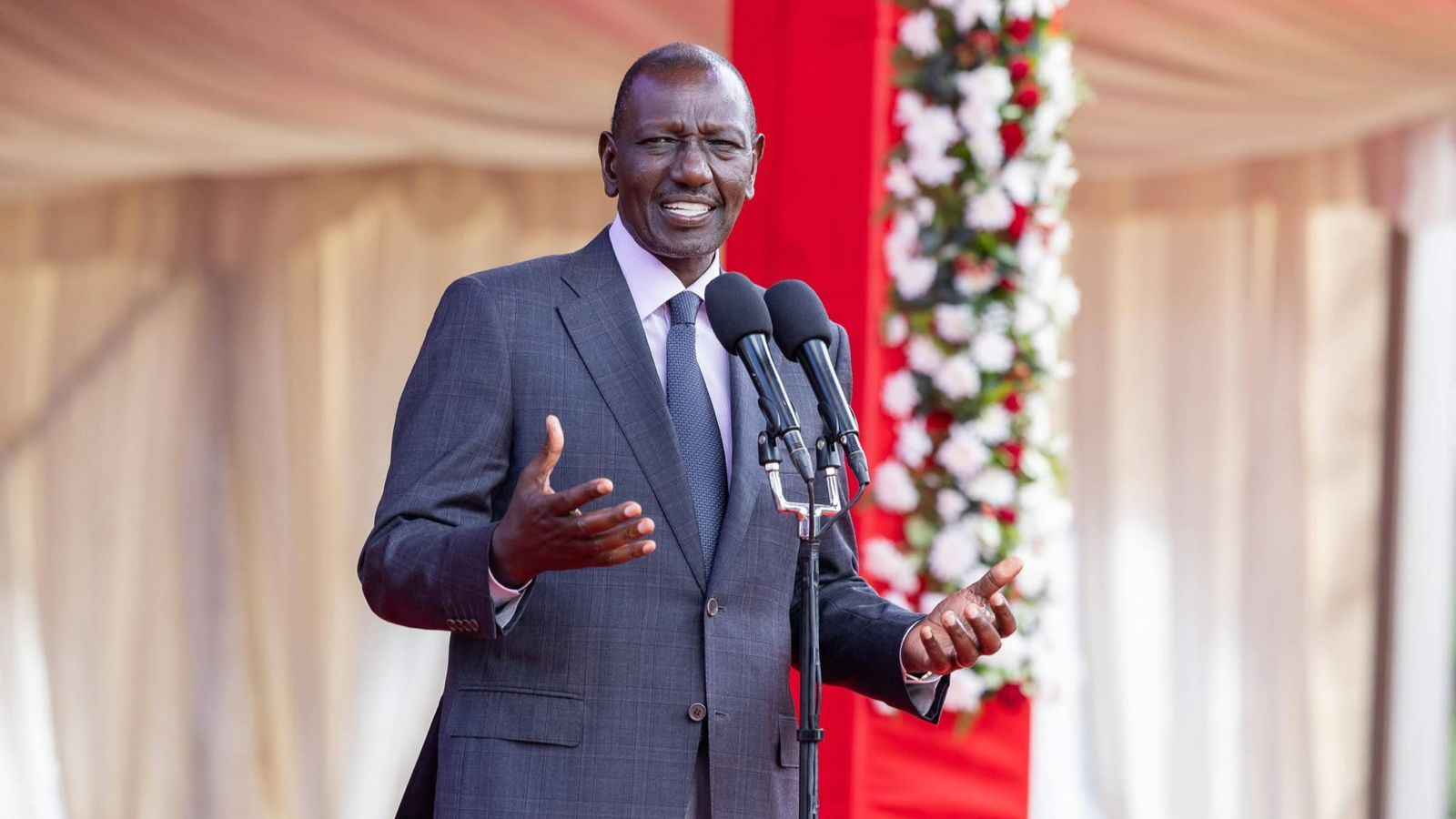
President William Ruto has ordered the demolition of a section of the perimeter wall at State House, Nairobi after it was found to have encroached on riparian land.
Speaking on Thursday, April 9, Ruto explained that the affected section of the State House boundary lies along the Kirichwa Kubwa River and falls within a legally protected riparian zone.
"For your information, State House has received notice from the multi-agency team reclaiming riparian land, that part of the State House boundary, the wall along Kirichwa Kubwa River falls within the riparian reserve and it must come down. I promise you that the wall will come down," he said.
In a letter to State House Comptroller Katoo Ole Metito, Nairobi Rivers Commission CEO Joseph Muracia said the perimeter wall may have encroached the riparian zone by 10 to 15 meters.
Muracia asked that the commission be given access to the grounds and the wall be adjusted in compliance with the demarcation notice.
Read More
"The Multi-Agency team wishes to access the grounds, State-House which is a protected area, to properly demarcate the riparian zone.
"Thereafter you will be requested to adjust the wall in compliance with the demarcation notice issued by the Multi-Agency team in compliance with the gazette notice," the letter read in part.

Notably, the development comes over a month after the government warned that resistance to riparian compliance in parts of Lavington and Kileleshwa is threatening the progress of the Nairobi River regeneration efforts.
In a statement on Wednesday, February 18, authorities said opposition from some upstream sections risks undermining gains already made under the multi-billion-shilling Nairobi River Regeneration Project.
Addressing the resistance, the government cautioned that the consequences extend far beyond the affected neighbourhoods.
"The success of this national restoration effort depends on collective responsibility, especially upstream. Continued resistance to riparian compliance in some upstream areas, particularly in sections of Lavington and Kileleshwa, threatens to undermine progress for millions downstream and across the broader basin, which stretches all the way to Makueni and Tsavo," the statement read.
Officials stressed that the project is not driven by political considerations but by the urgent need to safeguard public health and the environment.
"This is not about politics; it is about public health, environmental survival, and fairness. The river does not belong to one neighbourhood; it belongs to the entire country. Inaction is no longer an option. The restoration of the Nairobi River is a restoration of dignity for Kenya itself," the statement added.
The government described the initiative as an intervention to address decades of environmental degradation that has affected thousands of residents living along the river.
"The Nairobi River Regeneration Project is not simply an environmental exercise; it is a national intervention to restore human dignity. For decades, thousands of Nairobi residents have been forced to live, work, and raise families next to raw sewage, toxic waste, and illegal dumpsites, an unacceptable reality for any Kenyan," the statement continued.
Authorities said visible progress has already been made across several sections of the river basin, with communities downstream largely complying with relocation directives.
"The progress is already visible to wananchi, with sewer line construction underway, community parks like Kamukunji nearing completion, and thousands of young people employed in cleanup and restoration works. Informal settlements along the river, particularly downstream, have largely complied with riparian relocation notices, recognizing that this process protects families from disease, flooding, and environmental hazards," the statement further read.
The government added that economic and public health benefits of the project are already being realized, with thousands of jobs created and improved environmental outcomes expected in the coming years.
"The project has already created over 40,000 jobs and is expected to significantly reduce waterborne diseases while restoring the river as a safe and productive space for all Nairobi residents," the statement concluded.

-1773735153.png)