
Editor's Review
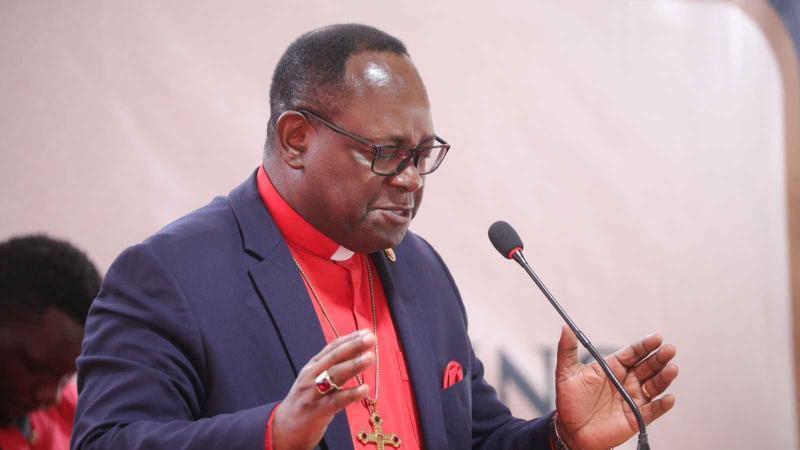
President William Ruto has nominated Bishop Kepha Nyamweya Omae as the new Chairperson of the National Cohesion and Integration Commission (NCIC).
President William Ruto has nominated Bishop Kepha Nyamweya Omae as the new Chairperson of the National Cohesion and Integration Commission (NCIC).
In a statement on Friday, April 10, Head of Public Service Felix Koskei confirmed that the nominations follow recommendations of the Selection Panel appointed to recruit and recommend suitable candidates for the post.
"These nominations are made in accordance with the recommendations of the Selection Panel appointed to recruit and recommend suitable candidates for appointment to the Commission," the statement read.
Subject to approval by the National Assembly, Bishop Omae has been nominated to serve as Chairperson.
The proposed members include Josphine Kirion Eragae, Joseph Nguyo, Jackson Swadi Kedogo, and Dr. Samuel Mwachiro Mwawasi.
Read More
Others are Irene Chepoisho Tulel, Hassan Billow Ahmed, and Jerusah Mwaathime Michael
Koskei highlighted the importance of the commission’s role in addressing key national challenges such as ethnic divisions and hate speech.
"In light of the Commission’s consequential mandate to foster national cohesion and unity as well as advance peaceful coexistence by confronting ethnic discrimination and hate speech, the Head of State and Government urges the National Assembly to accord these nominations consideration on a priority basis," the statement added.

NCIC is an independent government body in Kenya established in 2008 following the 2007–2008 post-election violence.
Its main objective is to promote national unity, peaceful coexistence, and equal opportunities for all Kenyans, regardless of ethnicity, race, or religion.
NCIC plays a key role in promoting national unity and cohesion by working to reduce ethnic tensions and foster a shared sense of national identity.
It encourages peaceful coexistence among different communities across the country.
The commission also focuses on preventing hate speech and ethnic incitement by monitoring public statements, particularly from politicians and the media, and can recommend prosecution for those found to be in violation.
In addition, NCIC advises the government on policies and laws that support integration, inclusivity, and equality.
It monitors ethnic representation in public service to ensure that government institutions reflect Kenya’s diversity and do not favor one community over others.
The commission also promotes equal opportunities by advocating for fairness in employment, education, and access to resources.
Another important role of NCIC is conducting civic education to raise awareness about unity, tolerance, and peaceful conflict resolution.
It also investigates cases of ethnic or racial discrimination, handling complaints and recommending appropriate legal action where necessary.

 (1)-1791708588-md.jpg)
 (1)-1791175033-md.jpg)
-1791699761-md.jpg)
-1791696120-md.jpg)


 (1)-1791708588-sm.jpg)
 (1)-1791175033-sm.jpg)

-1791699761-sm.jpg)