Editor's Review
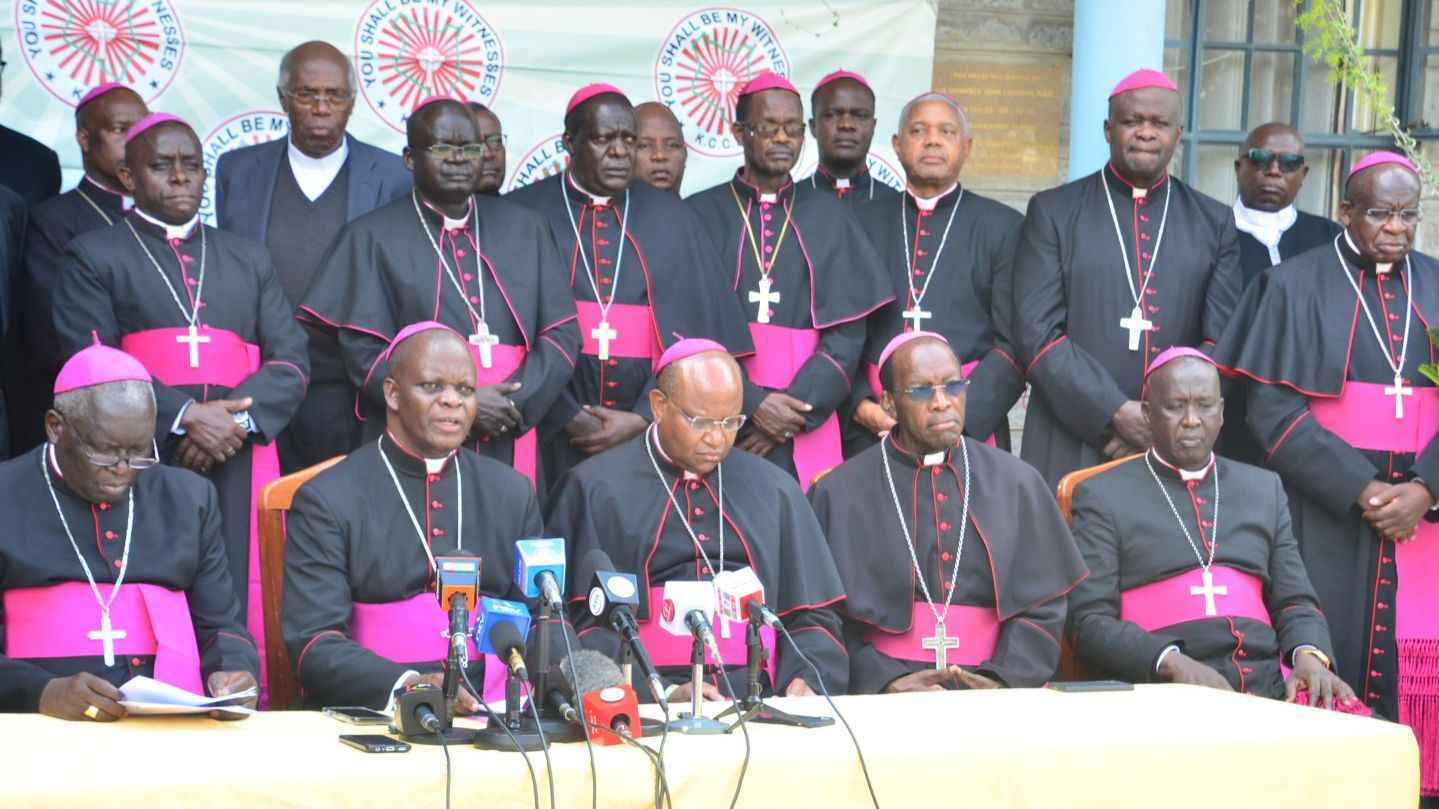
The Kenya Conference of Catholic Bishops (KCCB) has put the government under pressure over billions of shillings owed to faith-based health facilities.
The Kenya Conference of Catholic Bishops (KCCB) has put the government under pressure over billions of shillings owed to faith-based health facilities.
In a statement on Thursday, April 16, the bishops acknowledged recent efforts by the state to settle part of the debt but maintained that a significant financial burden remains unresolved.
"While we appreciate the positive signs that the Government made with some payments to faith-based hospitals done in the last weeks, our Catholic hospitals’ debts still stand at over Ksh5.7 billion, including rejected and returned claims. This excludes the aged NHIF debts of 3.3 billion," the statement read.
The bishops went on to question the effectiveness of the Social Health Authority (SHA) scheme, noting that it has failed to deliver on its promise of seamless healthcare financing and service provision.
They further raised concerns about the role of the Digital Health Authority (DHA), particularly regarding the handling of disputed claims.
Read More
"The SHA scheme is meant to work seamlessly for all players so that patient care is assured. However, this is not the case. The overall performance remains poor. The Parliamentary report on SHA by the Departmental Health Committee makes it clear that the scheme has serious shortcomings.
"The role of the Digital Health Authority (DHA) in the SHA processes concerning the rejected and returned claims needs to be clarified," the statement added.
The KCCB urged the government to take decisive action, warning that continued delays and inefficiencies could have dire consequences for patients who depend on these facilities.
"We believe it is within the power of the government to look into this problem and provide a long-lasting solution, as this situation undermines the protection of human life and dignity. We should not continue going in circles at the expense of human life in need of medical care," the statement continued.
They added that urgent structural reforms are needed within the SHA framework to address persistent weaknesses and operational failures.
"The government should therefore act with great urgency to address the SHA structural deficits, significant underfunding, and operational deficiencies, including technological system downtime," the statement further read.

Elsewhere, beyond healthcare, the bishops also turned their attention to the education sector, raising concerns about the implementation of the Competency-Based Education (CBE) system.
They noted that the reform was intended to better prepare learners for real-world demands but warned that lessons from past reforms appear to have been overlooked.
"The justification for phasing out the 8-4-4 system was that it was too theoretical and therefore did not adequately prepare learners for social and job market demands. Now that CBE has been implemented up to Grade 10, we have lessons to draw from previous attempts to introduce a new education system," the statement noted.
The bishops criticised the rollout of the new system, arguing that it appears rushed and insufficiently planned.
"First, we cannot place our children in a constant mode of experimentation. The government has all the technical expertise it needs, both locally and internationally, to have streamlined the implementation of CBE, long before rolling it out.
"The system seems poorly thought-out and is being poorly implemented. What is obvious is that there was little study, design, and thinking-through of the entire CBE system," the statement pointed out.
The bishops also highlighted the financial demands of the new system, noting that it requires significant investment in infrastructure and personnel.
"Secondly, CBE was introduced on the justification that it would prioritize practical skills, creativity, and critical thinking. As we have come to know it, CBE is capital-intensive. It requires more teachers, equipment, and financing," the statement further read.
The bishops called on the Ministry of Education to take urgent steps to review and improve the system through a more inclusive and transparent process.
"We implore the Ministry of Education to urgently constitute a multi-sectoral team to study, properly evaluate, and design in an understandable and overt manner how the CBE system can properly operate. The rightful role of the Sponsors in our institutions should be guaranteed so as to defend ethical and value content in the education system," the statement added.