
Editor's Review
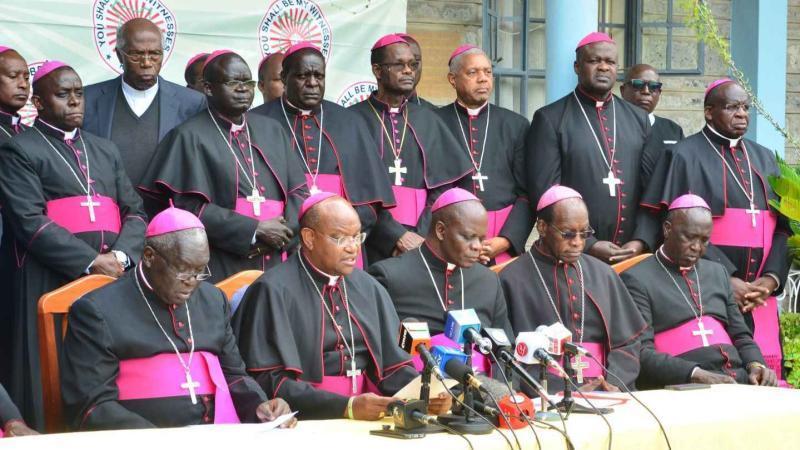
The Kenya Conference of Catholic Bishops (KCCB) has raised concern over persistent delays and inefficiencies in the civil marriage registration process.
The Kenya Conference of Catholic Bishops (KCCB) has raised concern over persistent delays and inefficiencies in the civil marriage registration process.
In a statement on Thursday, April 16, the clergy noted that the process of registering marriages has become increasingly difficult.
They further criticised the pace and handling of approvals, saying delays often disrupt timelines, creating uncertainty for couples.
"For some time now, we have been experiencing difficulties in the legal process of civil registration and legalization of marriage. The process of notification and obtaining certificates has become unnecessarily arduous.
"The clearance process is slow and at times insensitive to the time and dates set. Moreover, we are now experiencing a shortage of marriage certificates," the statement read.
Read More
According to the bishops, these systemic challenges are already having a measurable social impact, with fewer couples opting to go through the formal marriage process.
"These conditions have discouraged many from contracting marriage, as the statistics show. This is bound to cause a moral dent to society and risks depriving the weaker spouses of their legal rights," the statement added.
KCCB noted that marriage remains a cornerstone of societal stability and urged authorities to address the bottlenecks urgently.
"We as a country must protect and promote the institution of marriage as provided in the Constitution of Kenya (Article 45). When our families and the institution of marriage are strong, our society thrives," the statement further read.

Elsewhere, the bishops also turned their attention to the education sector, raising concerns about the implementation of the Competency-Based Education (CBE) system.
They noted that the reform was intended to better prepare learners for real-world demands but warned that lessons from past reforms appear to have been overlooked.
"The justification for phasing out the 8-4-4 system was that it was too theoretical and therefore did not adequately prepare learners for social and job market demands. Now that CBE has been implemented up to Grade 10, we have lessons to draw from previous attempts to introduce a new education system," the statement noted.
The bishops criticised the rollout of the new system, arguing that it appears rushed and insufficiently planned.
"First, we cannot place our children in a constant mode of experimentation. The government has all the technical expertise it needs, both locally and internationally, to have streamlined the implementation of CBE, long before rolling it out.
"The system seems poorly thought-out and is being poorly implemented. What is obvious is that there was little study, design, and thinking-through of the entire CBE system," the statement pointed out.
The bishops also highlighted the financial demands of the new system, noting that it requires significant investment in infrastructure and personnel.
"Secondly, CBE was introduced on the justification that it would prioritize practical skills, creativity, and critical thinking. As we have come to know it, CBE is capital-intensive. It requires more teachers, equipment, and financing," the statement further read.
The bishops called on the Ministry of Education to take urgent steps to review and improve the system through a more inclusive and transparent process.
"We implore the Ministry of Education to urgently constitute a multi-sectoral team to study, properly evaluate, and design in an understandable and overt manner how the CBE system can properly operate. The rightful role of the Sponsors in our institutions should be guaranteed so as to defend ethical and value content in the education system," the statement added.


 (1)-1791178178-md.jpg)





 (1)-1791178178-sm.jpg)