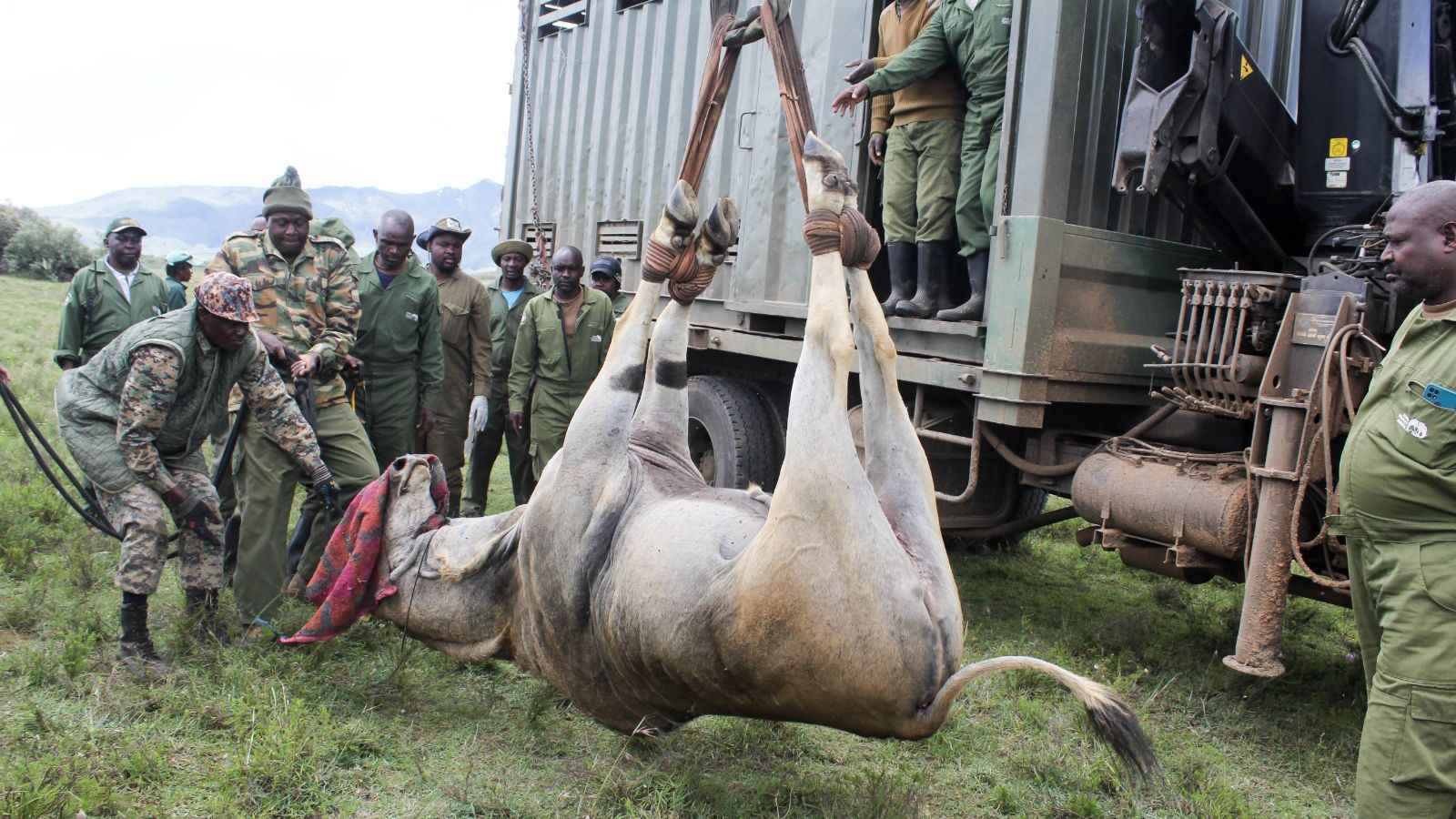
The Kenya Wildlife Service (KWS) has begun the third phase of relocating herbivores from Kedong Ranch in Naivasha to safer habitats.
In a statement on Friday, April 24, KWS said the latest exercise comes after two earlier operations conducted seven and five months ago.
"Kenya Wildlife Service has officially embarked on the third phase of relocating herbivores from Kedong Ranch to safer habitats. This follows two successful operations carried out seven and five months ago, during which more than 450 animals were translocated," the statement read.
KWS also gave details of a recent transfer involving over 30 gazelles and elands.
"In a recent operation, the team moved more than 20 Grant’s gazelles and 10 elands from Kedong Ranch to Solai Sanctuary," the statement added.
Read More
KWS explained that Kedong Ranch had previously played a key role as a wildlife movement corridor between Mount Longonot and Hell’s Gate National Park, but that status has changed significantly.
"Kedong Ranch once served as a vital wildlife corridor linking Mount Longonot and Hell’s Gate National Park. Today, that corridor has all but disappeared; lost to fencing, road construction, and rapid land sales," the statement noted.
KWS explained that shrinking habitats were making it harder for animals to access essential resources.
"As habitats shrink under these pressures, wildlife is pushed into smaller and more fragile spaces where access to food and water is no longer guaranteed," the statement further read.
KWS said the current phase, aiming to relocate approximately 200 animals, is aimed at improving the long-term survival chances of affected animals.
"In this third phase, the team aims to relocate approximately 200 herbivores to areas where they have a better chance of survival and can thrive in their natural habitats for posterity," the statement concluded.

This comes weeks after KWS responded to claims circulating on social media alleging that parts of Nairobi National Park are being destroyed.
In a statement on Friday, March 27, the agency said it had taken note of claims alleging that an upland forest within the park was under threat.
KWS, however, firmly rejected the assertions, insisting that no destruction is taking place.
"KWS wishes to clarify that these claims are misleading, unfounded and inflammatory. KWS confirms that the relocation and upgrade of the Nairobi Animal Orphanage is a carefully planned, lawful, and forward-looking initiative aimed at enhancing wildlife conservation, animal welfare, conservation education, and visitor experience," the statement read.
KWS explained that the Nairobi Animal Orphanage, established in 1964, has played a critical role in rescuing and rehabilitating distressed wildlife for more than six decades.
However, the agency noted that the current facility has become outdated due to rising demand and evolving global standards.
"However, due to increasing visitor numbers, growing demand for wildlife rescue, and evolving international standards on animal welfare, the current facility within Nairobi National Park no longer meets modern requirements," the statement added.
KWS further noted that the relocation project is grounded in Kenyan law and follows all necessary environmental procedures.
"This project is anchored in the provisions of the Wildlife Conservation and Management Act, 2013, which mandates KWS to conserve and manage wildlife while upholding high standards of animal welfare.
"In full compliance with environmental law, an Environmental Impact Assessment (EIA) was conducted under the Environmental Management and Coordination Act (EMCA). A comprehensive project report was prepared and submitted to the National Environment Management Authority (NEMA), including stakeholder engagement through a workshop held on 2nd October 2025 and supporting surveys," the statement further read.
According to KWS, the National Environment Management Authority (NEMA) reviewed and approved the project after assessing the submitted reports and stakeholder input.
The relocation, first conceptualised in 2013, is aimed at aligning the orphanage with internationally recognised animal welfare standards, including those set by the World Organisation for Animal Health (WOAH) and the International Union for Conservation of Nature (IUCN).
It also seeks to provide larger and more natural enclosures, decongest the current site, and improve safety and operational efficiency in wildlife rescue and rehabilitation.