Editor's Review
Ksh1 million will be awarded to those who suffered severe injuries or aggravated sexual violence.
The victims and bereaved families in anti-government protests have welcomed the compensation package offered by the government.
They say the Ksh2 billion compensation plan will ease medical costs, sustain households, and cushion those who lost their income.
But as they welcome the plan, they emphasised that financial relief must go hand in hand with justice, insisting perpetrators of abuses be held accountable.
They stress that no payout can restore lost lives or erase the lasting physical and emotional scars, though the support offers a path to recovery.
For many, the package represents a chance to rebuild.
Read More
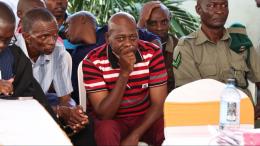
"Since I was shot, balancing life has been hard. We will appreciate whatever the government gives us. If it can help us set up a business to balance life, it will be okay,” said Charles Odhiambo, who sustained a leg injury during last July’s Saba Saba protests.
Unveiled on June 19 by the Panel of Experts on Compensation of Victims of Human Rights Violations, chaired by Makau Mutua, President William Ruto’s constitutional advisor, the scheme sets payouts ranging from Ksh3 million for fatalities to Ksh50,000 for minor injuries.
It covers civilians and security officers who endured physical, psychological, emotional, or economic harm, while cases predating 2013 will be addressed in future programmes.

Compensation categories include death, injury, sexual violence, economic loss, and trauma, though psychological harm will be met with rehabilitation rather than cash.
Claims will be judged on credibility rather than strict court standards, with applicants encouraged to file even if documentation is missing. Representatives may also act on behalf of victims unable to apply themselves.
The framework’s tiered structure awards Ksh3 million for fatalities, Ksh1 million for severe injuries or aggravated sexual violence, Ksh500,000 for moderate injuries, Ksh50,000 for minor injuries, up to Ksh100,000 for medical bills, and Ksh50,000 for economic loss.
Only the highest eligible claim is paid, and double compensation is barred.
Beyond money, victims may receive medical and psychosocial support, property restitution, employment and identity documents, public apologies, and institutional reforms.
Applications can be submitted orally or in writing via email at [email protected], or through the Kenya National Commission on Human Rights and IPOA.
A physical office will be opened on June 23, with payments made directly to victims’ or beneficiaries’ bank accounts.
The government insists the scheme is an ex gratia arrangement under the Reparations Guidelines 2026, not an admission of liability.
According to it, accepting compensation does not shield perpetrators, security agents or others, from investigation and prosecution.
Claimants may be required to sign waivers, and personal data will be protected under the Data Protection Act, 2019, with names disclosed only with consent.

 (1)-1791178178-md.jpg)
 (1)-1791178178-sm.jpg)