
Editor's Review
The government has announced a renewed push to strengthen its anti-money laundering systems as it seeks to restore international confidence in the country’s financial sector.
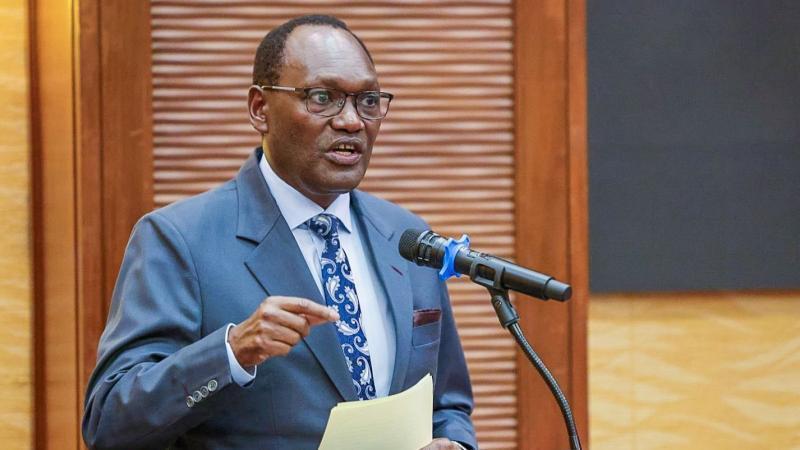
In a statement on Monday, February 16, Treasury Principal Secretary Chris Kiptoo outlined the progress made so far and the next steps required for Kenya to meet international standards set by global financial oversight bodies.
"Kenya is accelerating reforms to strengthen its Anti-Money Laundering and Combating the Financing of Terrorism (AML/CFT) framework to address identified gaps and restore full international confidence in the country’s financial system," he said.
Kiptoo said discussions had been held to evaluate ongoing efforts and align strategies aimed at meeting international requirements for removal from the monitoring process.
"On behalf of Hon. John Mbadi, Cabinet Secretary, The National Treasury, I held a meeting with Principals of AML/CFT implementing agencies to review progress under the International Cooperation Review Group (ICRG) process and agree on the next steps toward exiting the grey list," he added
Read More
According to the Treasury, several legal and institutional milestones have already been achieved as part of the reform agenda.
These include new legislation, stronger coordination mechanisms, and tighter oversight standards intended to improve transparency and reporting across the financial sector.
"Key progress includes the enactment of the Anti Money Laundering and Combating of Terrorism Financing Laws (Amendment) Act, 2025, and the Virtual Asset Service Providers (VASPs) Act, 2025, strengthened institutional coordination, enhanced risk based customer due diligence, improved suspicious transaction reporting, and closer inter agency collaboration across critical sectors," he further said.

Kiptoo further stressed that remaining reforms will be implemented aggressively to secure Kenya’s removal from the grey list maintained by the Financial Action Task Force.
"We are taking decisive actions to complete the remaining reforms and secure Kenya’s exit from the Financial Action Task Force (FATF) Grey List," he concluded.
This comes months after the European Commission named Kenya among several countries now classified as high-risk for money laundering and terrorism financing.
In a statement on Tuesday, June 10, 2025, the commission said the new development follows a newly published update to the EU’s list of strategic deficiencies in anti-money laundering (AML) and counter-terrorist financing (CFT) frameworks.
The revised list includes ten new countries, namely Algeria, Angola, Côte d'Ivoire, Kenya, Laos, Lebanon, Monaco, Namibia, Nepal, and Venezuela.
According to the European Commission, the aforementioned countries are now subject to enhanced scrutiny by EU-based financial institutions.
"The European Commission has updated its list of high-risk jurisdictions presenting strategic deficiencies in their national anti-money laundering and countering the financing of terrorism (AML/CFT) regimes. EU entities covered by the AML framework are required to apply enhanced vigilance in transactions involving these countries. This is important to protect the EU financial system," part of the statement read.
The statement added, "The updated list takes into account the work of the Financial Action Task Force (FATF) and in particular its list of 'Jurisdictions under Increased Monitoring'. As a founding member of FATF, the Commission is closely involved in monitoring the progress of the listed jurisdictions, helping them to fully implement their respective action plans agreed with FAFT. Alignment with FATF is important for upholding the EU´s commitment to promoting and implementing global standards."
The European Commission advised EU-regulated entities are required to apply enhanced vigilance in financial dealings with countries on the high-risk list.
The recommended steps to be taken include enforcing stricter customer due diligence and reporting obligations.




 (1)-1791178178-sm.jpg)