Editor's Review
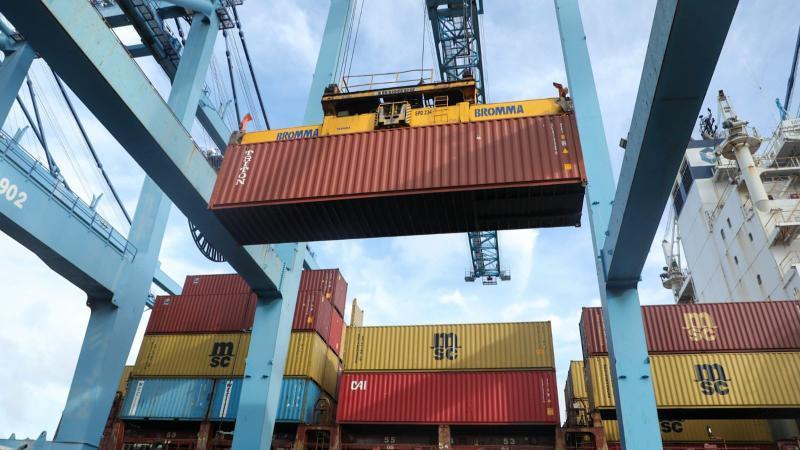
Kenya has recorded a major milestone in its trade relationship with China after the first cargo exported under China’s zero-tariff treatment programme for 53 African countries arrived at Xiamen Port in Fujian Province.
Kenya has recorded a major milestone in its trade relationship with China after the first cargo exported under China's zero-tariff treatment programme for 53 African countries arrived at Xiamen Port in Fujian Province.
In a statement on Tuesday, May 12, the Ministry of Trade said the development is expected to create fresh opportunities for Kenyan exporters seeking access to the vast Chinese market.
The consignment, shipped by Quanzhou Danong Tea Import and Export Company Limited, consisted of 15.125 tonnes of tea valued at USD 40,000 (Ksh5.17 million).
China’s zero-tariff arrangement officially came into effect on May 1, 2026, and is expected to make Kenyan goods more competitive by cutting the cost of entry into the Chinese market.
Before the programme was introduced, Kenyan tea exports to China were subject to a 15 percent tariff.
Read More
The initiative is also seen as a step toward addressing the long-standing trade imbalance between the two countries.
China remains one of Kenya’s biggest trading partners, although Kenya imports significantly more goods from China than it exports.
Kenya’s imports from China reached USD 3.84 billion (Ksh495.94 billion) in 2022, USD 3.28 billion (Ksh423.61 billion) in 2023, and USD 4.31 billion (Ksh556.64 billion) in 2024.
In comparison, Kenya’s exports to China stood at USD 233.84 million (Ksh30.20 billion) in 2022, USD 207.92 million (Ksh26.85 billion) in 2023, and USD 196.56 million (Ksh25.39 billion) in 2024.
Trade Principal Secretary Regina Ombam said the successful shipment highlights the strengthening economic partnership between Kenya and China while reinforcing Kenya’s role as a key trade and investment destination in Africa.
"The deal presents new opportunities for Kenyan farmers, manufacturers and exporters to expand their footprint in one of the world's largest consumer markets," said Ombam.

This development comes a week after the government announced that Kenyan exports will enjoy expanded access to the Chinese market after the government announced a new zero-tariff arrangement.
In a statement on Friday, May 1, the Ministry of Trade said the agreement grants duty-free access to 98.2% of Kenyan exports to China.
The ministry explained that the zero-tariff policy begins immediately and applies to most exports under the Kenya-China Early Harvest Agreement.
"Starting today, May 1, 2026, products from African countries with diplomatic ties with China, including Kenya, will enjoy zero-tariff access to the Chinese market. Approximately 98.2% of Kenyan exports stand to benefit from the Kenya-China Early Harvest Agreement," the statement read.
The ministry noted that the move signals a major shift in Kenya’s export trajectory and unlocks access to a massive global market.
"This marks a decisive new chapter for Kenya's export growth and presents an immediate opportunity for Kenyan businesses to expand exports, increase earnings, and penetrate one of the world's largest consumer markets," the statement added.
According to the ministry, Kenya continues to face a significant trade imbalance with China despite growing bilateral trade.
In 2025, imports from China stood at USD 5.19 billion, while exports to China were approximately USD 130.68 million, resulting in a deficit of over USD 5.06 billion.
However, the ministry said the agreement is designed to directly address this imbalance by boosting exports and strengthening economic outcomes.
"With the agreement in place, Kenya has a clear pathway to narrow this imbalance, boost foreign exchange inflows, and support job creation across key sectors," the statement further read.
Following this development, the government identified key export products expected to benefit immediately, including tea, coffee, avocados, macadamia nuts, and fresh horticultural produce.
Others are titanium ores, zirconium, manganese, leather, natural resins, and processed agricultural goods.
Exporters have also been directed to meet strict market requirements such as registration with relevant authorities and China’s customs agency, compliance with sanitary and phytosanitary standards, proper Chinese-language labelling, traceability systems, and complete export documentation.