Editor's Review
The government has extended the application of the reduced 8 per cent Value Added Tax (VAT) on petroleum products for another three months.
The government has extended the application of the reduced 8 per cent Value Added Tax (VAT) on petroleum products for another three months.
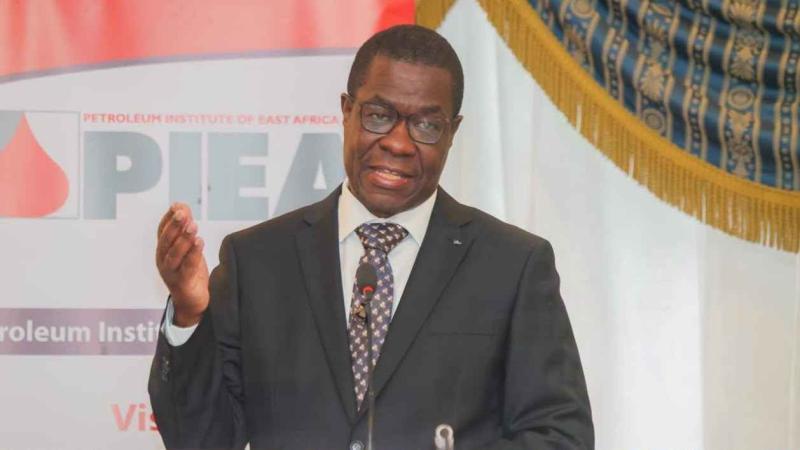
In a statement on Tuesday, July 14, Energy Cabinet Secretary Opiyo Wandayi said the extension of the reduced VAT rate had been agreed upon in consultation with the National Treasury to cushion Kenyans from continued volatility in the global oil market.
"As part of the Government's commitment to cushioning households and businesses from international market volatility, in consultation with the National Treasury, we have extended the application period for 8% of Value Added Tax (VAT) on petroleum products for a further three months, until 14th October 2026," the statement read.
Wandayi added that the government would deploy funds from the Petroleum Development Levy to help stabilize pump prices during the current review period.
"Further, in the July-August 2026 pricing cycle, the Government will deploy a subsidy from the Petroleum Development Levy to the tune of Ksh945 Million to sustain the current price levels," the statement added.
Read More
Wanday said the international oil market remains highly volatile, with disruptions around the Strait of Hormuz continuing to affect global shipping and fuel pricing.
"The market remains unsettled, and the Strait of Hormuz remains constrained, with commercial traffic running well below its usual levels and the daily Platts assessments moving sharply from one session to the next as events in the region continue to unfold," the statement explained.
Despite the uncertainty, Wandayi said Kenya has maintained a steady supply of petroleum products through the Government-to-Government fuel import arrangement, with all scheduled cargoes arriving on time and fuel remaining available nationwide.
"In a market of this kind, world prices can move either way within a week. What we can state plainly is this: Kenya's fuel supply has held firm throughout. Under our Government-to-Government arrangement, cargoes have continued to be sourced from a wider set of loading regions beyond the Gulf, every scheduled cargo has arrived and offloaded on time, and fuel has remained available at the pump throughout the country," the statement noted.

Wandayi, however, cautioned that renewed tensions in the Middle East have once again pushed international oil benchmarks higher, a trend that is expected to influence future fuel pricing cycles.
"With the restart of the Middle East crisis, international benchmarks have now begun to climb again, and this renewed pressure will be reflected in the pricing cycles that follow," the statement explained.
Wandayi said the ministry will continue working closely with industry players to ensure uninterrupted fuel supply, safeguard the Government-to-Government arrangement, and keep the public informed of developments in the global market.
"This Ministry will continue to work closely with the industry to keep supply consistent and uninterrupted, to defend the fixed terms of our Government-to-Government arrangement, and to keep Kenyans fully and openly informed as the picture continues to develop," the statement added.
Wandayi assured Kenyans that the ongoing global developments have not disrupted the country's fuel supply.
He reiterated that the country has adequate fuel stocks and a resilient import and distribution system, adding that the Government-to-Government fuel supply framework has strengthened the energy security while easing pressure on foreign exchange demand.
"I wish to assure all Kenyans that these global developments have not affected the availability of petroleum products in our country."
"Fuel remains readily available across the country, supported by adequate national stocks, a resilient and fully operational import and distribution system, and the continued success of the Government-to-Government (G2G) fuel supply arrangement, which has strengthened Kenya's energy security while reducing pressure on foreign exchange demand," the statement further read.
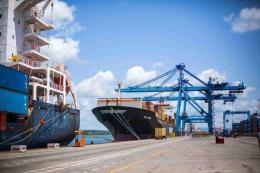
This comes weeks after Kenya and Rwanda signed three key agreements that will allow Rwanda to import bulk refined petroleum products through the Port of Mombasa under a Government-to-Government (G2G) arrangement.
The agreements, signed on Monday, June 29, at KASNEB Tower in Nairobi, include a Memorandum of Understanding (MoU), a Tripartite Agreement (TPA), and a Transport and Storage Agreement (TSA).
Together, they fully open the Northern Corridor for Rwanda's bulk petroleum imports and are expected to significantly increase fuel volumes transported through Kenya.
The agreements conclude negotiations that began during a bilateral meeting in Kigali in November 2024; Kenya's Cabinet later approved the framework on June 16, 2026, paving the way for its implementation.
The new framework is projected to increase Rwanda's annual petroleum imports through the Northern Corridor from approximately 42,000 cubic metres recorded in 2025 to more than 500,000 cubic metres.
The first shipment under the arrangement, designated RNEC 001/2026, is expected to arrive at the Port of Mombasa between September 4 and 6, 2026.

-1792658467-md.jpg)
-1768823097-md.jpg)