Editor's Review
In recent years, Kenya has been confronted with a series of disturbing mass grave discoveries that have shocked the public conscience and raised urgent questions about accountability.
In recent years, Kenya has been confronted with a series of disturbing mass grave discoveries that have shocked the public conscience and raised urgent questions about accountability, governance, and the protection of human life.
The discovery of mass graves in different parts of Kenya in recent years sent shockwaves across the country, with each revelation raising the same unsettling question: how could such a large-scale loss of life occur unnoticed, or without immediate intervention?
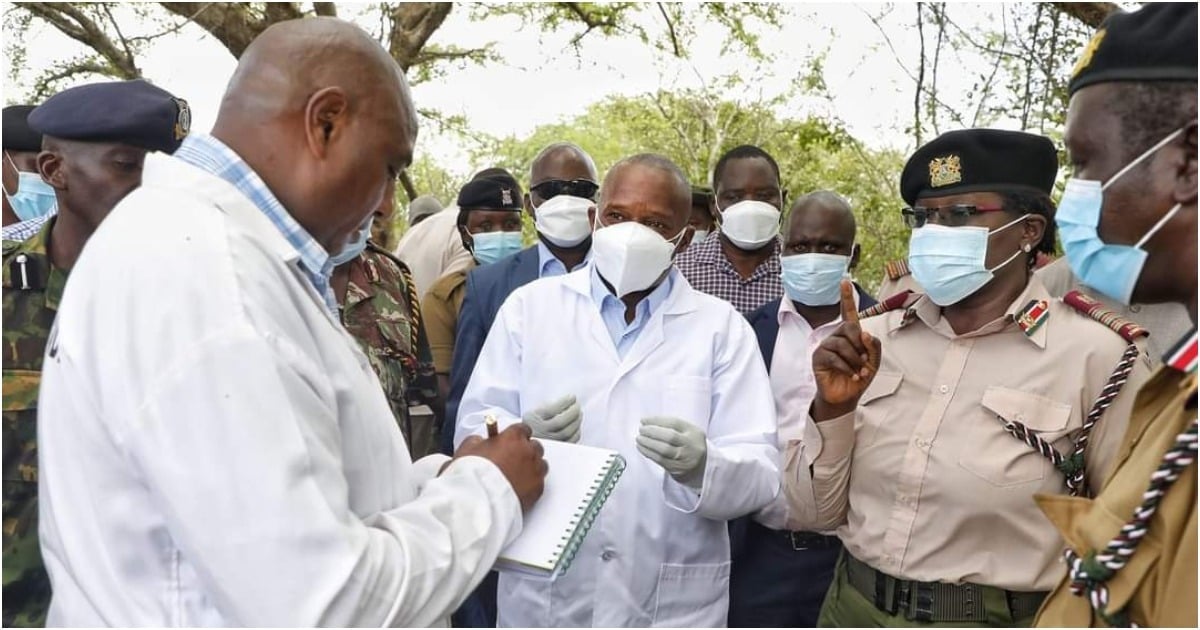
As investigations unfolded in each case, authorities were confronted with disturbing scenes that required extensive forensic work, multi-agency coordination, and prolonged efforts to establish identities, causes of death, and possible accountability.
In this article, we outline three mass grave discoveries in Kenya, the circumstances under which they were uncovered, and the key developments that have followed.
Shakahola Mass Graves
Read More
The mass graves were first uncovered in April 2023 after police rescued several individuals from a remote section of Shakahola Forest following a tip-off about a suspected religious group.
The group was linked to preacher Paul Mackenzie, who led Good News International Ministries. Investigations alleged that followers had been instructed to fast to death in order to “meet Jesus,” claims that have featured prominently in court proceedings and witness accounts. What initially appeared to be an isolated case quickly escalated into a national crisis.
As exhumations intensified, hundreds of bodies were recovered from shallow graves scattered across the forest. By late 2023, official figures reported that more than 400 bodies had been exhumed.

Post-mortem examinations indicated that many victims likely died from starvation, while some cases showed injuries consistent with possible suffocation and strangulation, though investigations are still ongoing.
Mackenzie and several associates were arrested and charged with multiple offences, including murder and terrorism-related charges. The case remains active before the courts as investigations continue.
Kware Dumpsite Mass grave
Barely a year later, another grim discovery emerged in the Kware area of Embakasi, Nairobi, shifting the national conversation from cultism to possible criminal killings and enforced disappearances.
In July 2024, police recovered several mutilated bodies dumped in sacks at a local dumpsite, following reports from residents and activists who had been tracking cases of missing persons.
The condition of the bodies and the manner in which they had been disposed of sparked widespread outrage and speculation, with human rights organisations raising concerns about possible links to extrajudicial killings.
The Directorate of Criminal Investigations (DCI) launched investigations into the incident and, on 15 July 2024, announced that they had arrested Collins Jumaisi, the prime suspect in the Kware murders.

Speaking during a media briefing, DCI boss Mohamed Amin claimed that Collins, a 33-year-old, was arrested at Soweto in Kayole Sub-county and allegedly confessed to killing 42 women, including his wife, between 2022 and July 11, 2024.
"The suspect was arrested at Soweto in Kayole Sub-County this morning at around 3:00 a.m. in a joint operation by the DCI and NPS officers. The suspect confessed to having lured, killed, and disposed of 42 female bodies at the dumping site, all murdered between 2022 and as recent as Thursday, July 11, 2024," Amin said in part.
According to the DCI, the suspect allegedly divulged that he became a serial killer out of anger after he started a business for his wife. Still, she reportedly failed to sustain it, leading to its closure. He allegedly helped her begin another business, but it also collapsed, after which he allegedly killed his wife.
On August 20, 2024, Jumaisi escaped from Gigiri police station together with other suspects, and was yet to be re-arrested by the time of publishing.
Kericho Mass Grave
In March 2026, police officers uncovered a suspected mass grave within the Makaburini area in Kericho County following a report filed at Kericho Police Station.
The alarm was raised by two street boys who work as grave diggers, prompting an immediate response from law enforcement. Officers from the Directorate of Criminal Investigations (DCI), alongside personnel from Kericho Police Station and scenes of crime units, visited the site and confirmed the presence of a freshly dug grave within the public cemetery.
Following this confirmation, authorities launched a full exhumation exercise under the supervision of senior homicide investigators and government pathologists. Initial assessments had suggested that approximately 14 bodies were buried at the site. However, as the exhumation progressed, officials confirmed that a total of 33 bodies were recovered.
Preliminary findings indicated that 25 of the deceased were believed to be minors, while eight were adults, though formal identification and forensic verification were still ongoing at the time of reporting.
Investigations into the circumstances surrounding the burials, including possible procedural or institutional lapses, remain ongoing as forensic work continues.
-1789385357.jpeg)