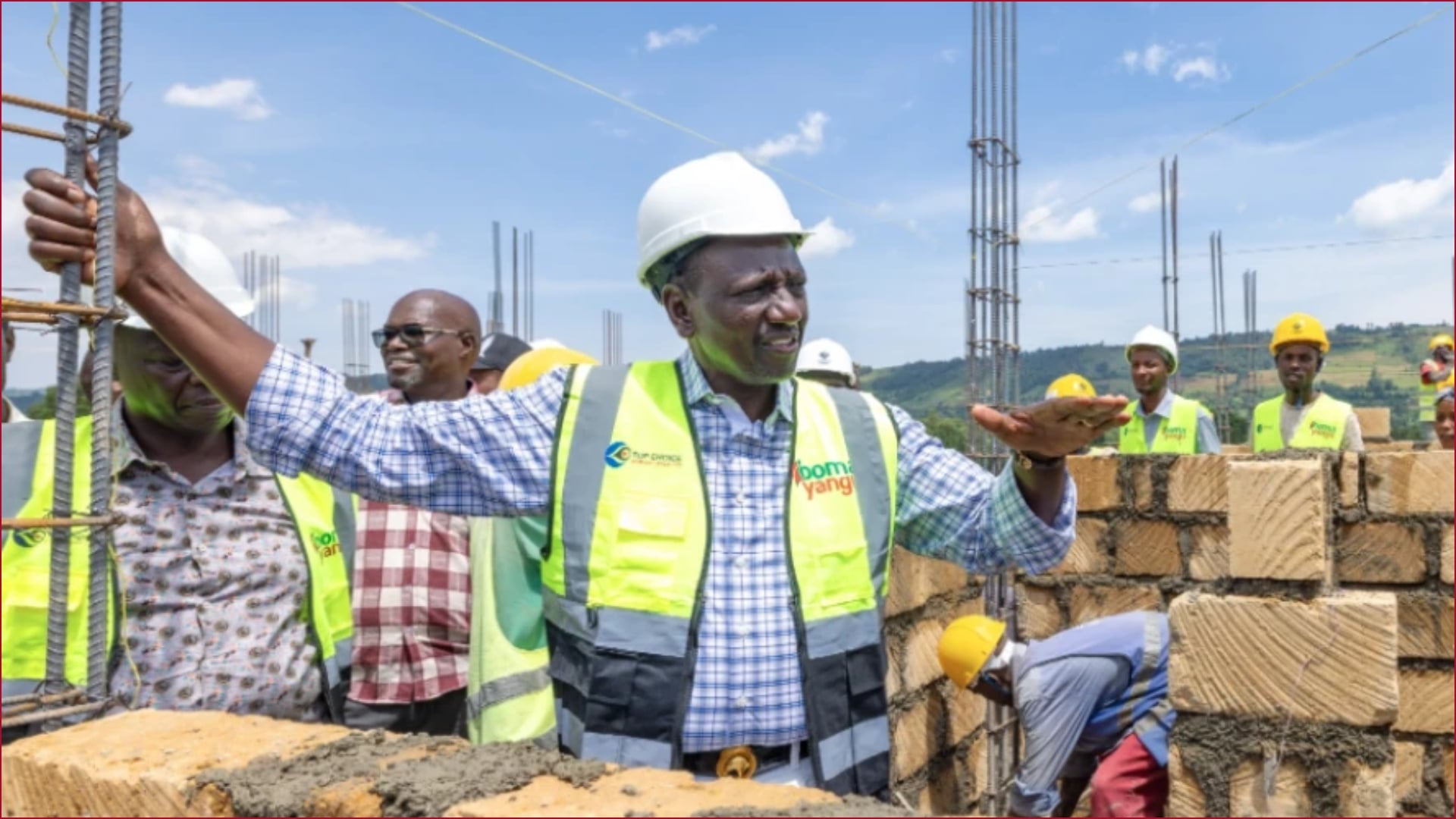
President William Ruto has dismissed allegations that he is pushing the Affordable Housing Programme to benefit from it as a supplier of building materials.
Former deputy president Rigathi Gachagua has been at the forefront opposing the programme, saying Ruto is committed to it for his benefit.
In his accusations, Gachagua often claims that Ruto and his cronies are major suppliers of materials, which is why the president is so passionate about the programme.
But speaking in Nyeri on Saturday, January 17, while attending the United Democratic Alliance (UDA) grassroots leaders' meeting, the president restated that the programme is for the common good of the country, telling of the naysayers.
He said the programme has created employment for the youth, adding that the benefits are shared right from labour provision to supplies.
Read More
Ruto said it is impossible to supply the programme as a loner, further suggesting that he is not anywhere near the procurement of the materials for the programme across the country.
"They say I push this programme because I supply cement and steel. Is it easy to supply those materials?" he posed.

He said the housing programme is ongoing across the country, and that he will push its implementation as outlined in his manifesto.
However, even as Ruto insists on housing, the programme has suffered setbacks in court.
For instance, the High Court in Nairobi recently suspended construction of the Southlands Affordable Housing Project in Lang’ata.
Justice Charles Mbogo issued the ruling in response to a petition challenging the project’s legality and compliance.
He granted conservatory orders halting the works until a motion before the court is determined.
Busia Senator Okiya Omtatah, who was involved in the litigation, welcomed the decision, saying it reinforces constitutional principles in development projects.
He stressed that while affordable housing is a vital public goal, it must be pursued lawfully, transparently, and with respect for land-use and environmental safeguards.
“Affordable housing is necessary, but it cannot be achieved through shortcuts or in breach of the law. Public projects must always comply with constitutional and statutory requirements,” Omtatah said.
He clarified that the case is not against housing initiatives themselves, but seeks to uphold accountability, constitutionalism, and judicial oversight in public development.