Editor's Review
Kenya has been selected to host the next round of the Amateur Radio on the International Space Station (ARISS) program in 2026.
Kenya has been selected to host the next round of the Amateur Radio on the International Space Station (ARISS) program in 2026.
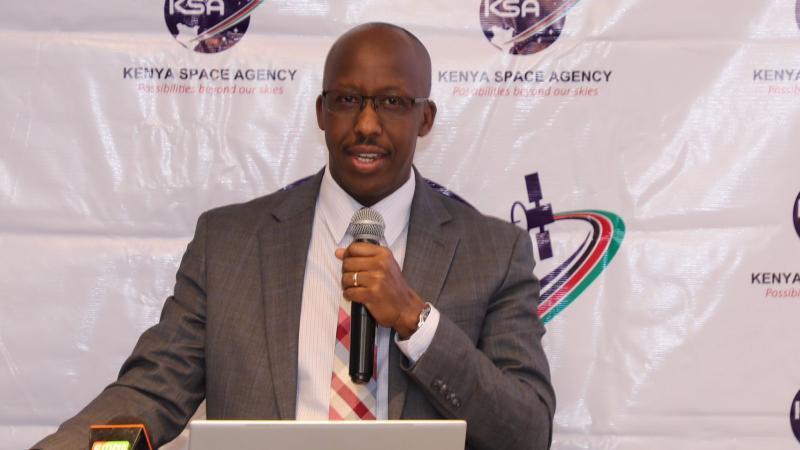
In a statement on Friday, January 23, the Kenya Space Agency (KSA) made the announcement, describing it as a rare chance for Kenyans to speak directly with astronauts on the ISS.
"We are thrilled to announce that Kenya has been selected to host the next round of the ARISS - Amateur Radio on the International Space Station (ISS) program, a global initiative that will give kenyans a rare opportunity to communicate directly with astronauts aboard the ISS," the statement read.
KSA noted that Kenya is the only African country selected for the 2026 round, highlighting the nation’s growing leadership in space science and innovation.
"Kenya is the only African country selected for this prestigious program in the 2026 round, underscoring the nation’s growing leadership in space science and innovation on the continent," the statement added.
Read More
KSA explained that the hosting period will run between July and December 2026 and will involve students, industry professionals, and citizens engaging in live radio contact with astronauts.
"The hosting window is scheduled between July and December 2026, during which Kenyan students, industry professionals and citizens will engage in live radio contact with astronauts, inspiring curiosity in STEM, industry innovation and space science," the statement further read.

KSA also outlined the preparations that will be undertaken in collaboration with regional and international partners to ensure a successful contact session.
"In preparation, we will work closely with an assigned Pan-African Citizen Science e-Laboratory mentor and Harold Safary, the Agency Liaison, to ensure a successful and impactful contact session," the statement concluded.
KSA announced that an open call will be made for individuals who wish to speak directly with astronauts aboard the ISS during the program.
The ARISS program is an international educational and outreach initiative that allows students, educators, and the general public to communicate directly with astronauts aboard the ISS using amateur (ham) radio.
ARISS is a collaboration between major space agencies and amateur radio organizations from several countries. These include NASA in the United States, Roscosmos in Russia, the European Space Agency (ESA), the Japan Aerospace Exploration Agency (JAXA), and the Canadian Space Agency (CSA), along with national amateur radio groups such as the American Radio Relay League (ARRL) and AMSAT.
Together, they coordinate operations, educational outreach, and technical support for amateur radio activities on the ISS.
Through ARISS, schools and youth groups can apply for scheduled radio contacts during which students ask questions directly to an astronaut on the ISS.
These live conversations usually last about ten minutes, which is the amount of time the ISS remains within radio range of a specific location on Earth.
In addition to voice contacts, the ISS also transmits images using Slow-Scan Television (SSTV), which can be received by anyone with a basic radio receiver and antenna.
ARISS also supports special on-orbit events and educational experiments linked to science celebrations, anniversaries, or student-led projects.
The ISS is equipped with amateur radio hardware that includes VHF and UHF transceivers, external antennas, and a laptop-based control system.
Astronauts operate this equipment during their free time, just like licensed amateur radio operators on Earth. Commonly used frequencies include 145.800 MHz for voice downlinks and around 437.800 MHz for SSTV transmissions.


 (1)-1791178178-md.jpg)



 (1)-1791178178-sm.jpg)