
Editor's Review
"I am not against maandamano, but let us not disrupt economic activities."
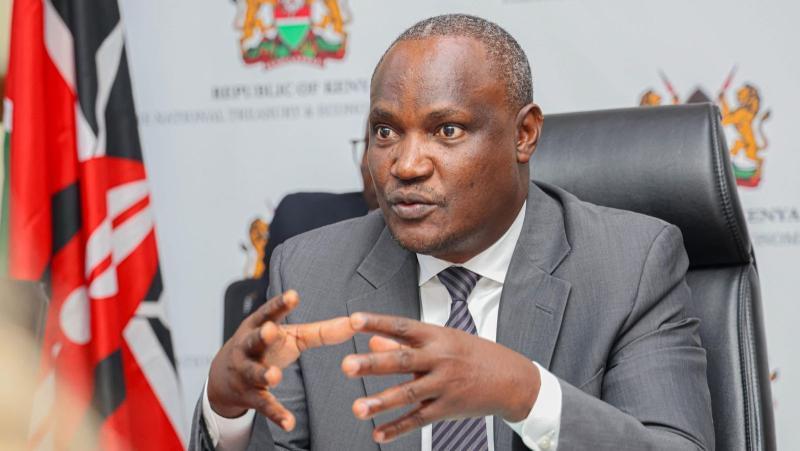
Treasury Cabinet Secretary John Mbadi has revealed that demonstrations are part of the reason Kenya pays high debts because it directly affects the country's credit rating.
Speaking on Tuesday, February 3, Mbadi revealed that mass protests lead to economic disruptions, thus undermining Kenya's ability collect revenue enoughto service its loans.
"I am not against picketing, but let us not disrupt economic activities. It is costly, expensive, and one of the reasons we pay high debts," he explained.
The CS noted that demonstrations of a single day can take the government up to three months to recover, which scared off international lenders.
He argued that top lenders like the World Bank and the International Monetary Fund often project that the losses would set back Kenya by three years.
Read More

"Today, I am struggling with the World Bank to justify and demonstrate that our debt sustainability is still within limits because they don't see it in their economic projections.
"Sometimes they project the economy to pick up in three years, but I convince them that it would recover within months," Mbadi disclosed.
The Treasury boss disclosed that the country has been recovering from the effects of the mass demonstrations that rocked the country in 2023, 2024, and 2025.
He called on Kenyans who are displeased with the government to look for other ways of expressing their discontent as long as they did not interfere with the economy.
The sentiments come against the backdrop of the matatu strike that left transport paralysed in Nairobi.
Several businesses within the Central Business District and its outskirts were affected by the slowdown as many residents were unable to report to work or their business places.
The United Opposition also vowed to go to the streets if the security organs did not address their concerns after the Witima Church attack.
 (1)-1791708588-md.jpg)
 (1)-1791175033-md.jpg)
-1791699761-md.jpg)
-1791696120-md.jpg)

 (1)-1791708588-sm.jpg)
 (1)-1791175033-sm.jpg)
-1791699761-sm.jpg)