Editor's Review
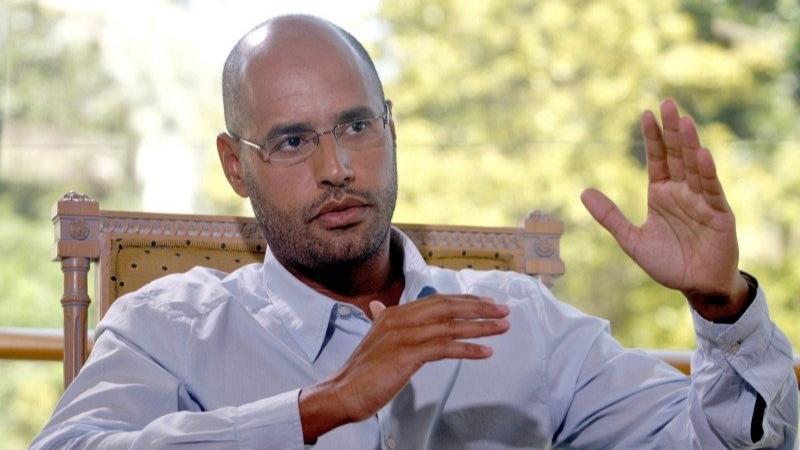
Saif al-Islam Gaddafi, the son of the late Libyan leader Muammar Gaddafi, was killed by masked gunmen in a night raid at his home in Zintan.
Saif al-Islam Gaddafi, the son of the late Libyan leader Muammar Gaddafi, was killed by masked gunmen in a night raid at his home in Zintan on Tuesday, February 3.
According to officials from his political team, the 53-year-old, who was once seen as a reformist heir, was killed in what they labeled a 'cowardly and treacherous assassination'.
The attack, carried out by a four-man commando unit that disabled security cameras before storming the residence, has prompted an urgent investigation amid fears it could further destabilize the nation.
Saif's French lawyer, Marcel Ceccaldi, confirmed the killing, stating it occurred around 2 PM local time at Gaddafi's home in Zintan where he had lived since his release from militia custody in 2017.
A close associate had recently warned Gaddafi of security concerns, and the head of his tribe had even offered to send protection, an offer he reportedly refused.
Read More
The Libyan Attorney General’s Office has opened an investigation into the killing, though details remain unclear and no group has claimed responsibility.

A major militia brigade affiliated with the Defense Ministry of the Government of National Unity has already denied any involvement.
During the 2000s, Saif cultivated an image as a progressive reformer leading negotiations for Libya to abandon its weapons of mass destruction program and repair relations with the West.
However, that reputation shattered during the 2011 Arab Spring uprising, when he staunchly defended his father's regime.
In a televised address, he warned of 'rivers of blood' and vowed to fight 'to the last man, woman and bullet,' a threat that led to his indictment by the International Criminal Court for alleged crimes against humanity.
Following the overthrow and killing of Gaddafi, Saif was captured by a militia while attempting to flee to Niger and was held in Zintan.
A Tripoli court sentenced him to death in absentia in 2015 for war crimes, but he was released under an amnesty law in 2017 and had lived underground since.
His attempt at a political comeback in 2021, when he announced a candidacy for the presidential election, proved highly controversial and contributed to the collapse of that electoral process.
Notably, Saif received his early education in Libya before pursuing higher studies abroad.
He earned a bachelor’s degree in architecture or engineering from Al-Fateh University in Tripoli. He later obtained a Master of Business Administration (MBA) from IMADEC Business School in Vienna, Austria.
In 2008, he completed a PhD at the London School of Economics (LSE), where his doctoral research focused on civil society and global governance.