Editor's Review
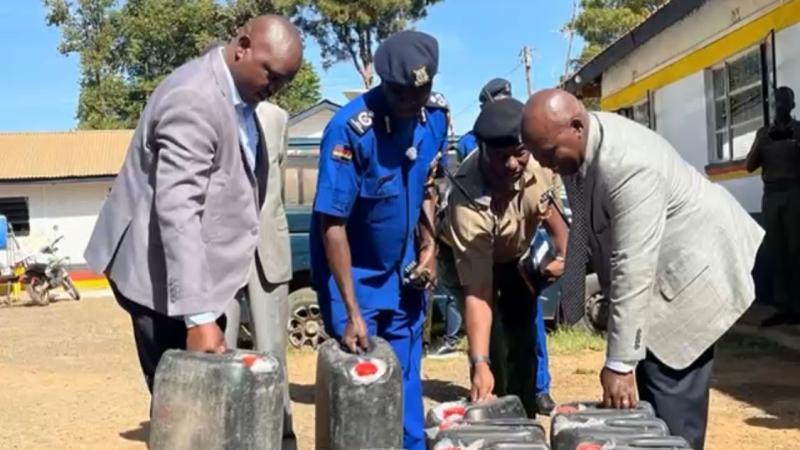
Two suspects have been arrested after authorities intercepted a consignment of suspected illicit ethanol valued at approximately Ksh1.2 million.
Two suspects have been arrested after authorities intercepted a consignment of suspected illicit ethanol valued at approximately Ksh1.2 million.
In a communication on Monday, March 30, the National Authority for the Campaign Against Alcohol and Drug Abuse (NACADA) said the operation is aimed at curbing the circulation of unregulated alcoholic substances across the country.
According to NACADA, a total of 810 litres of suspected illicit ethanol was seized during the operation.
The agency noted that such illegal products often find their way into the market through unscrupulous networks exploiting regulatory loopholes.
NACADA CEO Anthony Omerikwa confirmed the arrests, stating that the two suspects are currently in custody and will be arraigned in court.
Read More
He noted that the crackdown is part of a strategy to dismantle well-organized syndicates involved in the production and distribution of illicit alcohol.

Elsewhere, this comes weeks after NACADA shut down 15 drug and alcohol rehabilitation facilities following a nationwide inspection.
In a statement on Thursday, January 15, Omerikwa said the inspection exercise was carried out late last year, involving multiple government agencies and covering hundreds of facilities.
"The Authority announces the findings of a nationwide inspection of treatment and rehabilitation facilities conducted in November 2025 under a Rapid Results Initiative (RRI). The exercise was conducted by a Multi-Agency Team comprising of relevant Government Agencies and 236 facilities were inspected across 36 Counties," he said.
Omerikwa reported that slightly over half of the inspected centres met the required standards and were granted full accreditation.
However, NACADA noted that a significant number of facilities failed to meet minimum safety and operational requirements.
"Following the inspections, 135 facilities were fully accredited, offering a combined residential bed capacity of nearly 3,800. These accredited centres, many providing Level 3 residential services, form the backbone of the country's treatment and recovery response.
"However, 30 facilities were denied accreditation, while 15 facilities were issued immediate closure notices due to serious violations that posed risks to clients, including expired medicines, poor hygiene, unsafe structures, and a lack of qualified medical personnel. An additional 56 facilities were found to have compliance gaps and will remain under close monitoring," he added.
Additionally, Omerikwa said the inspection exposed broader systemic weaknesses in access, affordability, and specialised care within the rehabilitation sector.
"The findings also reveal major systemic gaps. Most accredited facilities are privately owned, making quality inpatient care unaffordable for many families. There is a critical shortage of public outpatient and community-based services, and an alarming lack of specialised rehabilitation services for women and adolescents," he further said.

 (1)-1791178178-md.jpg)
 (1)-1791178178-sm.jpg)