
Editor's Review
Consular services will not be offered in the course of the closure.
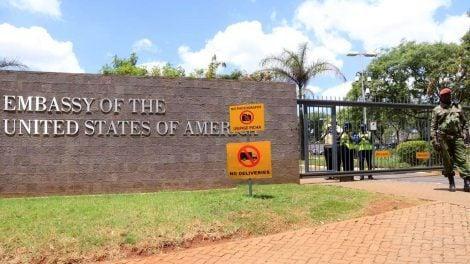
The US Embassy in Kenya will be out of service this Monday, May 25, after an announcement of one-day closure.
In a Twitter post on Sunday, May 24, the embassy announced the closure in recognition of Memorial Day.
Consequently, services such as visa and passport processing will not be available, mirroring a similar shutdown that occurred in February.
Memorial Day, held annually on the final Monday of May, is a US public holiday set aside to commemorate soldiers who died in service to their country.
The tradition traces its roots to the aftermath of the Civil War, when it was known as Decoration Day, before being formally recognised as a federal holiday in 1971.
Read More
It is typically observed through memorial services, processions, and graveside tributes involving flags and flowers.
Beyond its commemorative significance, the day is widely regarded as the unofficial kickoff to the summer season, bringing with it family get-togethers and community celebrations.

As earlier hinted, a similar closure was occasioned on February 26, this time in honour of the President's Day.
Presidents’ Day in the US was originally established to honor George Washington’s birthday on February 22.
In 1879, Congress made Washington’s Birthday a federal holiday. the first to commemorate an individual.
The Uniform Monday Holiday Act of the late 1960s shifted the observance to the third Monday in February, beginning in 1971, and because this date falls between Washington’s and Abraham Lincoln’s birthdays, the holiday gradually became known as Presidents’ Day, seen as honouring multiple presidents, though it is still officially recognised as Washington’s Birthday.
Earlier that year, on January 19, the US Embassy closed in observance of Martin Luther King Jr. Day, which is held annually on the third Monday of January.
MLK Day honours the legacy of Dr. King, a civil rights leader remembered for his advocacy of racial equality, voting rights, nonviolent resistance, and social justice.
The day is often marked by marches, parades, and speeches from civil rights and political leaders.




 (1)-1792314340-md.jpg)





 (1)-1792314340-sm.jpg)