By Victor Bwire
Does the media influence elections? Is voters' choice of candidates shaped by media coverage? The answer to both questions is yes. Media attention and focus on certain electoral issues and candidates, whether through traditional or digital platforms, play a significant role in election outcomes. It all depends on media management and campaign strategy, extending beyond mere publicity to deliberate visibility interventions. Technology, especially generative artificial intelligence (AI) and its integrated use, has broken down traditional gatekeeping by editors and media outlets, while enhancing the agenda-setting function of the media, particularly during elections.
While popularity alone is not enough to win voters' attention, media exposure, especially mentions, placement, and viral sound bites, can endear a candidate to voters and increase their chances of being elected. Routine media coverage of a candidate commenting on various electoral issues creates perceptions about that individual. While these perceptions can be complex, voters often come to view a frequently featured candidate as knowledgeable, articulate, and capable of representing their interests in Parliament, thereby deserving election. Conversely, candidates who receive little attention may be perceived as less suitable for office.
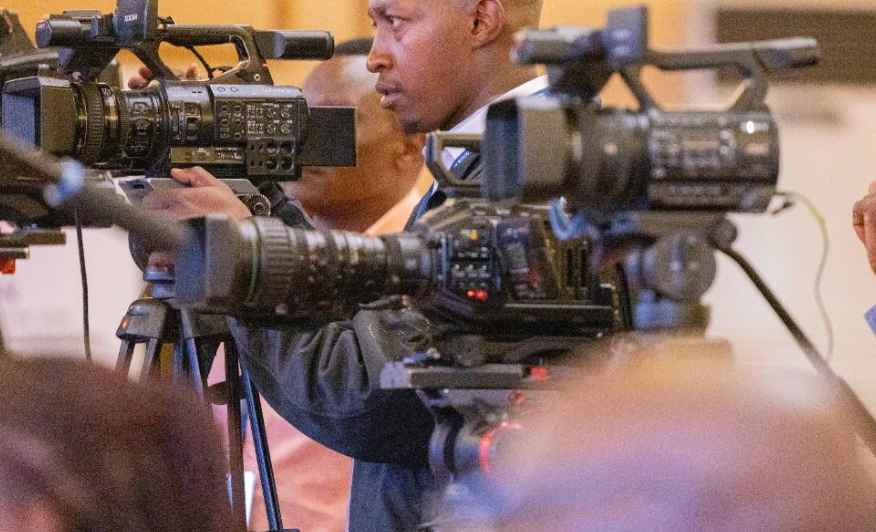
The media plays a critical role in shaping the election agenda through voter education, coverage of political parties' manifestos, candidate profiling, and discussion of campaign issues. In doing so, it contributes to good governance and fulfills its social responsibility mandate. The media also has a responsibility to provide civic education, serve as a watchdog, and facilitate citizen participation and engagement in the electoral process. It offers a forum for information exchange and public evaluation of political actors. One of the hallmarks of a strong democracy is the ability of the media to remain objective by providing fair and balanced coverage to all candidates vying for public office. Democracy also guarantees freedom of expression, giving citizens confidence that they will be heard and allowed to express their views without fear of victimization.
As expected, the growing use of technology, especially digital platforms, has transformed electoral processes, including campaigns, the performance of the Independent Electoral and Boundaries Commission (IEBC), traditional media coverage of electoral issues, and results transmission. More importantly, the civic and voter education role of the media has significantly enhanced voters' knowledge of their rights, responsibilities, and roles in elections.
Read More
Various media forms and formats are being used to engage voters and educate the public on the importance of voter registration, evaluating aspirants and candidates, facilitating open political debates, and electing leaders based on merit and substance. Yet, despite these efforts, the public often appears unbothered. Politicians have invested heavily in AI and are using it to generate campaign messages, memes, and sound bites, while also distributing speeches across integrated media platforms. They have employed publicists and media relations teams and adopted media intelligence strategies to secure voter attention across both traditional and digital platforms.
In addition to operating personal digital platform accounts and using bots, political actors create and amplify both legitimate messages and misinformation, highlighting the extent to which media influences electoral processes and the electability of candidates. Politicians have also acquired media outlets and digital campaign platforms, investing substantial resources in these channels. Whether media coverage is positive or negative, frequent mentions increase public attention and can influence voter acceptance or rejection of candidates.
Political campaign strategies, including candidate debates, podcasts, live interviews and livestreaming of events, can significantly influence voting patterns. This includes the management of crowd attendance, real-time fact-checking, online commentary, campaign narratives, and even the handling of hate speech. How the media covers these issues matters greatly. Media strategy is therefore essential for all election stakeholders, including voters, candidates, political parties, development partners, and election observers.
Access to critical electoral information is fundamental to enhancing the prospects of transparent, credible, and acceptable electoral processes. When election results are accepted, democracy is strengthened. When they are disputed, citizens should seek redress through the courts rather than through violence or unrest.

Observers have noted that the increasing digitalization of societies around the world has created unprecedented opportunities to seek, receive, and share political information and ideas. This has expanded the reach and effectiveness of voter education, which remains crucial to democratic participation. Politicians, voters, and other stakeholders can now communicate more quickly and directly, with information being amplified, scrutinized, or corrected in real time.
Regarding the role of the media in electoral processes, the European Court of Human Rights notes that: “Freedom of the press affords the public one of the best means of discovering and forming an opinion of the ideas and attitudes of their political leaders. It gives politicians the opportunity to reflect and comment on the preoccupations of public opinion; it thus enables everyone to participate in the free political debate which is at the very core of the concept of a democratic society.”
Similarly, the Inter-American Commission on Human Rights states that: “Freedom of the press is essential for the full and effective exercise of freedom of expression and an indispensable instrument for the functioning of representative democracy, through which individuals exercise their right to receive, impart and seek information.”
The European Court of Human Rights further emphasizes that it is the duty of the media to impart information and ideas on matters of public interest. The public, in turn, has a right to receive such information and ideas.
In the Declaration of Principles on Freedom of Expression in Africa, the African Union recognizes “the key role of the media and other means of communication in ensuring full respect for freedom of expression, in promoting the free flow of information and ideas, in assisting people to make informed decisions and in facilitating and strengthening democracy.”
Livestreaming, real-time fact-checking, and crowdsourcing of events enable young people to challenge official narratives, attract global attention, and promote accountability. The digital public sphere has fostered a new sense of shared national experience grounded in participatory politics rather than ethnic or partisan affiliations. Similarly, digital platforms have enabled whistleblowing as a civic practice, allowing Kenyans to expose corruption, challenge opaque state decisions, and defend the public interest. Memes have also emerged as a distinctive form of political expression and national identity formation among Kenyan youth.
As elections become increasingly digital, safeguarding information integrity while promoting responsible media coverage will be essential. The challenge for democracies is not merely to embrace new technologies such as AI, but to ensure they are used in ways that strengthen public trust, informed participation, and democratic accountability.
Victor Bwire is the Director, Media Training and Development at the Media Council of Kenya.