Editor's Review
Experts will meet in Nairobi in mid-March 2026 during the Pan-African Media Conference, hosted by the Media Council of Kenya, Kenya Editors Guild, Kenya Union of Journalists, and the OECD, to review these challenges and propose solutions.
By Victor Bwire
Media players in Africa, as elsewhere globally, are seeking sustainable interventions as challenges intensify in the face of digital innovations such as Artificial Intelligence, information manipulation, evolving public policy frameworks, platform economies, and changing audience behaviour.
Stakeholders are combining their knowledge and expertise to align the industry with the changing reality, while continuing to play a vital role in promoting democratic governance, supporting access to information, ensuring transparency and accountability in government, and shaping development narratives. Experts will meet in Nairobi in mid-March 2026 during the Pan-African Media Conference, hosted by the Media Council of Kenya, Kenya Editors Guild, Kenya Union of Journalists, and the OECD, to review these challenges and propose solutions.
It is already evident that while AI offers significant opportunities to enhance access to information and drive innovation, it also accelerates the creation and circulation of harmful content that can mislead audiences and threaten information integrity.
Although digital platforms have expanded access to information, uneven growth in digital infrastructure and media literacy continues to expose many citizens to information manipulation. Content and news production processes are also facing operational challenges, including declining revenues, increased taxes on media equipment, and interference from governments, advertisers, and owners in editorial decisions. More critically, technological challenges persist in safeguarding information integrity.
Read More
With the rise of digital media and citizen journalism, traditional business models for sustainable media outlets have come under pressure in the 21st century. Understanding sustainable business models is essential not only for media managers worldwide but also for international donors and development partners.
Financially independent media enterprises are more likely to uphold editorial freedom and resist corruption, government influence, and overreliance on external funding.
UNESCO reports that Anglophone African countries have experienced stronger growth in the media sector compared to other regions. However, state and private commercial ownership still dominate the media landscape across the continent. While there has been notable growth in online content, private radio, and television, newspaper circulation continues to decline, even as some print outlets maintain stable readership.

Key challenges to media pluralism include the need for legislative and structural reforms to strengthen the independence of regulatory bodies. Funding and business management remain major obstacles to sustainability.
Media ownership by politicians or their affiliates also persists, while mainstream financial institutions have played a limited role in financing media ventures, despite some progress through soft credit initiatives.
The theme of the convention, information integrity, digital platforms, and media in Africa, is expected to guide discussions toward actionable resolutions and policy recommendations for governments and regulators. The event aims to address the rapidly evolving media landscape and the urgent need for adaptive legal and regulatory frameworks that support a free, responsible, and ethical media environment.
The foundations for this conversation trace back to the Windhoek Declaration, which emphasized that a free and pluralistic press is essential for democracy and development, and called for media independence from political and economic control.
The OECD is participating as a knowledge partner, leveraging its expertise in information integrity. In 2022, it established the Hub on Information Integrity to support analysis and policy development aimed at strengthening the integrity of the information ecosystem while safeguarding freedom of expression. The OECD Council’s 2024 Recommendation on Information Integrity provides a global standard focused on resilience, transparency, and institutional accountability.
Africa cannot afford a media environment where journalists lack qualifications or fail to uphold ethical standards. Irresponsible or malicious journalism has the potential to undermine societies.
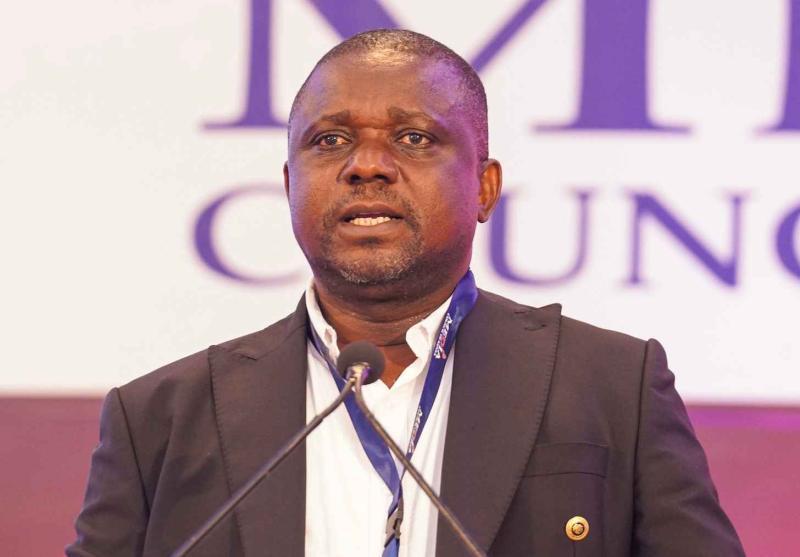
Victor Bwire is the Director, Media Training and Development at the Media Council of Kenya.