
Editor's Review
The government has warned that escalating tensions in the Middle East are now posing a serious threat to the country's export sector.
The government has warned that escalating tensions in the Middle East are now posing a serious threat to the country's export sector.
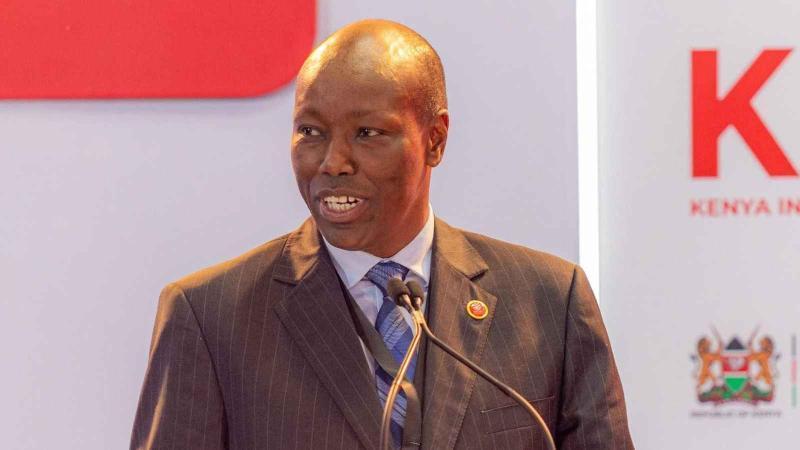
In a statement on Tuesday, April 21, Trade Cabinet Secretary Lee Kinyanjui said the disruptions are already being felt across key industries.
In his statement, Kinyanjui outlined how the crisis is affecting global trade systems and Kenya’s position within them.
"The ongoing crisis in the Middle East continues to exert significant pressure on global trade systems, with direct implications for Kenya's export sector, a key pillar of our foreign exchange earnings and economic stability," the statement read.
Kinyanjui pointed to Kenya’s recent export performance, noting that the country had achieved record growth before the current disruptions.
Read More
He warned that a significant portion of these exports is now under threat due to the ongoing geopolitical tensions in the Middle East.
"Kenya's exports reached a record Ksh1.1 trillion in 2024, supported by strong performance in horticulture, tea, apparel and emerging manufacturing sectors.
"However, the current geopolitical tensions now place at risk approximately Ksh164.6 billion worth of annual exports to the Middle East, one of Kenya's most strategic and fastest-growing markets," the statement added.
Kinyanjui further explained that the region plays a broader role beyond direct trade, acting as a key global logistics hub that supports Kenya’s access to multiple international markets.
"Beyond direct trade, the Middle East serves as a critical global logistics and transshipment hub. Disruptions in this region are therefore affecting not only exports to Gulf markets, but also Kenya's access to Europe, Asia and North America," the statement continued.
According to Kinyanjui, the crisis has led to the suspension and restriction of major maritime and air cargo routes through the Red Sea and Gulf corridors.
He explained that transit times have increased by between 10 and 20 days, freight costs have surged, and air cargo delays of up to 48 hours are affecting perishable exports such as flowers and fresh produce.

As such, the government says it has already begun implementing measures to cushion exporters and stabilize the economy.
"A key intervention is the temporary reduction of VAT on petroleum products from 16 percent to 8 percent, to ease cost pressures from rising global oil prices," the statement noted.
Authorities have also activated coordinated efforts across agencies to closely monitor supply chain pressures and protect critical sectors.
"A multi-agency framework has been activated to monitor fuel pricing, freight costs and supply chain stability. This is focused on protecting priority sectors including horticulture, tea, coffee, livestock and manufacturing," the statement read.
Kinyanjui concluded by stressing the need for Kenya to reduce overreliance on specific transit routes and expand into new markets.
"The current situation underscores the need to reduce reliance on single transit corridors. Kenya is accelerating efforts to diversify export markets, particularly in Asia, Europe, and emerging markets in Latin America, while deepening intra-African trade," the statement concluded.
Elsewhere, this comes a day after the Qatar Civil Aviation Authority (QCAA) announced the gradual reopening of the country’s airspace to foreign airlines.
In a notice on Monday, April 20, the aviation regulator confirmed that the resumption will take place in stages, with operations centered at Hamad International Airport.
"Qatar Civil Aviation Authority (QCAA) has issued a Notice to Airmen (NOTAM) announcing the gradual resumption of operations for foreign airlines in the State of Qatar via Hamad International Airport," the statement read.
QCAA explained that the move is not abrupt but carefully calibrated, based on a broad assessment involving multiple stakeholders.
"QCAA stated that this decision follows a comprehensive assessment of the situation, conducted in coordination with all relevant national entities, to ensure the highest levels of readiness and operational efficiency," the statement added.
QCAA reassured airlines and passengers that strict global aviation standards will be upheld, with safety and security remaining a top priority.
"It affirmed that all flights and related operations will be carried out in accordance with the highest internationally recognized safety and security standards, with all necessary measures and precautions in place to safeguard passengers and aviation personnel," the statement further read.
-1768823097-md.jpg)




 (1)-1792651348-sm.jpg)