Editor's Review
The waste management facility was officially commissioned by President William Ruto in October 2025 and is designed to eliminate the need for traditional garbage collection methods.
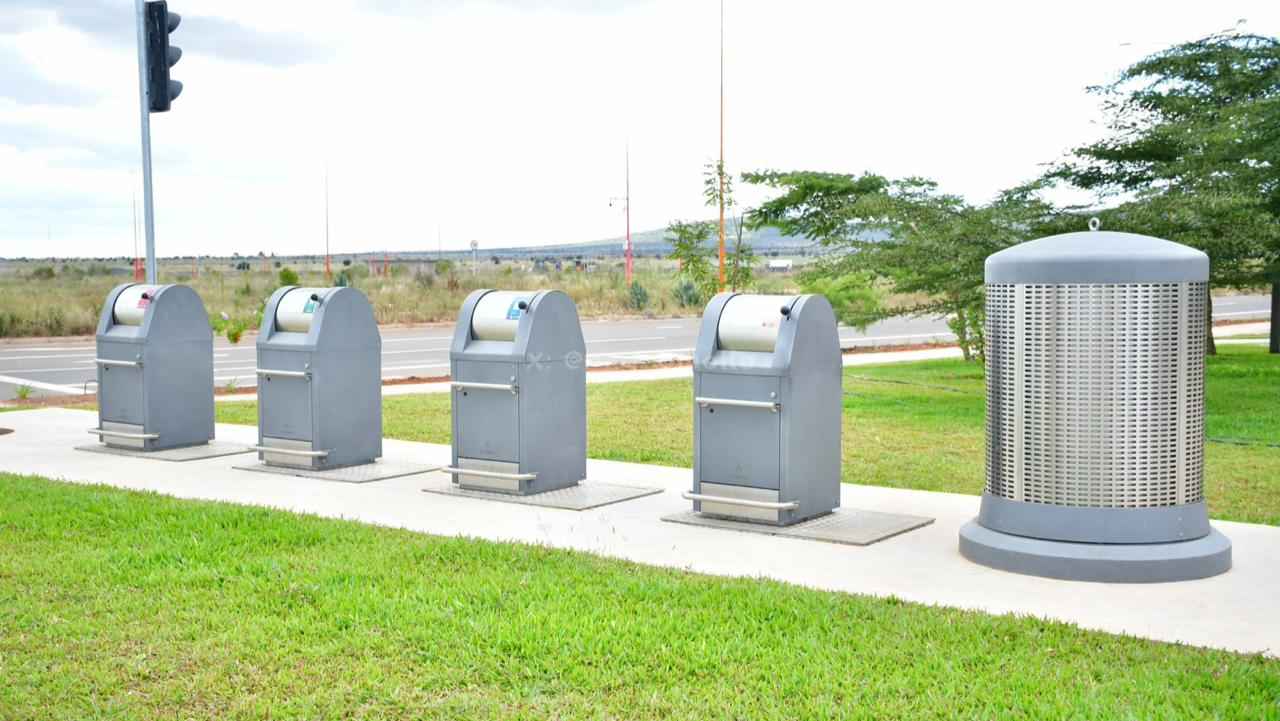
Konza Technopolis has unveiled Africa’s first automated pneumatic solid waste management system, a facility designed to transform urban waste handling through underground automation and smart technology.
In a statement on Thursday, June 4, Interior Principal Secretary Raymond Omollo said the smart city continues to lead the continent in urban innovation.
"As Africa's leading smart city and a source of national pride, Konza Technopolis continues to set new benchmarks in urban innovation through the deployment of the continent's first automated pneumatic solid waste management system," he said.
According to Omollo, the waste management facility was officially commissioned by President William Ruto in October 2025 and is designed to eliminate the need for traditional garbage collection methods.
"Officially commissioned by President William Ruto in October 2025, the facility replaces conventional garbage collection methods with a fully automated underground network capable of processing up to 40 tonnes of waste daily, delivering a cleaner, more efficient and environmentally sustainable urban environment," he added.
Read More

Omollo said the system is built on a 14.8-kilometre underground pipeline network connecting 25 collection stations and 100 disposal inlets distributed across East and West Konza.
Residents and businesses are required to sort waste at the source into four categories - organic, paper, packaging and mixed waste.
The waste is then transported through the underground network to a central processing terminal for handling.

According to Omollo, the entire operation is coordinated through an advanced digital monitoring platform.
"Operations are managed through a centralized SCADA platform that continuously monitors waste levels and automatically activates high-powered vacuum technology when collection is required," he noted.
Waste moves through the underground pipeline system at speeds of up to 70 kilometres per hour before reaching the central terminal.
There, cyclone separation technology extracts solid waste for compaction and recycling, while filtered air is safely released back into the environment.

Meanwhile, Ruto has awarded a charter to the Kenya Advanced Institute of Science and Technology (Kenya-AIST).
Located within Konza Technopolis, the institution is Kenya’s first public postgraduate-only university and is fully funded through scholarships.
In a statement on Wednesday, June 3, Interior Principal Secretary Raymond Omollo said Kenya was drawing lessons from successful innovation-driven economies to accelerate its development agenda.
"Kenya is increasingly aligning its advanced development agenda on comparative global learning, drawing lessons from leading innovation economies such as South Korea to accelerate its transition into a knowledge-driven industrial state," he wrote.
Omollo noted that the granting of a charter to the university marked a key milestone in the country’s efforts to strengthen research, innovation, and industrial development.
"In this context, President William Ruto awarded a charter to the Kenya Advanced Institute of Science and Technology (Kenya-AIST) in May 2026, marking a strategic milestone in positioning Kenya within the global frontier of science, technology, and research-led development," he added.
Kenya-AIST has been structured around seven advanced disciplines: Mechanical Engineering, Nuclear Engineering, Electrical and Electronics Engineering, IT Engineering, Civil and Environmental Engineering, Chemical Engineering, and Agricultural Biotechnology.
The institution is expected to produce highly skilled researchers and innovators capable of driving Kenya’s industrial transformation.
According to Omollo, the university’s location within Konza Technopolis places it at the heart of an expanding innovation ecosystem.
The campus sits alongside advanced manufacturing facilities, including the Lucky DJX Jeans Export Processing Zone hub and the National Data Centre, creating opportunities for direct collaboration between researchers and industry players.
According to Omollo, the university’s integration with surrounding industrial infrastructure is designed to ensure that research outputs can be rapidly commercialized and deployed.
"This 'plugged-in' model enables real-time research-to-industry transition, where prototypes, patents, and systems can be tested, refined and immediately scaled within adjacent production facilities," he further said.


 (1)-1788757524.jpg)