
Editor's Review
The year 2025 will be remembered as a dark chapter in Kenya's journey toward constitutional democracy.
The year 2025 will be remembered as a dark chapter in Kenya's journey toward constitutional democracy.
It is a year when activists, bloggers, software developers, and ordinary citizens expressing dissent found themselves hunted, arrested, abducted, and in one tragic case, killed in police custody.
Rose Njeri
Rose Njeri, a 35-year-old Nairobi-based software developer and digital activist, created what seemed like a straightforward civic tool: an email platform that would allow Kenyans to easily submit feedback on the 2025 Finance Bill to their elected representatives.
The platform, dubbed "Civic Email," was essentially an email-sending tool that let users select recipients from the National Assembly Clerk to the assembly's Finance Committee.
Read More
Njeri first announced the tool on May 19 through her X account.
The tool featured a subject line and email body template that users could edit and append with their name signature before sending to National Assembly officials.
The template highlighted concerns about the 2025 Finance Bill, particularly clauses that Njeri argued would lead to a higher cost of living. She took particular issue with proposals to amend tax procedures and allow the Kenya Revenue Authority (KRA) to access personal data without a court order, arguing it could undermine privacy rights.
"There are inadequate protections against potential overreach by the Kenya Revenue Authority, creating a risk of unauthorized access to citizens' private financial information," the email template read.
"I call for the withdrawal of this bill as it is made in bad faith, ignorant to the current economic needs and political wills of the people of Kenya."
On May 30, Rose Njeri was arrested at her apartment in Nairobi's South B area and taken to Pangani Police Station. According to reports, approximately 15 officers in three Subaru vehicles descended on her home, ransacked it, and confiscated her phone, laptop, and hard drives.
Lawyers and activists immediately condemned the arrest, terming it an effort to silence dissent. They questioned the lack of clear reasons for her continued detention without bail and the police's failure to produce her before court as soon as possible.

Former Chief Justice David Maraga condemned the arrest and detention, arguing it negated the spirit of Madaraka Day, which celebrates Kenya's self-governance.
"Madaraka Day is about internal self-governance and the freedom to run our country... Rose Njeri is the latest to be abducted for allegedly innovating an accessible system for citizens to express their views on the Finance Bill 2025. This completely negates the spirit of Madaraka," he said.
Meanwhile, the Law Society of Kenya (LSK), through its President Faith Odhiambo, expressed frustration over the difficulties lawyers faced in providing Njeri with legal counsel.
Kenyans rallied for her release on social media using the hashtag #FreeRoseNjeri.
When she finally appeared in court, she was charged with "unauthorized interference with a computer system" contrary to Section 16 of the Computer Misuse and Cybercrime Act.
Prosecutors argued that Njeri's platform directed mass emails to the National Assembly Clerk's systems, ‘thereby interfering with their normal functioning.’
It was a charge that digital rights activists and legal experts found deeply troubling, as it effectively criminalized the act of facilitating citizen engagement with their elected representatives.
Magistrate Geoffrey Onsarigo released Njeri on a KSh100,000 bond and scheduled a ruling for June 20, 2025, to determine whether she would answer to the cybercrime-related charges.
Her defense team, which included former Chief Justice David Maraga, argued that the charges lacked a clear legal foundation and infringed upon her constitutional rights.
Following her release, Njeri expressed sincere gratitude to Kenyans who raised their voices demanding her release.
"I express my sincere gratitude to anyone who raised their voice in any way regarding my illegal arrest, detention, house search and possession of my property by the State," she stated. "I can't thank you enough for your support."
But Njeri didn't stop at gratitude. She issued a passionate appeal to Kenyan voters to think carefully about their choices in future elections.
"I'd like to send a plea to all Kenyans of voting age, the next time you have a ballot paper in front of your face, and this might sound harsh, I beg you to think, really think," she said.
"Don't vote for a person who doesn't respect our Kenyan Constitution. Don't vote for someone who doesn't respect court orders and don't vote for someone who's only angry he got kicked out. Vote for someone who respects and defends the Kenyan Constitution because if tomorrow you're in my shoes, you'd want to have a leader who can extend to you your Constitutional rights."
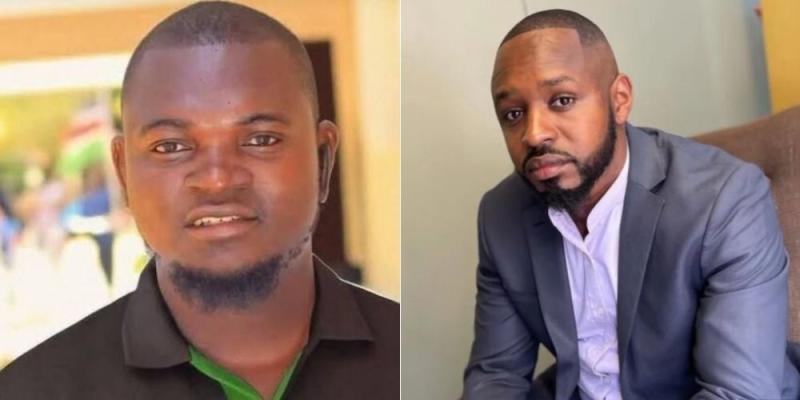
Bob Njagi and Nicholas Oyoo: The Uganda Abduction
Bob Njagi and Nicholas Oyoo, two Kenyan activists associated with the Free Kenya Movement, traveled to Uganda on Monday, September 29, 2025, to show solidarity with opposition leader Robert Kyagulanyi, popularly known as Bobi Wine, ahead of Uganda's 2026 presidential elections.
They traveled by road alongside two Ugandan companions who went home upon arrival in Kampala, leaving the two Kenyans to link up with Wine's campaign team.

On Tuesday, September 30, Njagi and Oyoo were seen accompanying Wine and other National Unity Platform (NUP) leaders as they campaigned across Buyende and Kamuli districts. It was a show of pan-African solidarity; Kenyans supporting Ugandans fighting for democratic space in their country.
However, on Wednesday, October 1, their journey turned into a nightmare. When their campaign team stopped at a petrol station in the Kireka area to repair their car, four armed men ambushed Njagi and Oyoo. Eyewitnesses reported that the two activists were forced into a waiting vehicle while their friend narrowly escaped. Within moments, the abductors sped off, and both men's phones were immediately switched off.
VOCAL Africa immediately condemned the abduction, calling for swift action to secure the activists' release.
"Reports confirm that activists Bob Njagi and Nicholas Oyoo of the Free Kenya Movement were abducted in Kampala, Uganda, while attending opposition leader Bobi Wine's campaign. They were reportedly taken from a fuel station. VOCAL Africa strongly condemns the abduction and demands their immediate and unconditional release," their statement read.
Bobi Wine himself broke his silence on October 2, describing the abduction as "mafia-style" and accusing the Ugandan government of orchestrating it.
"We strongly condemn the abduction by armed operatives of Kenyan activists and human rights defenders Bob Nyagi and Nicholas Ayoo. The two were picked up mafia-style this afternoon from a petrol station in Kireka and driven off to an unknown destination!" he stated.
"The criminal regime apparently abducted them simply for associating with me and expressing solidarity with our cause!" Wine added.
The High Commission of Kenya in Kampala raised the matter with Uganda's Ministry of Foreign Affairs on October 1, requesting assistance in locating the two men.
"The Mission requests the Ministry's assistance in liaising with the relevant authorities in Kampala to obtain information regarding the current situation of the missing Kenyans in order for the Mission to take appropriate action in securing their release and safe return to Kenya," the communication read.
However, on October 6, Ugandan Police Force (UPF) Spokesperson Kituuma Rusoke denied that the two activists were in police custody.
"The Kenyan activists who are alleged to have come to join in a rally in Uganda and disappeared, I have not been briefed by the police that we have them in our custody," Rusoke stated, adding that there had been no official reports indicating that they were missing persons.
The denial by Ugandan authorities meant that Njagi and Oyoo effectively became victims of enforced disappearance, held somewhere by someone, but with no official acknowledgment of their detention. For 39 days, their families, friends, and fellow activists lived in anguish, not knowing whether the two men were alive or dead.
On Saturday morning, November 8, VOCAL Africa reported that Njagi and Oyoo had been found in Busia. The duo was released and handed over to Kenya's High Commissioner in Uganda, who facilitated their travel to Busia, where they were received by County Commissioner Chaunga Mwachaunga.
"We welcome the release of Nicholas Oyoo and Bob Njagi after 39 days of their enforced disappearance. We extend our appreciation to the Kenyan and Ugandan governments at the highest level and the immediate former president of Kenya for their cooperation towards their safe return," VOCAL Africa said in a statement.
Kenya's Principal Secretary for Foreign Affairs, Korir Sing'oei, appreciated the efforts by the Kenyan mission in Kampala and promised to provide a more detailed account later.
On November 9, Ugandan President Yoweri Museveni confirmed that his government had indeed arrested the two Kenyans, directly contradicting the earlier police denials.
Museveni claimed the arrests were based on intelligence reports.
"Here we have very good intelligence. We arrested two Kenyans who were working with Kyagulanyi's group that they are experts in riots," Museveni stated, providing a rationale for the detention that many observers found deeply troubling; activists were arrested and held incommunicado for over a month simply because they were supporting an opposition leader.
Ndiangui Kinyagia
On June 21, 2025, blogger Ndiangui Kinyagia went missing after allegedly being abducted by masked men in Kinoo, Kiambu County. Before his disappearance, Kinyagia had shared a timetable for the June 25 protests on his X account, outlining a nationwide plan for demonstrations, including a march to State House Nairobi.
For 10 days, Kinyagia's whereabouts remained unknown, drawing national attention from rights groups and civil society organizations. Amnesty Kenya issued a statement demanding his release.
"Free Ndiangui Kinyagia. He was last seen on June 21 after a reported raid by DCI officers at his home in Kinoo. We call for his immediate release. If he is accused of any crime, let him be presented before a court of law, not held incommunicado."
On Monday, June 30, the High Court took dramatic action. Justice Chacha Mwita ordered Inspector General of Police Douglas Kanja to produce Kinyagia in court on Tuesday, July 1, at 11:00 am without fail or provide an explanation for his continued disappearance.
"I have taken into account the fact that the second applicant has not been found for 10 days and that the life of a citizen is in danger," Justice Mwita stated, making clear the court's concern for Kinyagia's safety.
On Thursday, July 3, the mystery was partially solved when Kinyagia's family confirmed that he was alive and had made contact with relatives. Through family lawyer Wahome Thuku, it was revealed that Kinyagia had contacted a family member on Tuesday evening from an undisclosed location.
"Mr Ndiangui indicated to the family member that he had hidden temporarily for fear of his life upon learning that DCI officers were looking for him over unknown criminal allegations," the statement read.
On June 30, DCI boss Mohamed Amin confirmed that Kinyagia was indeed a person of interest, sought for questioning over controversial online posts ahead of the June 25 protests. Amin stated that officers had conducted a search at Kinyagia's apartment in Kinoo but didn't find him there. However, he said they had seized electronic gadgets that could aid in their investigations.
Lawyer Wahome Thuku accused DCI officers of unlawfully entering Kinyagia's home during his absence and confiscating several items, a claim that raised questions about due process and the lawfulness of the search.
On July 3, Kinyagia appeared at the Milimani Law Courts accompanied by his lawyers Martha Karua, Babu Owino, and Kibe Mungai. In an emotional scene captured on video, Kinyagia's mother broke down in tears as she hugged her son, who had been missing for over 10 days.
Justice Chacha Mwita took the extraordinary step of barring police from arresting Kinyagia following his appearance.
"In the meantime, the police will not arrest Ndiangui Kinyagia since he is now a petitioner in this matter and may be required to testify," Mwita ordered. "He should be presented by his advocate and not arrested or detained until further orders of this court."
The judge stated that Kinyagia could be taken to the DCI to record a statement if needed, but only when accompanied by his lawyer, and police could not detain him after questioning.
Albert Ojwang
Albert Ojwang was a 31-year-old teacher, blogger, and social media commentator from Homa Bay County. His voice was one among thousands of Kenyans who used social media platforms to comment on current affairs, critique government actions, and engage in political discourse—a constitutional right in Kenya's democracy.
On June 7, 2025, Ojwang was arrested in his home village, reportedly over a social media post critical of Deputy Inspector General of Police Eliud Lagat. He was taken from Homa Bay to the capital, Nairobi, and detained at the Central Police Station, a journey of over 350 kilometers . The following morning , on June 8, Ojwang was found dead.
The police's initial explanation was stunning in its implications: they claimed he died after allegedly hitting his head against a cell wall, implying suicide or self-inflicted harm.
It was an explanation that satisfied no one, least of all forensic experts who conducted a post-mortem examination. Their findings told a drastically different story: they found evidence of blunt-force trauma, neck compression, and multiple soft-tissue injuries, injuries consistent with assault, not a suicide attempt.
The forensic evidence directly contradicted the police narrative, suggesting that Ojwang had been beaten to death while in custody. Given these findings, authorities interdicted (suspended) several officers on duty at the station that night, including the cell sentry, duty officers, and the Officer Commanding Station; a move meant to allow transparent investigations.
The death of Albert Ojwang triggered widespread outrage and protests in Nairobi and other areas. Demonstrators condemned what many called a brutal killing by those meant to protect citizens.
As crowds marched, tensions escalated. Police fired tear gas to disperse protesters, particularly around the Parliament area and Central Police Station. In some instances, anger boiled over, there were reports of vehicles set ablaze and at least one police station attacked as citizens vented their fury at what they perceived as state-sanctioned murder.
Boniface Mwangi
When activist Boniface Mwangi traveled to Tanzania on May 18, 2025, alongside Ugandan journalist and lawyer Agatha Atuhaire, his intention was straightforward: to show solidarity with Tundu Lissu, a Tanzanian opposition leader facing treason charges. It was meant to be a simple trip to attend a court hearing and return home.
Instead, it became a harrowing ordeal of alleged detention, torture, and sexual assault that would shock East Africa and raise serious questions about the treatment of activists across the region.
On Monday morning, May 19, Mwangi raised the alarm from his hotel room at Serena Hotel in Dar es Salaam. Through social media posts, he revealed that unidentified armed men in civilian clothes were outside his room, claiming to be police officers but refusing to identify themselves.
"My life is in danger. I'm at Serena Hotel, Dar es Salaam, and there are armed men in civilian clothes outside my room. They claim they are police officers, but they have refused to identify themselves. They will have to break the door to remove me here. I'm not going to open it," Mwangi posted.
He expressed fear for his life, citing the deteriorating human rights situation in Tanzania under President Samia Suluhu's administration.
"I'm scared for my life because there is a lot of abduction in this country; a lot of executions, and people are in jail for resisting President Samia Suluhu's dictatorship. That's why I can't open this door," he added.
Later, Mwangi confirmed that the armed individuals had moved to the hotel lobby, and he said he was prepared to cooperate once Tanzanian lawyers dealing with the matter arrived.
Despite initial reports on May 21 that Mwangi and Atuhaire had been deported, the Tanganyika Law Society President Boniface Mwabukusi clarified that the two were still detained in Tanzania. They were no longer in police custody but remained held by the Immigration Department of the United Republic of Tanzania.
Mwabukusi called on Tanzanian authorities to uphold the law and follow due process.
"We respectfully urge the Immigration authorities to ensure that all actions taken comply fully with the Constitution, statutory requirements, and principles of natural justice," he stated.
The Kenyan Ministry of Foreign Affairs expressed concern that despite several requests, Kenyan government officials had been denied consular access to Mwangi.
"The ministry is also concerned about his health, overall well-being, and the absence of information regarding his detention," their letter to Tanzania's Ministry of Foreign Affairs read.
On May 22, Mwangi resurfaced in Ukunda, Kwale County, after being deported from Tanzania. He was reportedly deported by road and abandoned at the coastal town. Following his return, he was immediately taken to a hospital for a medical check-up.
Human rights activist Hussein Khalid revealed that Mwangi could barely walk after his release, claiming he had been severely tortured. Khalid shared videos showing visible injury marks on Mwangi's legs, confirming that he was in need of urgent medical assistance.
On June 2, at a press conference, Boniface Mwangi and Agatha Atuhaire provided detailed accounts of the torture they endured in Tanzania. What they described was systematic, brutal, and designed to inflict maximum pain and humiliation.
According to their accounts, the assault began at a police station on Monday, May 19, in the presence of their legal team. After receiving a call from the Kenyan Ambassador saying he would be deported, Mwangi was instead transferred to another police station where state security officers began beating him.
"We were transferred to a police station where we found a guy called Mafwele. The beating continued in the presence of three lawyers. At that station, Mafwele said he is going to rape Agather," Mwangi recalled.
"When the lawyers left us they did not tell our families that we are being beaten, threatened and harassed. Because Mafwele, in front of the lawyers asked if I was circumcised. He said they would circumcise me again."
At the Central Police Station, an unknown gang walked in. The activists were blindfolded and pushed into a Land Cruiser which drove for about 20 minutes. They were taken to a room that became their torture chamber.
"They told me to strip naked. When I stripped, they removed my handcuffs. I was grabbed by around four men, they lifted me up so fast, and tied me upside down. They started beating my feet. They put my underwear in my mouth, they played gospel music in the car to drown my pain," Mwangi recounted.
He described being sexually assaulted "in the name of Samia," with objects inserted into his anal area.
"They would ask me to say I am feeling nice, and say 'Asante Samia'. I started bleeding. All this time they are saying they are recording what they are doing to me."
Atuhaire confirmed similar sexual assault, clarifying that "the tormenters never used their sexual organs but other objects to sexually assault them." While handcuffed and blindfolded, extreme pain was also inflicted on their feet.
Later, Mwangi was driven to a border point where a boda boda rider was waiting to ferry him into Kenya.
He was given Tsh.20,000 and Ksh.400 for transport, a cruel parting gift after days of torture.
-1789385357-md.jpeg)


 (1)-1791708588-sm.jpg)
 (1)-1791175033-sm.jpg)