
Editor's Review
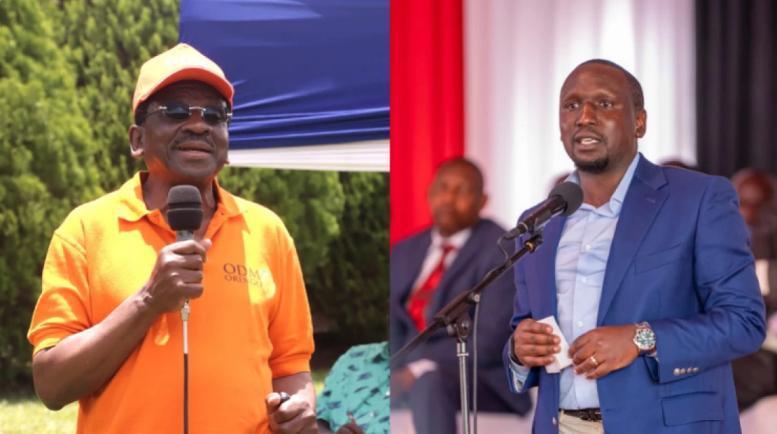
Irungu Kang'ata
Kang’ata studied law at the University of Nairobi, where he became actively involved in student leadership.
Across different generations, a number of Kenyan politicians faced suspension or expulsion during their university years, largely linked to student activism and leadership.
Documented accounts show that these incidents often arose from protests over governance, policy, and institutional decisions, with many later returning to complete their studies and pursue public careers.
James Orengo
Orengo was a student at the University of Nairobi in the early 1970s, where he emerged as a key figure in student leadership under the Student Organisation of Nairobi University (SONU). During the 1973/1974 academic year, he led what is widely regarded as the first major student strike at the institution.
The strike was triggered after a group of architecture students were dismissed over poor academic performance. Orengo and other student leaders mobilised protests opposing the decision, escalating tensions between students and the university administration.
Read More
As a result of the unrest, Orengo and several leaders were expelled from the university. However, sustained pressure from the student body led to their eventual readmission, allowing him to complete his studies.
Following his university years, Orengo transitioned into national politics. He was elected Member of Parliament for Ugenya, later served as a Cabinet Minister, became Senator for Siaya, and is currently serving as the Governor of Siaya County.
Hassan Omar Hassan
Omar Hassan was a law student at Moi University and served as chairman of the Moi University Students Organisation (MUSO) in the late 1990s. In 1999, he led large-scale student protests demanding institutional reforms at the Eldoret-based university.
Among the issues he raised was opposition to the university’s name, arguing that it should be changed to either Kesses University or the University of Eldoret. The protests led to prolonged unrest and the eventual closure of the institution.
While many students were later readmitted under strict conditions, Hassan Omar was expelled due to his leadership role in the demonstrations. His activism also drew direct criticism from then-President Daniel arap Moi, who publicly rebuked him.
After the political transition in 2002 under the NARC government, Omar was readmitted to Moi University, where he completed his Bachelor of Laws (LLB) degree.
He later joined public service, serving as Mombasa Senator and holding leadership roles in national political parties.

Irungu Kang'ata
Kang’ata studied law at the University of Nairobi, where he became actively involved in student leadership. During his time on campus, he led a campaign against what he described as discrimination between regular and parallel programme students.
The campaign escalated into protests and unrest, which led to the temporary closure of the university. Kang’ata was subsequently suspended for his role in organising the demonstrations.
Following the suspension, he returned to Murang’a, where he took up informal work, including washing cars. During this period, he also worked as a DJ, which contributed to his local popularity.
He was later readmitted and completed his law degree before advancing his legal and political career. Kang’ata went on to serve as Senator for Murang’a and is currently the Governor of Murang’a County.
Aaron Cheruiyot
Cheruiyot attended Moi University, where he pursued a Bachelor of Arts in Language and Literary Studies. During his time at the institution, he was involved in student politics and contested for the chairmanship of the Moi University Students Organisation (MUSO) in 2008, narrowly losing the election.
In 2009, Cheruiyot was suspended from the university for one year after leading protests against transport cartels operating in Kesses. The protests were aimed at opening up the transport sector to fair competition, which had been resisted by existing operators.
After serving his suspension, he resumed his studies and completed his undergraduate degree. He later enrolled for a Master of Business Administration (MBA) at Kenyatta University.
Cheruiyot transitioned into politics and was elected Senator for Kericho, a position he continues to hold, including serving in leadership roles within the Senate.
David Ole Sankok
David Ole Sankok was a medical student at the University of Nairobi when he entered student politics and was elected chairman of SONU in 2000. His leadership marked several milestones, including becoming the first medical student, the first person with a disability, and the first Maasai to hold the position.
Within months of assuming office, Sankok led opposition against the introduction of parallel degree programmes, which he argued would commercialise education and undermine academic standards. He organised demonstrations and resisted the implementation of the programme, bringing him into conflict with both university authorities and the government.
The standoff led to sustained pressure on student leaders, including arrests and intimidation. Sankok reported being arrested multiple times within a short period during the protests.
He was eventually suspended alongside other student leaders following the unrest. During this period, he also allegedly faced serious security threats, prompting him to relocate to Norway, where he continued his medical studies at the University of Bergen.
Following a political transition in Kenya in 2002, the government granted amnesty to suspended students, allowing them to return and complete their medical degree at the University of Nairobi.
He later entered politics and served as a nominated Member of Parliament representing persons with disabilities.
-1789385357-md.jpeg)



 (1)-1791708588-sm.jpg)
 (1)-1791175033-sm.jpg)