Editor's Review

The National Infrastructure Fund Bill 2026 recommends the creation of a self-sustaining and independent financial pool that will be exclusively used to fund infrastructure projects in the country.

The National Infrastructure Fund Bill 2026 is a proposal that seeks to create a paradigm shift in how Kenya will fund its infrastructure development.

The Bill recommends the creation of a self-sustaining and independent financial pool that will be exclusively used to fund infrastructure projects in the country.

Under this Bill, the National Infrastructure Fund (NIF) will be established as a sovereign infrastructure investment vehicle.

What is NIF and How Does it Work?

Kenya's rapid population and economic growth demand infrastructural development that will go toe to toe to ensure sustainability. 

Traditionally, infrastructure development projects have relied heavily on the National Treasury and public debt for funding. The infrastructure demands of the country have already put a strain on its resources, which are already limited.

With other sectors like health and sanitation, basic education, payment of salaries, and other recurrent expenditure, not much is left to adequately fund infrastructural development.

NIF will provide much-needed relief on the pressure exerted on the Treasury by offering alternative funding solutions while scaling up and accelerating the development of the national infrastructure. 

"The purpose of the Fund is to mobilise private capital and non-traditional sources of infrastructure finance 4(b) and to 4(d) strengthen the national capacity for origination, structuring and execution of large and complex infrastructure projects," the Bill reads in part.

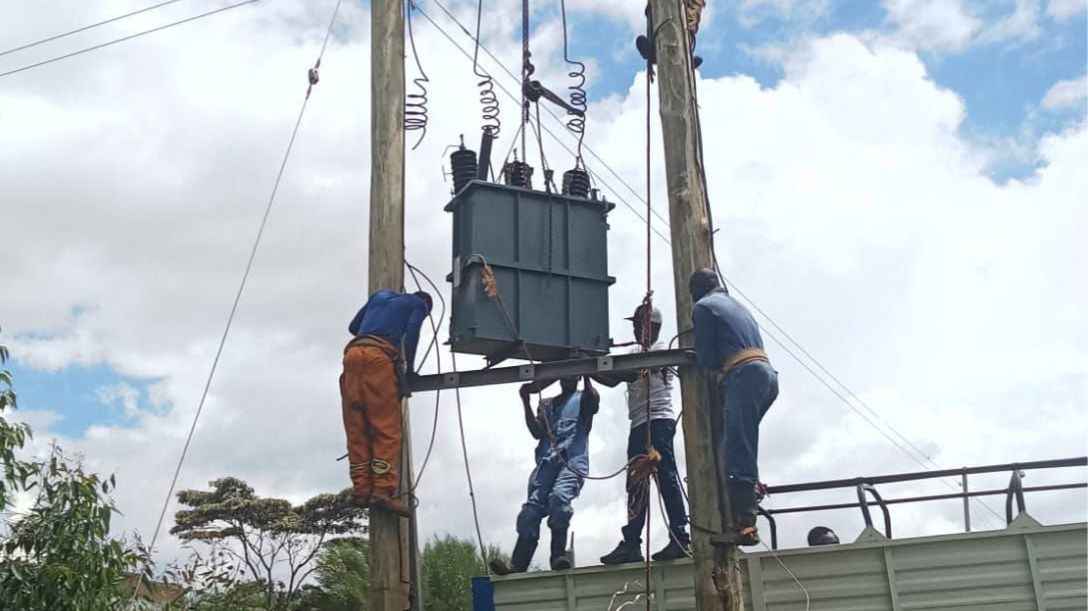
NIF will focus mostly on infrastructure like national highways and railway networks, the construction of airports, electricity generation, transmission, and distribution, water reservoirs, irrigation, and agribusiness infrastructure. 

Where Will the National Infrastructure Fund Get Its Money

NIF will be a corporate body that will be able to enter into contracts, borrow money, purchase, charge, and dispose of movable and immovable property.

The Fund will predominantly source money from infrastructure finance, including domestic pension funds and collective investment schemes, sovereign wealth funds, and climate finance.

NIF will be managed by a Board of Directors and a Chief Executive Officer 

The Board will be tasked with mobilising resources for the Fund through investment in projects and entering into contracts on its behalf.

"The Board may eenter into arrangements or agreements with, and act as agent or mandatory for, any department or agency of the government of Kenya, or any other body or person, for the development of infrastructure projects to, by, on behalf of or jointly with that institution and deliver financial assistance on their behalf under the arrangement or agreement," the Bill reads in Part.

It can also invest in projects on behalf of the NIF through equity investment or debt, based on the bankability of the projects.

The Board may also buy and manage securities on behalf of the Fund. However, it cannot borrow money ot take credit against the balance sheet of NIF.

File Image of President William Ruto

How secure is the National Infrastructure Fund (NIF) 

There have been multiple concerns about the mismanagement of government funds based on the fact that similar establishments are riddled with allegations of corruption.

NIF promises to do things differently since it is an investment platform, and not a spending pool.

The fund has in place tough measures to avoid not only the misappropriation of funds but also political influence.

The National Infrastructure Funds Bill pushes for the NIF to be subjected to auditing internally and by independent auditors.

The NIF Board of Directors will form an audit committee to oversee an internal audit and engage external auditors.

"The audit committee shall be responsible for the review of annual financial statements of the Fund before the approval of the board and the overall assurance to the Board on the system of internal control risk governance and operational systems," the Bill proposes.

All audit reports will be shared with the Cabinet Secretary for Treasury, who is mandated to make them accessible to the public.

These include audited annual reports of the Fund, annual performance evaluation results, and reports on the appointment of independent directors.

Unlike traditional state entities, where appointments are often tied to political relations, the Board of Directors will comprise a series of experienced individuals who have high integrity.

The NIF Bill demands that, for a person to be appointed as the chairperson of the board, he or she shall have to have proven business leadership and have served in a senior management position for at least 15 years.

NIF will not recycle old names in the appointment of its directors.

"A person is not qualified to be appointed as anindependent director of the Fund, if that person- (a) was employed by a Government-Owned Enterprise or its related parties, including its major shareholders, in the preceding five years; (b) was an employee of the National Government for the preceding five years," the bill reads in part.

Politicians have also been disqualified from sitting on the NIF Board of Directors.

 "A person is not qualified to be appointed as an independent director of the Fund if that person has been affiliated with a political party in theimmediately preceding five years," the Bill reads in part.

The Benefits to the People

While the core mandate of the National Infrastructure Fund is on major infrastructure, the ripple effect of improving infrastructure will be felt among multiple sectors.

Food production will be boosted through the agribusiness projects. The development of efficient transport networks and the increasing supply of electricity will lower food costs in the market.

The NIF will also create employment opportunities for Kenyan youth, who will be engaged in the construction works, as well as industries that will come up as a result of the expansion of the infrastructure.