Editor's Review
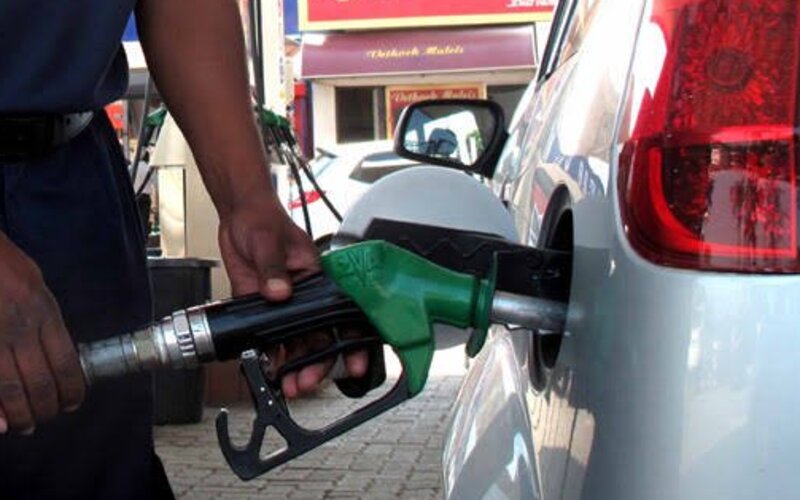
The MP questioned why Kenyans continue to pay high pump prices despite a significant drop in international crude oil prices.
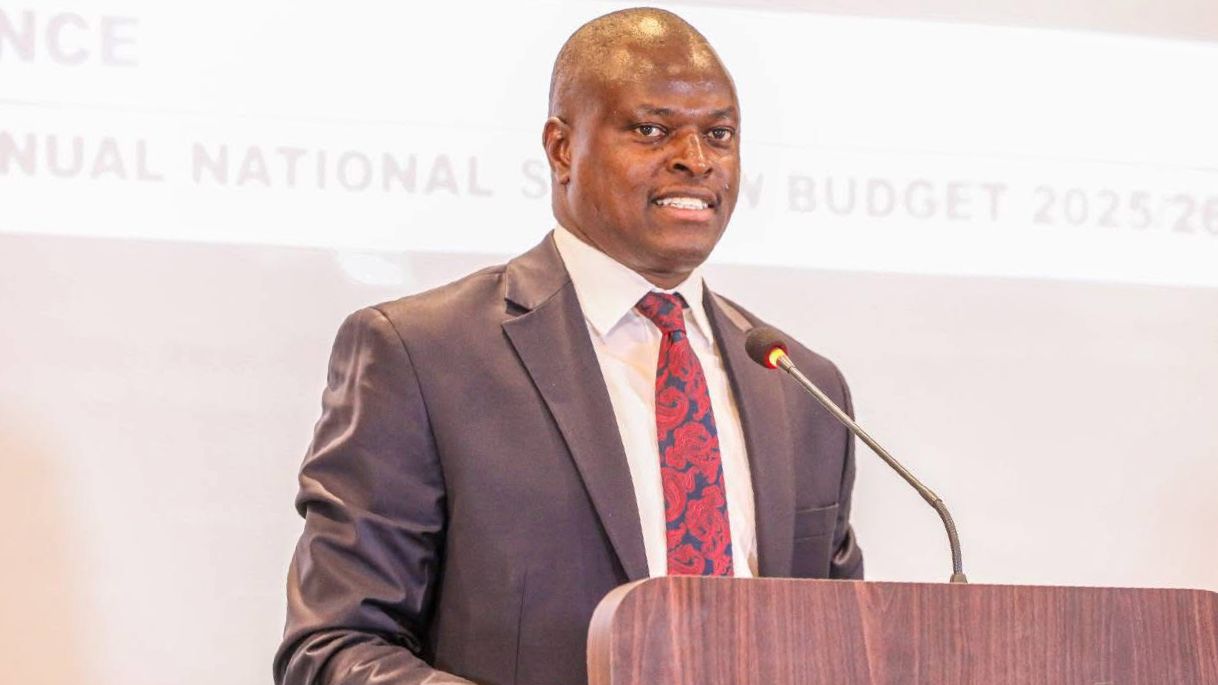
Kiharu MP Ndindi Nyoro has called on the government to review fuel taxation policies, arguing that the current cost of fuel locally does not reflect global oil price trends.
In a statement on Tuesday, March 24, the MP questioned why Kenyans continue to pay high pump prices despite a significant drop in international crude oil prices.
Nyoro pointed out that historical data show fuel prices in Kenya were considerably lower even when global oil prices were at their peak, raising concerns about the impact of taxes and levies imposed in recent years.
"Fuel prices globally were higher in March of 2022 at around $100 Per Barell, reaching a peak of over $116 Per Barell in May of 2022. Higher than the current global oil prices.
"Yet, Petrol was around Ksh150 and Diesel Ksh131 at the peak in May. Even without a subsidy, it was still cheaper than now. Even while global prices halved from a high of $116 Per barrel in 2022 to below $55 Per barrel in December 2025, Kenyans didn’t notice the drastic global price change at the pump," he said.
Read More
Nyoro attributed the persistent high prices to government-imposed taxes, specifically highlighting VAT and the fuel levy introduced in recent years.
"The reason for high prices in Kenya includes the introduction of an extra 8% VAT in 2023 and an extra Ksh7 fuel levy in 2024. VAT is over Ksh25 per liter. This is besides other excise taxes and levies," he added.
Nyoro further alleged that the fuel levy has already been securitized, raising concerns about its legality and financial implications.
"More interesting is that the government has already taken a loan or collected the Ksh7 in advance through illegal securitization. This amounts to Ksh32 billion per year," he continued.
Nyoro noted that Kenya, as a non-oil-producing country, has limited control over global prices and must instead rely on domestic policy tools such as taxation and subsidies to manage costs.
"For non-oil-producing economies, their markets are price takers of the global prices; they are left with the tool of levies, taxes, or subsidies to deal with fuel prices. Taxes and levies account for around 50% of fuel prices in Kenya, among the highest in the World," he further said.

Based on this, Nyoro urged the government to take immediate action by scrapping the additional charges imposed on fuel.
"A time has now come for Kenya to remove the Ksh 7 in fuel levy added in 2024 and reduce the 8% VAT on fuel. The banks that participated in the illegal securitization should be made to pay for their greed. They either give a moratorium or laws must be changed," he explained.
Nyoro argued that Kenyans have already borne the burden of high taxes and deserve relief, especially as global prices decline.
"The government must intervene. Consumers have done their bit by paying additional VAT and fuel levy when prices were coming down; now it is time for the government to reciprocate by removing the 8% additional VAT and Ksh 7 fuel levy.
"Our economy cannot afford to shoulder all these levies and taxes at this time in consideration of the global dynamics. Kenyans must be shielded. The economy must be supported," he stated.
Nyoro also raised concerns about regional price disparities, noting that Kenya’s fuel prices are higher than those of its neighbors despite being a key transit hub for petroleum products.
"It is unfathomable that fuel is cheaper in Uganda, yet their fuel requirements pass through Kenya. In Tanzania, Petrol is below Ksh155 in Kenyan shillings. Still cheaper in Rwanda," he concluded.
This comes months after Nyoro fired a warning at the government over what he termed as inadequate funding for schools in the 2026 academic year.
Speaking on Tuesday, January 6, the lawmaker criticized the government for releasing only Ksh109 per student to run schools for the current term, dismissing official statements about capitation disbursement as untrue and incorrect.
"Some of these things we are not begging. As leaders, sometimes we are just telling the government to do what they need to do. Last week we told the government clearly that they needed to release a circular in terms of capitation or we were going to do some unspecified actions," he stated.
Nyoro accused the government of failing to adequately fund schools for the year 2026, noting that only Ksh109 has been sent to institutions to cover operational costs for the entire term.
"So I'm also now calling the government. You have not funded schools in the year 2026. You've only sent 109 shillings only to run our schools for this term," he added.
Nyoro outlined a two-phase strategy to address the capitation crisis.
In the first phase, he pledged to make all stakeholders aware of what he called the government's misrepresentation of facts regarding school funding.
The legislator warned that he would be monitoring the government's actions closely during the term, specifically watching for the disbursement of actual funds rather than what he termed as 'stories.'
"And we are going to observe within this term on the behaviour, the demeanour, the body language of government and especially in terms of sending money, not stories. And by the time we are going to the midterm, we expect the government to have sent the real money for this term," he further said.
Nyoro issued an ultimatum, threatening to mobilize Kenyan parents if the government fails to release adequate capitation funds by mid-term.
He argued that parents have a right to demand proper funding since they pay taxes and free basic education is constitutionally guaranteed.
"Failure to which we are going to mobilise all the Kenyan parents to debate what their rights are. And their right is that they pay taxes. Free basic education has been there in Kenya. The Kenyan parents cannot continue to observe silently as the government continues to tear down and annihilate the right of learners in Kenya by not adequately funding the free basic education," he warned.