Editor's Review
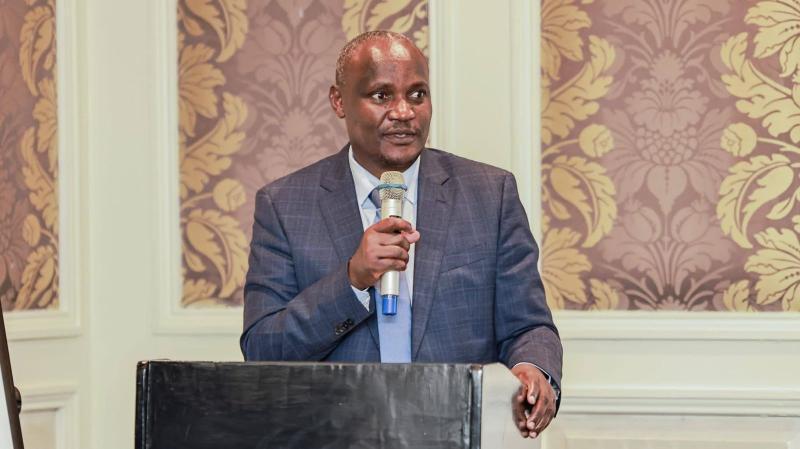
Treasury Cabinet Secretary John Mbadi has assured lawmakers that Kenya has adequate petroleum reserves despite escalating tensions in the Middle East.
Treasury Cabinet Secretary John Mbadi has assured lawmakers that Kenya has adequate petroleum reserves despite escalating tensions in the Middle East.
Appearing before the National Assembly’s Finance and National Planning Committee on Thursday, April 2, Mbadi revealed that, based on data from the Ministry of Energy and Petroleum, Kenya has sufficient fuel stocks covering petrol, diesel, and jet fuel needs for several days.
As of March 30, the country had 138,623 metric tonnes of Super Petrol, which translates to 16 days of supply, 207,841 metric tonnes of diesel, equivalent to 19 days, and 150,398 metric tonnes of jet fuel, enough for 49 days.
Mbadi further explained that additional shipments scheduled for March and April are expected to strengthen these reserves.
The planned deliveries include 290,000 metric tonnes of Super Petrol (47 days cover), 182,900 metric tonnes of diesel (20 days cover), and 60,000 metric tonnes of jet fuel (25 days cover), with the first consignments already expected to arrive.
Read More
While acknowledging that the current supply situation remains stable, Mbadi warned that future imports could become more expensive.
He cautioned that rising global oil prices in the coming months may translate into higher pump prices locally, potentially triggering inflationary pressure and straining public finances.

Mbadi maintained that despite global uncertainty, the country’s GDP is projected to grow to 5.3 percent in 2026 and 2027, up from 5.0 percent in 2025.
He further disclosed that the government has established a multi-agency team to continuously assess developments arising from the conflict and propose timely interventions to shield the economy from severe shocks.
"Hon. Members, as any responsible government would do, we are taking a whole government approach to monitoring the situation. In fact, I have just come from a meeting where we were deliberating on a few scenarios as a result of the ongoing war and how we would respond to them," he said.
Mbadi added that Africa remains particularly exposed to disruptions in the Middle East due to its heavy reliance on the region for energy supplies.
"The Middle East serves as the continent’s largest external supplier of petroleum products and natural gas, making African economies highly vulnerable to supply disruptions and price shocks arising from instability in the region," he observed.
Despite the risks, Mbadi reassured MPs that Kenya’s government-to-government (G-G) oil import arrangement would provide a buffer against extreme price volatility.
"The G-G arrangement between Kenya and the three largest suppliers of oil in the Middle East is expected to somehow cushion us from the energy shocks being experienced across the world today,with the disruption caused by the closure of the Strait of Hormuz, because the arrangement binds the companies to supply Kenya with oil from whatever sources," he explained.
This comes a day after the Energy and Petroleum Regulatory Authority (EPRA) dismissed a viral poster circulating online that claims the regulator has revised fuel pump prices.
In a clarification issued on Wednesday, April 1, the authority explained that fuel price adjustments follow a legal and regulatory framework, which does not align with the claims made in the circulating poster.
"Under Section 101 (y) of the Petroleum Act 2019 and Legal Notice No.192 of 2022, EPRA announces the applicable fuel price schedule for the subsequent month on the 14th of every month," EPRA clarified.
The fake poster, which mimics EPRA’s official format, suggests that fuel prices had been increased due to global geopolitical tensions affecting oil supply.
-1792658467-md.jpg)
-1768823097-md.jpg)