Editor's Review
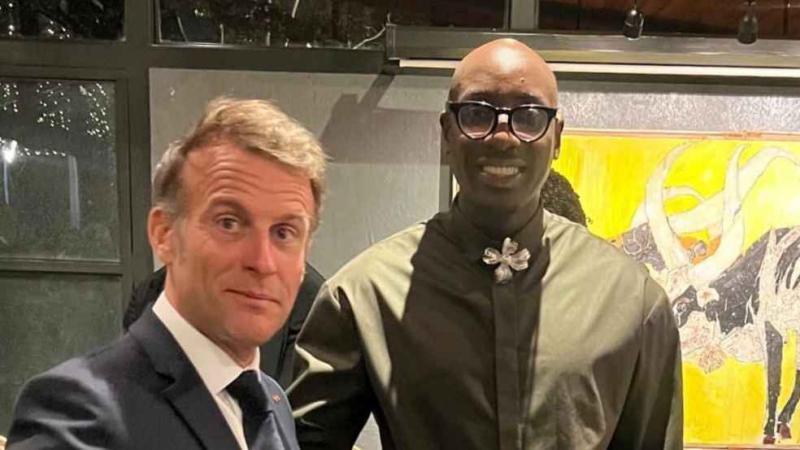
Singer Bien-Aimé Baraza has responded to online criticism that followed his meeting and dinner with French President Emmanuel Macron.
Singer Bien-Aimé Baraza has responded to online criticism that followed his meeting and dinner with French President Emmanuel Macron.
The backlash emerged on social media after photos and reports circulated showing Bien among notable guests who interacted with the French leader.
Some online commentators accused the artist of appearing too close to French political power, while others questioned African entertainers engaging with Western leaders amid ongoing geopolitical tensions involving France in parts of Africa.
A section of critics also alleged that such engagements risked normalizing neo-colonial influence on the continent, with a vocal minority even calling for boycotts of Bien’s music.
Responding to the criticism, Bien defended his decision to attend the meeting and maintained that engaging global leaders does not amount to surrendering his African identity or beliefs.
Read More
"I can sit at a table with global leaders and still remain fully African, fully critical, and fully myself. Presence is not submission," he said in a post on Tuesday, May 12.

Meanwhile, police in Nairobi arrested several human rights activists on Tuesday after they attempted to access the Kenyatta International Convention Centre (KICC) during the ongoing Africa Forward Summit.
The protesters were intercepted by police officers along Uhuru Highway as they tried to move closer to the summit venue.
Witnesses said some demonstrators, including foreign nationals, were forcefully pushed into police vehicles and taken away.
Security around the convention centre was significantly heightened following the confrontation, with officers heavily deployed around KICC and access roads leading to the venue sealed off.
The activists were demonstrating against France and President Emmanuel Macron, accusing the French government of imperialism and objecting to its involvement in the summit.
Carrying placards and chanting anti-imperialism slogans, the protesters called for an end to what they termed as foreign interference in African affairs.
Police later responded by firing teargas and shooting into the air in an effort to disperse the crowd, although some protesters remained at the scene in defiance.
After briefly scattering, a section of the demonstrators regrouped moments later before more police Land Cruiser vehicles arrived.
Several protesters were then forcibly arrested and driven away as others fled to avoid being detained.