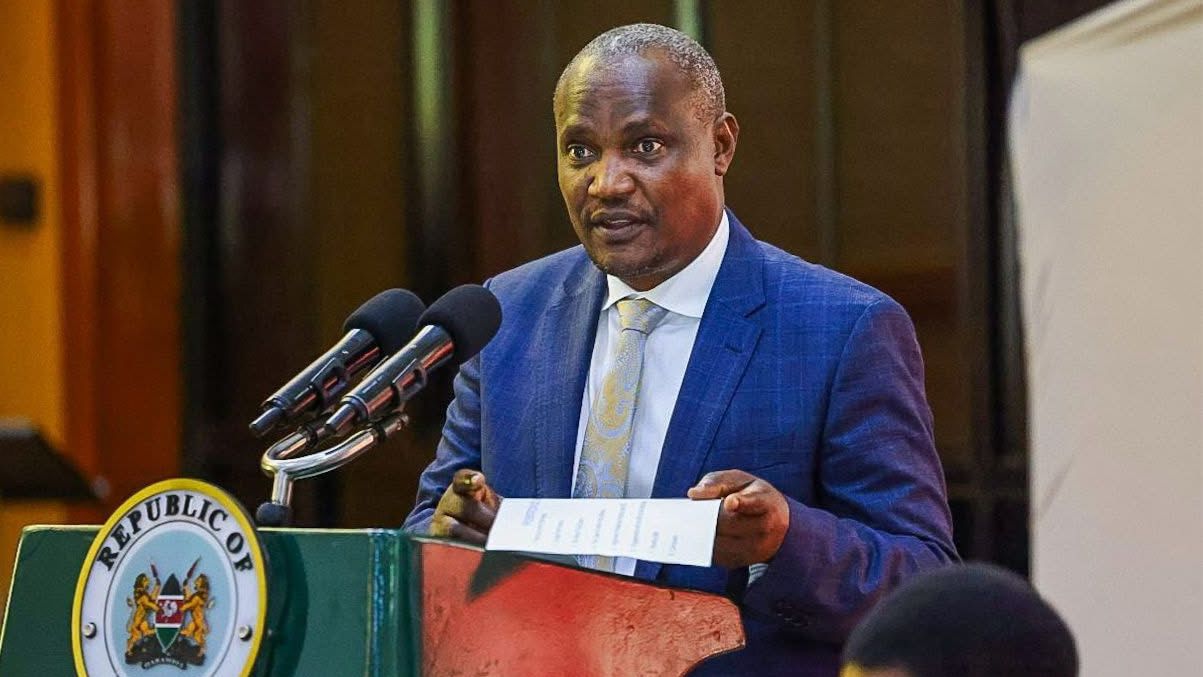
President William Ruto has appointed Treasury Cabinet Secretary John Mbadi as the Chairperson of the newly constituted National Infrastructure Fund Governing Council.
In a statement on Wednesday, April 1, Head of Public Service Felix Koskei confirmed that the appointments follow the enactment of the new law.
"It is notified that His Excellency the President has members to the Governing Council of the National Infrastructure presidential action follows the coming into force of the National Infrastructure Fund Act, 2026 (Act No. 4 of 2026) pursuant to Article 116 of the Constitution," the statement read.
Koskei noted that the establishment of the fund represents a shift in Kenya’s development strategy, moving away from heavy reliance on public debt.
"The establishment of the Fund is a transformative step in the nation's journey towards inclusive development. The Act anchors a strategic shift from a predominantly debt-driven model to a sustainable, investment-led approach, designed to mobilise private capital and enhance delivery of commercially viable infrastructure projects," the statement added.
Read More
In addition to Mbadi as Chairperson, statutory members include Central Bank Governor Kamau Thugge and Attorney-General Dorcas Agik Oduor.
The council also features independent members including Prof. Benedict Oramah, a prominent figure in African trade finance and former President of Afreximbank, who brings decades of continental and global expertise.

Other members include Faith Boinett, an advocate and governance expert; Paul Russo, a leading figure in Kenya’s banking sector; and Richard Etemesi, a seasoned financial services executive with international experience.
Koskei noted that the Governing Council has already been assigned its first major task, setting up the leadership structure that will drive the fund’s operations.
"The Governing Council's immediate priority will be to oversee the recruitment of the Fund's Board of Directors, which shall in turn recruit the Chief Executive Officer to drive the operationalisation of the Fund," the statement concluded.
This development comes days after Mbadi dismissed claims that civil servants will have their salaries deducted to finance NIF.
Speaking on Tuesday, March 10, he explained that proceeds from the privatization of state-owned enterprises will be used to fund NIF's seed capital.
Mbadi noted that Kenya Pipeline Company (KPC) is an example of an entity whose divestiture of government shares will be channeled to the NIF.
"No, this fund is being set up by the seed capital from the divestiture of government shares in state-owned enterprises. KPC is the first entity; we also have Safaricom and many others that will come," he said.
Mbadi mentioned that the establishment of NIF is likely to lower taxes levied on Kenyans, adding that the government has already committed to reducing taxes for low-income earners.
"In fact, this fund is likely to lower taxes that are levied for Kenyans. We have already committed ourselves to reducing the taxes on low-income earners," he added.




-1786977226.jpg)